Planners in Ohio’s capital city hope a new zoning code will help reverse some of the damage done by the city’s previous zoning codes.


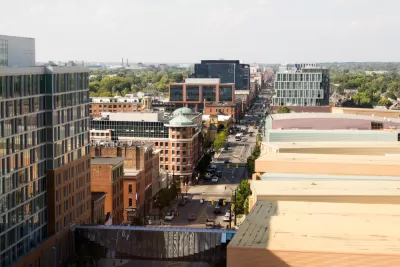
Planners in Columbus will be spending the coming months undertaking a public engagement process to help write a new zoning code for the state of Ohio’s most populous city, with a draft version of the new code expected later this year and final approval slated for 2024.
“Columbus has already highlighted 62 main corridors throughout the city with growth potential via more favorable zoning rules, including West Broad Street, Cleveland Avenue and Bethel Road,” according to an article by Tyler Buchanan. The zoning changes will start there, according to Buchanan, before being applied to the whole city. These corridors were identified in a recently published report titled, “Where Do We Begin?” by the Zone In team of Columbus planners.
As for the intended benefits of the new zoning code, planners have a lot riding on the first comprehensive rewrite of the city’s zoning code since the 1950s. “A planned rewrite of the Columbus zoning code will go a long way toward spurring badly-needed housing construction, improving transit options and developing ‘walkable’ neighborhoods, city leaders say.”
As noted in an article picked up by Planetizen in April 2022, the city’s current zoning code has been criticized for discriminatory practices and a “piecemeal” implementation.
FULL STORY: Columbus plans long-needed zoning overhaul


Zoning Reform: New Politics, Same Old Challenges
The political will for zoning reforms has never been stronger. The traditional opponents of development, however, are still finding ways to push back.

Development Code, Future Land Use Map Updates Coming to Dallas
The ForwardDallas initiative is attempting for the Holy Grail of planning: development certainty.
'Housing Supply and Affordability Act' Offers $1.5 Billion in Grants for Development-Friendly Zoning Reforms
The Housing Supply and Affordability Act would be a major victory for the YIMBY cause.

Planetizen Federal Action Tracker
A weekly monitor of how Trump’s orders and actions are impacting planners and planning in America.

The state-sanctioned urbicide of Austin
People don’t kill cities. Freeways do.

US to reduce Colorado River water deliveries to Mexico
A new Colorado Treaty amendment reduces Mexico’s Colorado River water allocation by 250,000 acre feet.

5 New England states march closer to 800 megawatt wind energy project
Securing federal approval for the project may be complicated under the Trump administration, which has historically been hostile towards domestic wind power.

Baltimore to break ground on $50 million Transit Priority Project
The project will bring faster bus trips, safer streets and better bike connections to Baltimore.

Airbnb launches $250 million 'last-dollar financing' housing accelerator, makes first investment in Austin
The company will put $6.4 million towards affordable housing development in Texas’ capital.

FREE Course: Walkable City 1: Why Walkability?
After describing his path towards focusing on walkability as the essence of good planning, Jeff Speck marches through his five principal reasons for making more walkable places.
Reinventing Malls: Planning Alchemy—Turning Gray Fields Into Gold
The course focuses on the opportunities and imperatives that shape reinvention of mall sites.

Eagle County Government
Harvard University Graduate School of Design
Nashville Planning Department
The Architects Foundation
University of Cincinnati Online
The Pocatello Development Authority
The Urban Renewal Agency of the City of Pocatello
Journal of the American Planning Association