As the world’s water supply becomes more threatened, the wealthiest people are exacerbating the crisis through non-essential uses while the poor are the first to lose access to water.


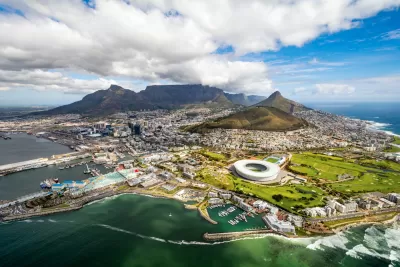
A study of water use in Cape Town, South Africa found that “ the richest people used 50 times more water than the poorest,” driving the city’s water crisis, which reached an extreme in 2018 with the Day Zero crisis. In Cape Town, the study’s authors concluded that 14 percent of the city’s population used 51 percent of water, writes Damian Carrington in The Guardian.
The researchers say other major world cities face a similar challenge. “In March, a report by the Global Commission on the Economics of Water concluded that the world faces an imminent water crisis, with demand expected to outstrip supply by 40% by 2030.”
The report predicts that the gap in access to water between the rich and the poor will continue to widen as water scarcity deepens. “The scientists said failing to account for social inequality in a water crisis often led to technocratic solutions that simply reproduced the uneven and unsustainable water use patterns that contributed to the water crisis in the first place.”
Read the full story: Swimming pools of the rich driving city water crises, study says

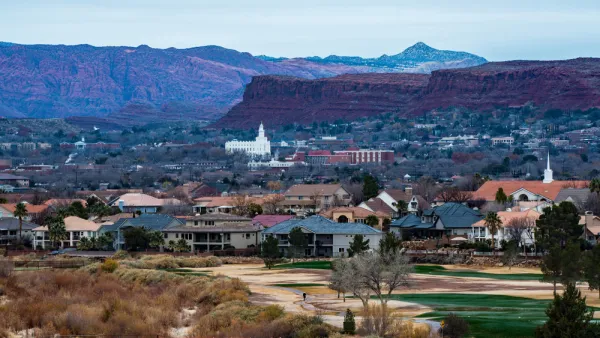
Can Southwest Utah’s Water Supply Handle its Explosive Growth?
A remote corner of the state is the nation’s fastest-growing metro area, but concerns about water supplies across the Southwest signal an uncertain future.
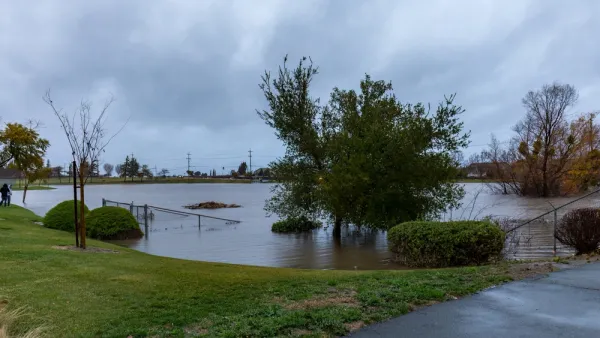
California’s Reservoirs are Filling Up, but For How Long?
Recent storms are bringing plenty of water to parched parts of California, but scientists warn the relief won’t be a long-term solution to longer, drier periods.
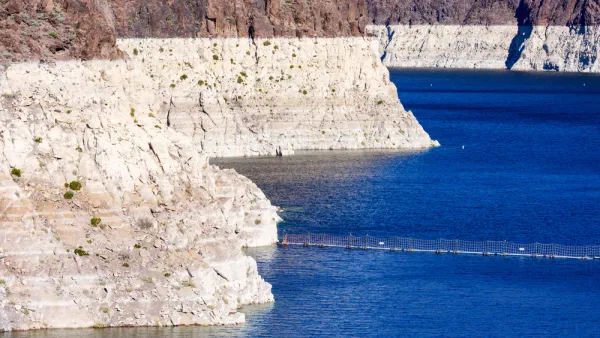
Colorado River Water Crisis Deepens
The states that rely on the Colorado’s water must make drastic cuts in water usage to maintain use of the West’s most important—and most threatened—water source.

Planetizen Federal Action Tracker
A weekly monitor of how Trump’s orders and actions are impacting planners and planning in America.

The state-sanctioned urbicide of Austin
People don’t kill cities. Freeways do.

US to reduce Colorado River water deliveries to Mexico
A new Colorado Treaty amendment reduces Mexico’s Colorado River water allocation by 250,000 acre feet.

Nation's most wind-powered state turns to coal as data centers increase energy demand
For the first time in decades, Iowa has increased its generation of coal power.

NYC cools commuters with city's first rain garden above a bus stop
New York City officials say the plants in the rain garden can absorb 16 gallons of rainwater during heavy storms.

Brightline West’s future may rely on $6 billion federal loan
The company has until Nov. 2 to make a $400 million equity investment into its proposed high-speed rail line.

FREE Course: Walkable City 1: Why Walkability?
After describing his path towards focusing on walkability as the essence of good planning, Jeff Speck marches through his five principal reasons for making more walkable places.
Reinventing Malls: Planning Alchemy—Turning Gray Fields Into Gold
The course focuses on the opportunities and imperatives that shape reinvention of mall sites.

Greater Baltimore Committee
Eagle County Government
Harvard University Graduate School of Design
The Architects Foundation
University of Cincinnati Online
The Pocatello Development Authority
The Urban Renewal Agency of the City of Pocatello
Journal of the American Planning Association