The “Our Missoula Development Guide” is getting an update as the Montana deals with the contemporary pressures of population growth and gentrification.



The city of Missoula is updating its growth policy and zoning code with goals to relax constraints of housing production while mitigating gentrification and rising housing costs.
According to a recent article by Dominic Vitiello, the city is currently underway with the second phase of a six-phase process to complete the update. “The first step from officials and planners was a community launch phase aimed at informing and educating the public about the “Our Missoula” project,” reports Vitiello. “Phase two is about defining the problem. That means identifying how codes and policies fall short in addressing equity and community needs.”
Jamin Kimmel, an urban planner for Cascadia Partners, is quoted in the article discussing the need to loosen restrictions on housing production in the city. Kimmel describes the city’s current zoning as a detriment to housing affordability by allowing large, expensive homes in a few neighborhoods while concentrating most development in low-income neighborhoods at risk of gentrification and displacement.
More context on Montana's housing crisis and efforts to mitigate it here.
Read the full story: Missoula officials look to update land, zoning policies

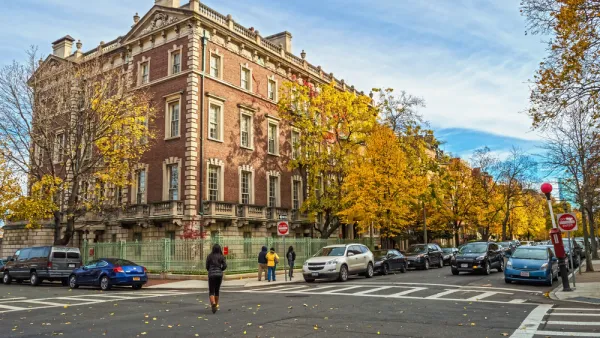
Boston to Require Fair Housing Review for New Developments
The Boston Zoning Code is one of the first in the nation to Affirmatively Furthering Fair Housing.
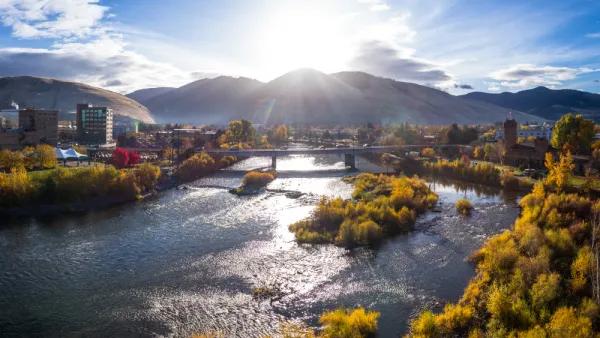
New 'Design Excellence Overlay' Aims to Inspire New Development in Missoula
The city of Missoula professes a strategy of "focusing inward" when it comes to growth and development. A new 'Design Excellence Overlay' will help achieve more goals toward that strategy in the city's downtown.
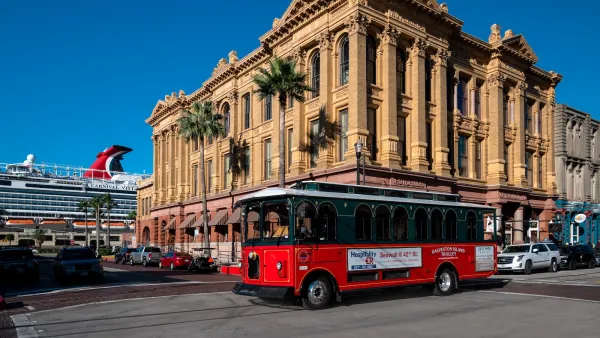
A Historic Texas Beach Town Faces Existential Growth Questions
Galveston, Texas is growing — and so are questions about its land use strategy.

Planetizen Federal Action Tracker
A weekly monitor of how Trump’s orders and actions are impacting planners and planning in America.

Northwest rail fans eager for Sept. 30 debut of Amtrak’s Airo fleet
Get ready for that new train smell and more seats. But they won’t go faster or run more frequently on the Cascades route in Washington and Oregon.

Trump is considering data centers on 6 states' public land — some state officials say they had no idea
If the administration approves the proposed projects, data center and data center-related developments will cover 17,600 acres of public land.

After decades of planning, Sacramento gains new light rail station
Trains will arrive every 15 minutes during peak hours and every 30 minutes during non-peak hours.

Massive tunnel-boring machine breaks ground on Gateway Project
The Trump administration revoked funding for the project in October 2025, and then restored it earlier this year.

Airo trainsets begin service on Amtrak Cascades route
The trains feature panoramic windows, complementary wifi and over 300 seats per train set.

FREE Course: Walkable City 1: Why Walkability?
After describing his path towards focusing on walkability as the essence of good planning, Jeff Speck marches through his five principal reasons for making more walkable places.
Reinventing Malls: Planning Alchemy—Turning Gray Fields Into Gold
The course focuses on the opportunities and imperatives that shape reinvention of mall sites.

City of Thousand Oaks
City of Wisconsin Rapids
Harvard University Graduate School of Design
The Architects Foundation
University of Cincinnati Online
Northern Illinois Transit Authority (NITA)
The Pocatello Development Authority
The Urban Renewal Agency of the City of Pocatello