An article by the L.A. Times earlier this week has raised the temperature of the debate about drug users and crime on rail transit. Concerns about public safety on transit are a common symptom of post-pandemic transit around the country.


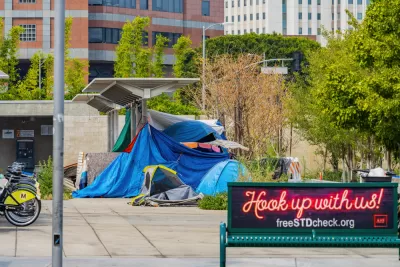
“Since January, 22 people have died on Metro buses and trains, mostly from suspected overdoses — more people than all of 2022. Serious crimes — such as robbery, rape and aggravated assault — soared 24% last year compared with the previous,” according to an article by Rachel Uranga for the Los Angeles Times.
The article has been the talk of social media all week, with advocates and public officials weighing in on either side of the issue. The article suggests that ridership on the Los Angeles County Metropolitan Transportation Authority (Metro) is suffering as a result of the perceived public safety risks on the system—particularly on the system’s rail lines.
Commuters have abandoned large swaths of the Metro train system. Even before the pandemic, ridership in the region was never as high as other big-city rail systems. For January, ridership on the Gold Line was 30% of the pre-pandemic levels, and the Red Line was 56% of them.
Eventually, the article discusses the Ambassador Program, launched by metro at the beginning of March after being announced in June 2022:
In response to such concerns, transit officials committed $122 million over the last year trying to make the system — composed of 105 rail stations and more than 12,000 bus stops — feel safer by placing 300 unarmed “ambassadors” to report crimes and help passengers. It’s part of what officials like to tout as a “multilayered” approach to improving a system that’s become emptier and more dangerous over recent years — even as billions have been sunk into expansion of the rail lines.
The article also provides details about the fentanyl crisis in Los Angeles and the ongoing debate about how best to react. In the meantime, transit is in the midst of a crisis of multiple dimensions—with ridership, funding, policing, operator shortages, and public perception, just to name a few.
FULL STORY: L.A. riders bail on Metro trains amid ‘horror’ of deadly drug overdoses, crime


A Transit Ridership Role Reversal in California
Since the outset of the pandemic, the capital of car-oriented sprawl in California has become the king of public transit. Looking for lessons about the future of public transit in the United States? Look to San Francisco and Los Angeles.
Los Angeles Transit Ridership Grew in 2023
Metro attributes the growth to new destinations, added security, and a streamlined train system.
BART’s Credit Rating Dinged
U.S. public transit agencies haven’t yet seen the bottom of a pandemic-induced fiscal crisis.

Planetizen Federal Action Tracker
A weekly monitor of how Trump’s orders and actions are impacting planners and planning in America.

The state-sanctioned urbicide of Austin
People don’t kill cities. Freeways do.

US to reduce Colorado River water deliveries to Mexico
A new Colorado Treaty amendment reduces Mexico’s Colorado River water allocation by 250,000 acre feet.

5 New England states march closer to 800 megawatt wind energy project
Securing federal approval for the project may be complicated under the Trump administration, which has historically been hostile towards domestic wind power.

Baltimore to break ground on $50 million Transit Priority Project
The project will bring faster bus trips, safer streets and better bike connections to Baltimore.

Airbnb launches $250 million 'last-dollar financing' housing accelerator, makes first investment in Austin
The company will put $6.4 million towards affordable housing development in Texas’ capital.

FREE Course: Walkable City 1: Why Walkability?
After describing his path towards focusing on walkability as the essence of good planning, Jeff Speck marches through his five principal reasons for making more walkable places.
Reinventing Malls: Planning Alchemy—Turning Gray Fields Into Gold
The course focuses on the opportunities and imperatives that shape reinvention of mall sites.

Eagle County Government
Harvard University Graduate School of Design
Nashville Planning Department
The Architects Foundation
University of Cincinnati Online
The Pocatello Development Authority
The Urban Renewal Agency of the City of Pocatello
Journal of the American Planning Association