Hundreds of residential and commercial buildings in the San Francisco Bay Area are vacant, waiting for electric connections from PG&E.


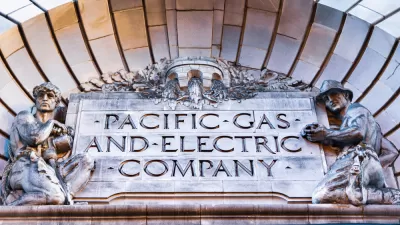
Writing in the San Francisco Chronicle, Dustin Gardiner and Julie Johnson reveal that “Hundreds of newly constructed apartment buildings and businesses in Northern California are sitting empty at any given time because the projects must wait on one entity, Pacific Gas and Electric Co., to turn on the lights.”
According to housing advocates and developers, the utility has become even slower than normal in recent years, preventing hundreds of families and businesses from purchasing and occupying new buildings. “There were 319 commercial and multi-family buildings waiting for PG&E to turn on power as of late February, according to PG&E data obtained by state Sen. Scott Wiener’s office. Of those, 134 buildings had been waiting for more than two months and 95 had been waiting for more than three months.” In rural areas, the wait can take years.
On Monday, State Senator Scott Wiener (D-San Francisco) introduced a bill aimed at holding PG&E accountable and speeding up the interconnection process. The bill, SB 83, would require investor-owned utilities to complete the process within eight weeks or provide financial compensation. San Francisco is building a case to take over PG&E infrastructure in the city and create its own utility.
This kind of delay isn’t unique to the Bay Area, or to PG&E, Gardiner and Johnson note, and rural areas face some of the longest waits. This reflects in the frustration of state lawmakers, who have proposed six measures to address the interconnection delay this year.
Read the full story: New Northern California housing often sits empty, waiting for PG&E to turn on the lights

The High Cost of Curbside Electric Vehicle Charging
There's nothing like the convenience of charging one's electric vehicle at home, assuming you have a garage, driveway, or your apartment building has a charger. California cities and utilities are working to increase EV infrastructure on all fronts.
The High Cost of Burying Power Lines
With speculation that downed power lines and exploding transformers may have caused California's most deadly and destructive wildfires, many question why utility companies don't bury these lines through fire-prone areas.
As prices skyrocket, San Francisco Mayor declares rent emergency
Landlords in San Francisco have initiated over 2,400 evictions since January, putting the city on track to see more evictions this year than during any year in the past decade.

Planetizen Federal Action Tracker
A weekly monitor of how Trump’s orders and actions are impacting planners and planning in America.

The state-sanctioned urbicide of Austin
People don’t kill cities. Freeways do.

US to reduce Colorado River water deliveries to Mexico
A new Colorado Treaty amendment reduces Mexico’s Colorado River water allocation by 250,000 acre feet.

Nation's most wind-powered state turns to coal as data centers increase energy demand
For the first time in decades, Iowa has increased its generation of coal power.

NYC cools commuters with city's first rain garden above a bus stop
New York City officials say the plants in the rain garden can absorb 16 gallons of rainwater during heavy storms.

Brightline West’s future may rely on $6 billion federal loan
The company has until Nov. 2 to make a $400 million equity investment into its proposed high-speed rail line.

FREE Course: Walkable City 1: Why Walkability?
After describing his path towards focusing on walkability as the essence of good planning, Jeff Speck marches through his five principal reasons for making more walkable places.
Reinventing Malls: Planning Alchemy—Turning Gray Fields Into Gold
The course focuses on the opportunities and imperatives that shape reinvention of mall sites.

Greater Baltimore Committee
Eagle County Government
Harvard University Graduate School of Design
The Architects Foundation
University of Cincinnati Online
The Pocatello Development Authority
The Urban Renewal Agency of the City of Pocatello
Journal of the American Planning Association