The Wildlife Conservation Board (WCB) just approved approximately $51.83 million in grants to help restore and protect fish and wildlife habitat throughout California.


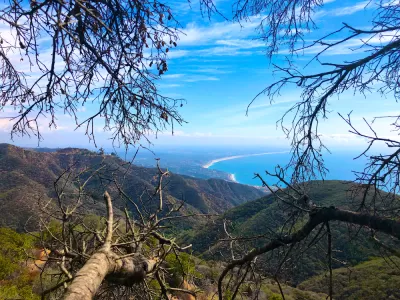
California's Wildlife Conservation Board (WCB) was created in 1947 to administer a capital outlay program for wildlife conservation and related public recreation. The primary responsibilities of WCB are to select, authorize and allocate funds for the purchase of land and waters suitable for recreation purposes and the preservation, protection and restoration of wildlife habitat. WCB approves and funds projects that set aside lands within California for such purposes, through acquisition or other means, to meet these objectives.
At its February 16, 2023 meeting, the WCB approved roughly $52 million in grants to help restore and protect fish and wildlife habitat throughout California. Some of the 25 approved projects will benefit fish and wildlife, including some endangered species, while others will provide public access to important natural resources.
A few of the funded projects are:
- An $11 million grant to Save the Redwoods League for a cooperative project with the National Park Service, California Department of Parks and Recreation (State Parks), and California Department of Forestry and Fire Protection to enhance forest health and reduce hazardous fuels through selective thinning on 1,000 acres of mixed conifer forest and four miles of road removal in Redwood National and State Parks in Humboldt and Del Norte counties.
- A $4.9 million grant to the Resource Conservation District of the Santa Monica Mountains for a cooperative planning project with California Department of Fish and Wildlife (CDFW), State Coastal Conservancy, State Parks, and Caltrans to develop the technical studies, environmental review and outreach necessary to restore the Topanga Lagoon located within the third largest watershed that drains into the Santa Monica Bay and maintains a natural hydrologic regime that supports three native fish species and over 20 native amphibians, including a population of endangered tidewater goby and Southern California steelhead in Los Angeles County.
- A $4.3 million grant augmentation to the Ventura County Watershed Protection District for a planning project that will complete final design plans for Matilija Dam removal and for three downstream levee construction and rehabilitation projects, which are essential components to support future restoration of the most productive and resilient spawning and rearing habitat for Southern California steelhead in support of the Matilija Dam Ecosystem Restoration Project located four miles northwest of the city of Ojai in Ventura County.
For more information, please read the source article.
Read the full story: Wildlife Conservation Board Funds Environmental Improvement And Acquisition Projects

Colorado oil and gas land lease on public land could imperil nation's largest elk herd
The federal government approved the largest land lease to oil and gas interests in Colorado history.
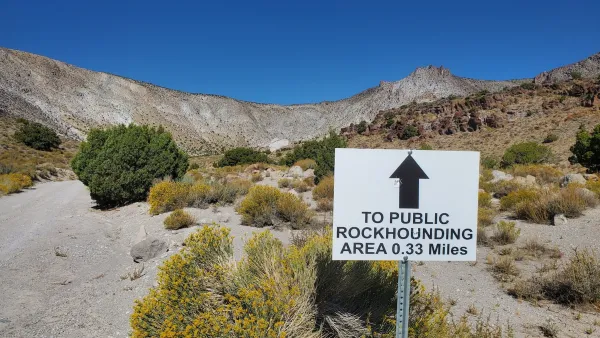
Supreme Court cements access to millions of acres of 'checkerboard' public land
A Tenth Circuit court ruled that private property owners can't prevent people from accessing 'corner-locked' public lands.

September Must-Reads: Top 10 Articles From Last Month
EV drivers can no longer use carpool lanes alone, Bay Area transit is saved — for now — by a $750 million loan, and a Florida commuter rail line loses its state subsidy, jeopardizing its future.

Desperate measures: Advocates weigh draining Lake Powell to fill Colorado River
Draining the reservoir could reduce evaporation losses by a couple hundred thousand acre-feet.

Eastern Nebraska is running out of electricity
Data centers and electrification are straining eastern Nebraska’s grid, throttling economic development.

Move over, LA: St. Louis gears up for Olympics, invests millions in downtown redevelopment
The Missouri city will host the 2028 Olympic soccer group stage and knockout matches.

Bill to overhaul energy permitting clears Senate
The Bipartisan American Affordability and Jobs Act of 2026 still needs to pass the House of Representatives.

MTA sends Dem leaders a wish list to mend Trump’s damages
Requests include exempting new train and bus components from tariffs and increasing transit security funding.

Mass. votes against statewide minimum lot size for single-family homes
Over 2 million residents voted on Question 7; it was decided by just over 30,000 votes.

FREE Course: Walkable City 1: Why Walkability?
After describing his path towards focusing on walkability as the essence of good planning, Jeff Speck marches through his five principal reasons for making more walkable places.
Reinventing Malls: Planning Alchemy—Turning Gray Fields Into Gold
The course focuses on the opportunities and imperatives that shape reinvention of mall sites.

City of Rosemead
Rutgers University, Edward J. Bloustein School of Planning and Public Policy
One Hundred Miles
University of Michigan School for Environment and Sustainability (SEAS)
Hunter College, City University of New York (CUNY)
The Architects Foundation
City of Cambridge
The Pocatello Development Authority
The Urban Renewal Agency of the City of Pocatello