After the city lost its bike share fleet, its former manager pledged to bring it back, and did so under a non-profit model that centers equity for riders and workers.


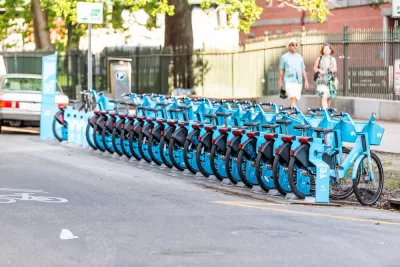
“Of the nearly 300 bike-share and scooter-share programs in North America, more than half are privately owned, a figure that is quickly growing. That leaves most micromobility programs vulnerable to market whims, a precarious position for a mode of transportation upon which many people depend,” explains Gabriela Aoun Angueira in Grist.
When the pandemic threatened to permanently end New Orleans’ bike share system—which was suspended in 2020, then passed on to Lime, whose contract was eventually canceled by the city due to disagreements over the introduction of electric scooters—Geoff Coates, former manager of Blue Bikes, decided to create a community-run model and bring bike share back to the city.
Coates reorganized under a new nonprofit called Blue Krewe, which secured funding from prior bike share sponsors Blue Cross and Blue Shield and the Greater New Orleans Foundation, and relaunched a 500-bike system in September 2021.
According to Aoun Angueira, “Blue Bikes costs less to use now — just 15 cents per minute, or $25 a month for a membership. People who use Medicaid or SNAP benefits pay only $4. The program covers roughly the same area as before, but Blue Krewe has a review process to ensure bikes are distributed equitably.” Blue Krewe also employs full-time workers rather than using the gig economy model.
The city’s newest climate action plan calls for expanding the system to 2,000 bikes as part of its effort to cut vehicle trips in half by 2030.
Read the full story: How to build a better bike-share program

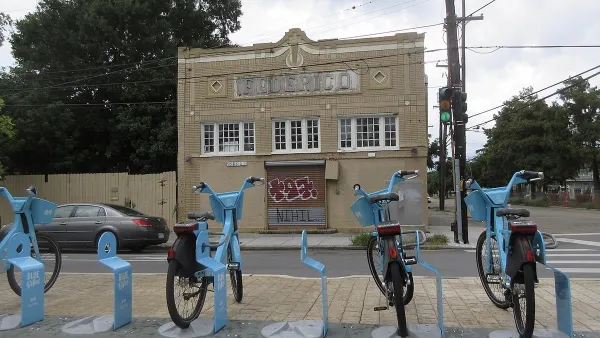
New Orleans Bike Share Celebrates 300,000 Rides
The city revived its bike share system under a community-run model in 2021.
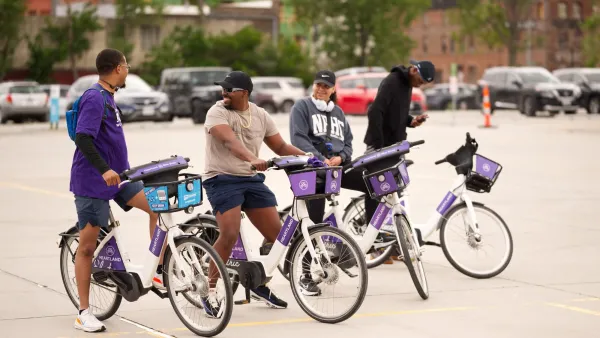
Omaha's 400 shared e-bikes are now free to all residents
Before eliminating fares for locals, the Heartland system only recovered 10%-15% of its operating costs through fare revenue.
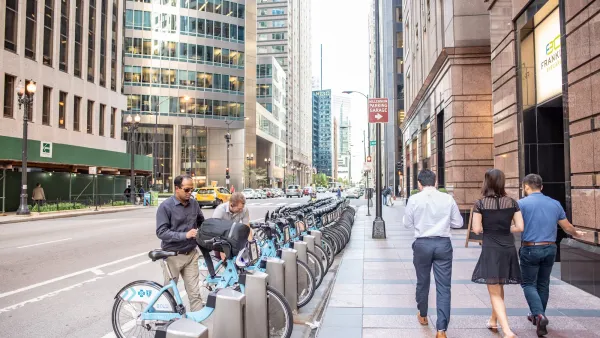
Chicago to Add or Upgrade 200 Bike Share Stations
The Divvy bike share system saw its highest ridership ever in 2025 with 6.8 million trips.

Planetizen Federal Action Tracker
A weekly monitor of how Trump’s orders and actions are impacting planners and planning in America.

California plans to bury El Niño’s downpour
If the state plays its cards right, it may be able to store a billion acre-feet of El Niño’s water in aquifers.

Desperate measures: Advocates weigh draining Lake Powell to fill Colorado River
Draining the reservoir could reduce evaporation losses by a couple hundred thousand acre-feet.

California city breaks ground on transit connector
The project includes three mobility hubs and a pedestrian bridge.

After public outcry, Massachusetts city releases housing development tracker
Cambridge’s tracker currently shows 250 housing projects in various stages of development.

40 years after approval, Chicago breaks ground on new park
The park honors Jean Baptiste Point du Sable, the city’s first permanent non-native settler.

FREE Course: Walkable City 1: Why Walkability?
After describing his path towards focusing on walkability as the essence of good planning, Jeff Speck marches through his five principal reasons for making more walkable places.
Reinventing Malls: Planning Alchemy—Turning Gray Fields Into Gold
The course focuses on the opportunities and imperatives that shape reinvention of mall sites.

City of Rosemead
Rutgers University, Edward J. Bloustein School of Planning and Public Policy
One Hundred Miles
Hunter College, City University of New York (CUNY)
The Architects Foundation
University of Cincinnati Online
City of Cambridge
Montrose County
The Pocatello Development Authority