A recent court ruling could turn the tide against a roadway expansion plan that threatens to displace homes and businesses and that locals say was pushed through with little transparency or community input.



A planned turnpike expansion project has prompted several lawsuits in Oklahoma, where local residents say the Oklahoma Turnpike Authority (OTA) acted without transparency when developing the proposal. Asia Mieleszko, writing in Strong Towns, describes the legal battle.
The saga began in 2021, when ODOT announced vague plans for a major long-range infrastructure plan. Then, “On February 22 [2022], the residents of Oklahoma, Cleveland, McClain, Osage, and Tulsa counties were formally, for the first time, introduced to the details of a $5 billion, 15-year turnpike expansion project whose trajectory seemed inevitable and whose route would devastate hundreds of homes, businesses, and natural areas.”
According to Mieleszko, “Named ACCESS Oklahoma, the plan involves widening four existing turnpikes, installing several new alignments, and constructing new access points for those alignments. Aspects of the project require expropriating businesses, homes, and farmland through eminent domain affecting five Oklahoma counties.”
The plaintiffs claim they weren’t given adequate notification about the project’s scope, with some finding out about the proposed route and the potential displacement of their homes or businesses through local newspapers. On December 1, 2022, a county judge “ruled that the OTA “willfully violated” the state’s Open Meetings Act, a decision supported by troubling evidence that emerged throughout the legal process.”
The most recent court ruling sets the project and OTA “back at square one,” with another Supreme Court case also challenging the legality of the venture.
Read the full story: Ruling: Oklahoma Turnpike Authority “Willfully” Misled Public to Force $5 Billion Expansion Project

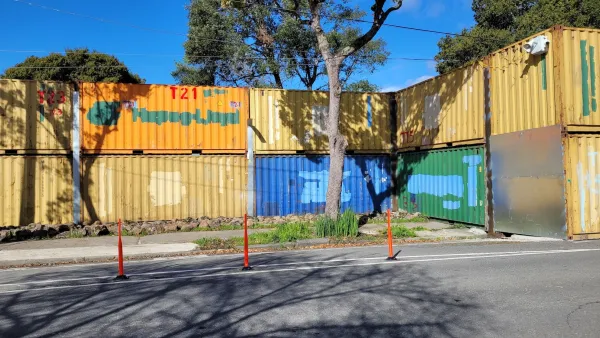
Berkeley promised to build supportive housing in People's Park. Where is it?
More than two years after People's Park was cordoned off, there is no word on a timeline for a promised affordable housing project.
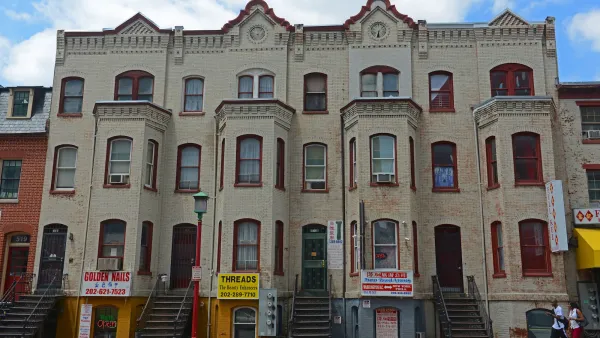
Is this the first wave of de-gentrification?
Valencia, Temescal, H Street and the fickle fortunes of the gentrified neighborhood.
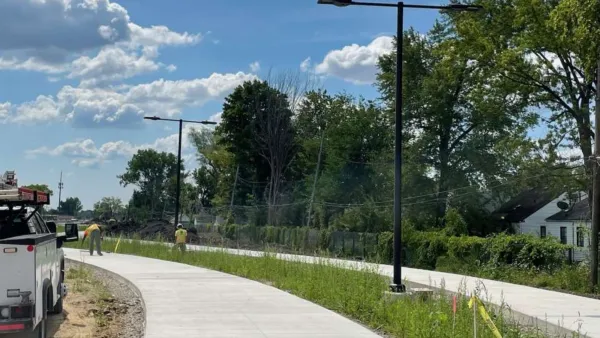
Detroit greenway brings revival — and fears of displacement
The planned Joe Louis Greenway is already bringing change to the neighborhoods near it.

Planetizen Federal Action Tracker
A weekly monitor of how Trump’s orders and actions are impacting planners and planning in America.

The state-sanctioned urbicide of Austin
People don’t kill cities. Freeways do.

US to reduce Colorado River water deliveries to Mexico
A new Colorado Treaty amendment reduces Mexico’s Colorado River water allocation by 250,000 acre feet.

Nation's most wind-powered state turns to coal as data centers increase energy demand
For the first time in decades, Iowa has increased its generation of coal power.

NYC cools commuters with city's first rain garden above a bus stop
New York City officials say the plants in the rain garden can absorb 16 gallons of rainwater during heavy storms.

Brightline West’s future may rely on $6 billion federal loan
The company has until Nov. 2 to make a $400 million equity investment into its proposed high-speed rail line.

FREE Course: Walkable City 1: Why Walkability?
After describing his path towards focusing on walkability as the essence of good planning, Jeff Speck marches through his five principal reasons for making more walkable places.
Reinventing Malls: Planning Alchemy—Turning Gray Fields Into Gold
The course focuses on the opportunities and imperatives that shape reinvention of mall sites.

Greater Baltimore Committee
Eagle County Government
Harvard University Graduate School of Design
The Architects Foundation
University of Cincinnati Online
The Pocatello Development Authority
The Urban Renewal Agency of the City of Pocatello
Journal of the American Planning Association