A massive climate adaptation planning effort is underway for the docks (and seawalls and landfill) of the San Francisco Bay.


The Port of San Francisco and the U.S. Army Corps of Engineers is undertaking a multi-year effort to study and plan for sea-level rise in San Francisco, where the city's bay shoreline is expected to rise as much as seven feet.
John King reports on the study for the San Francisco Chronicle, including details on the scope of the plan, which plans on a 100-year timeline for 7.5 miles of the shoreline, from Fisherman’s Wharf south to the Hunters Point shipyard. The study is a component of the Port of San Francisco's Waterfront Resilience Program.
"A tentative outline of any plan and its potential costs won’t emerge before next spring. But some ideas that are in the mix — including locks on Mission Creek, and letting industrial land near the southern waterfront revert to natural conditions — hint at how profoundly the city’s relationship to the bay could change in coming decades," according to King.
"To draw up a potential plan, seven different response scenarios must be sorted through by the Army Corps and a half dozen city agencies. The final product would seek to protect inland resources while maintaining or improving public access to the bay," adds King.
As noted in the article, the Port of San Francisco is already working to reinforce the city's shoreline from rising bay waters, with the Embarcadero Seawall Program—another component of the Waterfront Resilience Program.
FULL STORY: S.F.’s plan to protect the city from sea-level rise will ‘set the stage for our future shoreline’

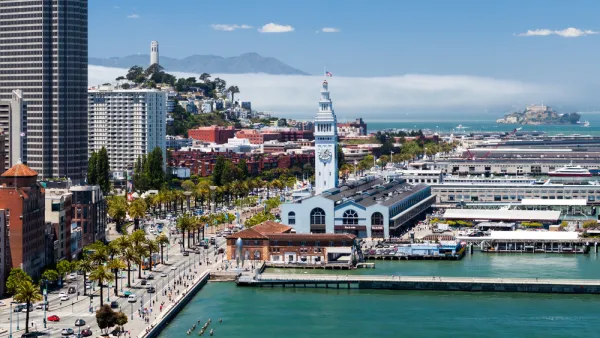
Report: Embarcadero Needs to Rise 7 Feet to Resist Sea-Level Rise
A bombshell report details the adaptation measures that will be necessary to keep San Francisco's Embarcadero high and dry as the climate changes and sea levels rise.
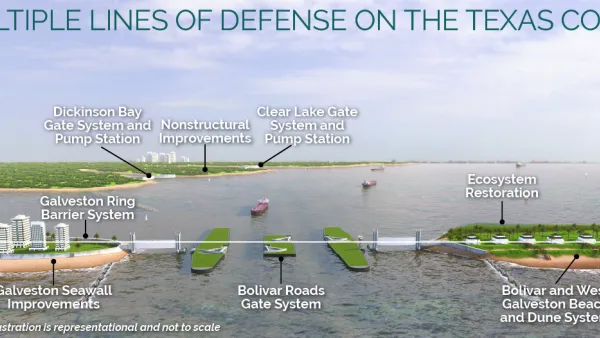
$31 Billion ‘Ike Dike’ Hurricane Protection Project Moving Through Congress
Congress authorized the $31 billion ‘Ike Dike’ sea-level rise adaptation project, along with a laundry list of other water infrastructure projects.
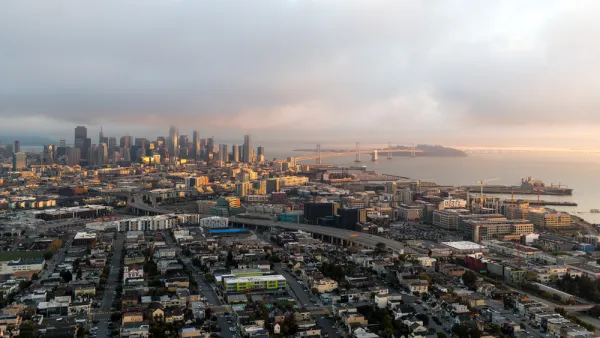
Where the Ground Sinks Under the Weight of Development
New research documents how the weight of buildings causes the ground to sink underneath developments in the San Francisco Bay Area.

Planetizen Federal Action Tracker
A weekly monitor of how Trump’s orders and actions are impacting planners and planning in America.

The state-sanctioned urbicide of Austin
People don’t kill cities. Freeways do.

US to reduce Colorado River water deliveries to Mexico
A new Colorado Treaty amendment reduces Mexico’s Colorado River water allocation by 250,000 acre feet.

Mamdani overhauls NYC's Vision Zero plan with 100 new policy goals
The overhaul aims to reduce traffic deaths and make streets safer for pedestrians, cyclists and drivers through lower speed limits, new safety infrastructure and more.

Amtrak not solely to blame for New Jersey commuter rail's unreliability, report finds
A new study from the Garden State Initiative found that NJ Transit’s budget grew 20% across a 4 year period, but reliability declined significantly over the same period.

EPA erases limits on planet-warming pollution from power plants
Under Monday’s plan, power plants would still have some limits on how much mercury, arsenic and other contaminants they can emit.

FREE Course: Walkable City 1: Why Walkability?
After describing his path towards focusing on walkability as the essence of good planning, Jeff Speck marches through his five principal reasons for making more walkable places.
Reinventing Malls: Planning Alchemy—Turning Gray Fields Into Gold
The course focuses on the opportunities and imperatives that shape reinvention of mall sites.

Eagle County Government
Harvard University Graduate School of Design
Nashville Planning Department
The Architects Foundation
University of Cincinnati Online
The Pocatello Development Authority
The Urban Renewal Agency of the City of Pocatello
Journal of the American Planning Association