A lack of regulations and zoning codes tailored to electric vehicle charging infrastructure is hindering the proliferation of charging stations.


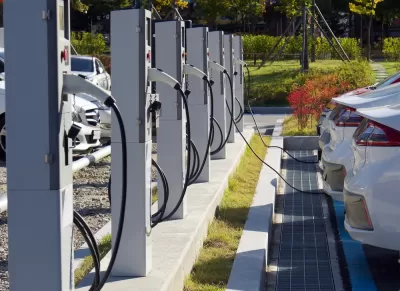
According to a new report from the Fuels Institute Electric Vehicle Council, the widespread proliferation of electric vehicle charging stations is being stymied by outdated or nonexistent state and local policies.
As Dan Zukowski explains in Smart Cities Dive, less than half of 100 cities surveyed in 2021 had ordinances related to EV charging, and “As of 2020, 10 states had adopted installation-related policies and five had operations-related policies.”
Regulations, or the lack thereof, vary widely across the country. In some cities, new construction is required to accommodate EV charging infrastructure. Others have created online portals to streamline permitting, but many providers still wait as long as two years for a permit. “Local policies often include requirements for parking and signage; design, installation and technical issues; EV-ready building codes; and permitting specific to non-residential charging stations. EV-ready parking spaces include a junction box or 240-volt outlet.”
While some cities have made encouraging efforts, the piecemeal approach to EV charging station permitting and regulation leads to long wait times for permits and an overreliance on outdated regulations designed for fuel storage tanks and gas station infrastructure. The report recommends targeted efforts to streamline zoning and planning codes, improve coordination among different levels of government, and create EV-specific regulations and building codes.
FULL STORY: EV charging station rollout hampered by outdated state, city regulations: report

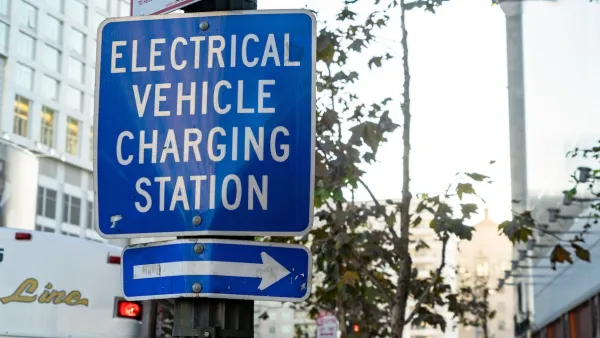
New York State Finances $60M Loan for EV Charging Infrastructure
Gov. Hochul announced the investment just as a federal program for EV charging infrastructure was halted by administration officials.
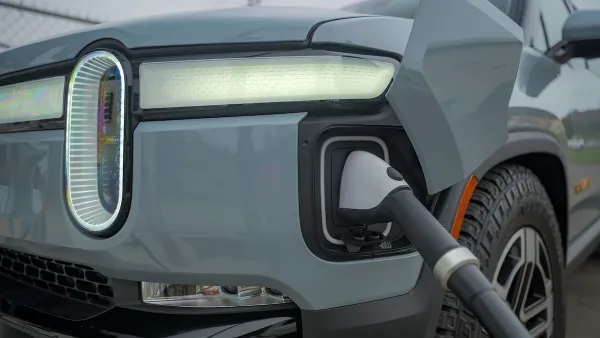
Rivian Joins Movement Toward Universal EV Charging
As more automakers like Tesla, Ford, and Rivian make their charging infrastructure compatible, the shift could lead to the faster development of a nationwide EV charging network.
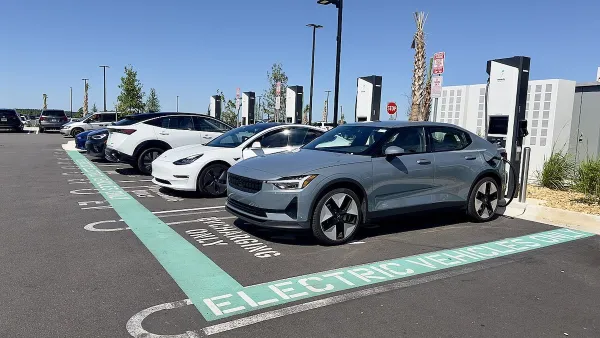
Florida Law Bars Cities From Regulating EV Chargers
Under the new law, cities cannot require charging infrastructure in local codes.

The state-sanctioned urbicide of Austin
People don’t kill cities. Freeways do.

US to reduce Colorado River water deliveries to Mexico
A new Colorado Treaty amendment reduces Mexico’s Colorado River water allocation by 250,000 acre feet.

New Jersey’s second-largest city bans standalone data centers
Jersey City will continue to allow co-location facilities, such as those meant for research institutions that store their own data.

Amtrak not solely to blame for New Jersey commuter rail's unreliability, report finds
A new study from the Garden State Initiative found that NJ Transit’s budget grew 20% across a 4 year period, but reliability declined significantly over the same period.

EPA erases limits on planet-warming pollution from power plants
Under Monday’s plan, power plants would still have some limits on how much mercury, arsenic and other contaminants they can emit.

Phoenix announces new on-demand transit service, more frequent RAPID buses
Both new services will launch in October, and are part of Phoenix's Project Effective Access Solutions for Easing Congestion.

FREE Course: Walkable City 1: Why Walkability?
After describing his path towards focusing on walkability as the essence of good planning, Jeff Speck marches through his five principal reasons for making more walkable places.
Reinventing Malls: Planning Alchemy—Turning Gray Fields Into Gold
The course focuses on the opportunities and imperatives that shape reinvention of mall sites.

Eagle County Government
Harvard University Graduate School of Design
Nashville Planning Department
The Architects Foundation
University of Cincinnati Online
The Pocatello Development Authority
The Urban Renewal Agency of the City of Pocatello
Journal of the American Planning Association