A major zoning amendment was approved by the Cambridge City Council on Monday, October 24, 2022.


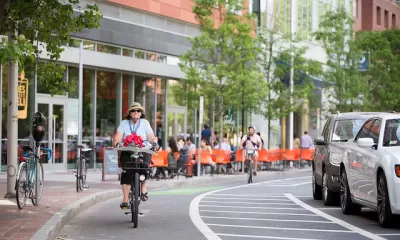
The City Council in Cambridge, Massachusetts voted, 8-1, to eliminate parking requirements citywide yesterday. The council vote amends the city's zoning ordinance by eliminating all minimum parking requirements in the city.
The city, location of multiple universities with top ranked planning programs, becomes the first in Massachusetts to enact such a complete parking reform, reports Elias J. Schisgall for the Crimson. According to the article, the council cited "declining car ownership and the need for more open space and housing construction" as the reasons for the significant policy reform.
The council's sole dissenting vote, Councilor Dennis J. Carlone, is quoted in the article saying that the zoning code amendment would not have the desired effect of reducing traffic, and that the real problem with parking requirements in the city is the use of parking maximums.
The parking reform is the latest example of innovative zoning practices in the city of Cambridge. In 2020, the city also adopted an affordable housing overlay, which allows affordable housing developments with bonus height and density in residential neighborhoods throughout the city, while also streamlining the development approval process for affordable housing projects.
Cambridge is the latest in a string of cities and states to adopt sweeping changes to parking requirements. The state of California most recently enacted statewide parking reforms, in August removing parking requirements for developments near transit stops, following the state of Oregon, which adopted the "Climate-Friendly and Equitable Communities" rule earlier in the summer. Cincinnati eliminated parking requirements in some of the city this year, while Ann Arbor eliminated parking requirements throughout that city. Dallas and Richmond, Virginia are currently considering parking reform.
[Update: Additional coverage of Cambridge's parking reform is available behind the paywall at the Boston Globe.]
FULL STORY: Cambridge Becomes First Massachusetts City to Fully Abolish Parking Minimums


Why Parking Reform Goes Hand in Hand With More Housing
To achieve the full benefits of ‘missing middle housing’ and make way for small-lot construction, cities must rethink parking mandates.

Parking Requirements Removed Near Cleveland Transit Stops
Transit oriented parking reform has arrived in Cleveland.

Phoenix Could Ease Parking Requirements to Support Transit, Affordable Housing
In addition to lower citywide parking requirements on residential properties, a proposed law in Phoenix would lower minimum parking requirements even further for affordable housing developments near the city’s light rail system.

Planetizen Federal Action Tracker
A weekly monitor of how Trump’s orders and actions are impacting planners and planning in America.

The state-sanctioned urbicide of Austin
People don’t kill cities. Freeways do.

US to reduce Colorado River water deliveries to Mexico
A new Colorado Treaty amendment reduces Mexico’s Colorado River water allocation by 250,000 acre feet.

Mamdani overhauls NYC's Vision Zero plan with 100 new policy goals
The overhaul aims to reduce traffic deaths and make streets safer for pedestrians, cyclists and drivers through lower speed limits, new safety infrastructure and more.

Amtrak not solely to blame for New Jersey commuter rail's unreliability, report finds
A new study from the Garden State Initiative found that NJ Transit’s budget grew 20% across a 4 year period, but reliability declined significantly over the same period.

EPA erases limits on planet-warming pollution from power plants
Under Monday’s plan, power plants would still have some limits on how much mercury, arsenic and other contaminants they can emit.

FREE Course: Walkable City 1: Why Walkability?
After describing his path towards focusing on walkability as the essence of good planning, Jeff Speck marches through his five principal reasons for making more walkable places.
Reinventing Malls: Planning Alchemy—Turning Gray Fields Into Gold
The course focuses on the opportunities and imperatives that shape reinvention of mall sites.

Eagle County Government
Harvard University Graduate School of Design
Nashville Planning Department
The Architects Foundation
University of Cincinnati Online
The Pocatello Development Authority
The Urban Renewal Agency of the City of Pocatello
Journal of the American Planning Association