The city hopes its incentives to buyers will help convert the thousands of city-owned vacant lots into housing, green space, or other productive uses.


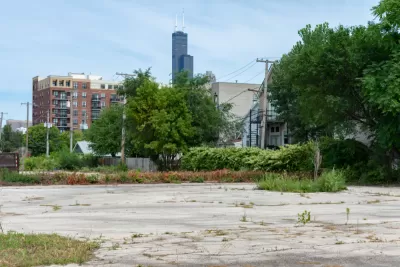
In an effort to deter crime and create more affordable housing units in the city, Chicago is speeding up its process for selling city-owned vacant lots to buyers at a low cost. The city has identified 4,000 lots “clean and ready for sale” out of the 10,000 properties owned by the city, reports Mackenzie Hawkins for Bloomberg CityLab.
“Turning lots into housing and community spaces like gardens, playgrounds and shopping centers is part of Mayor Lori Lightfoot’s strategy to boost investments in the city’s south and west sides,” Hawkins explains. The endeavor is based on similar projects that have led to declines in violence and crime in other cities. “Efforts to restore vacant lots in Philadelphia reduced gun violence by 29%, burglaries by 22%, and nuisance crimes like vandalism and noise complaints by 30%, according to a study of 541 lots by researchers at Columbia University that Chicago officials have referenced when presenting their plan.”
To boost the project, “the city has allocated $87 million in federal and bond funding to vacant lot revitalization under the Chicago Recovery Plan, allowing it to undertake a comprehensive survey of all empty plots.” The lots will primarily be sold for residential construction, but the city will also accept applications for commercial and open space projects.
FULL STORY: Chicago Plans to Speed Up Vacant Lot Sales in Bid to Curb Crime

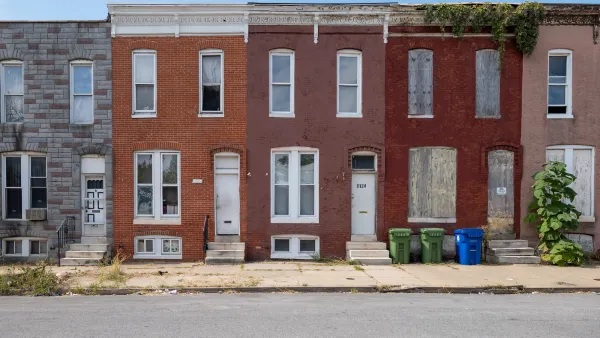
Baltimore Pushes ‘Whole Block’ Redevelopment Plan for Vacant Properties
The city will incentivize developers to take on projects that will renovate or redevelop unused city-owned properties.
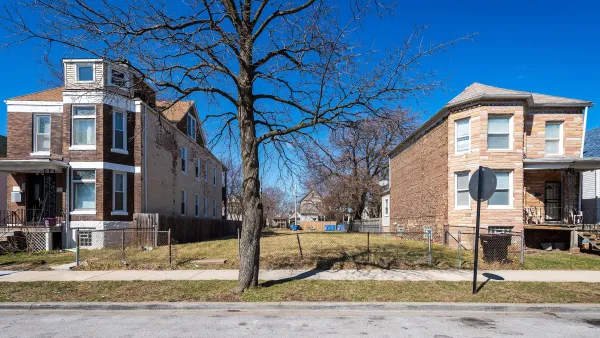
Chicago Breaks Ground on Vacant Lots Sold for $1 to 'Rebuild Middle-class Housing.'
The city’s Missing Middle Infill Housing program supports development in distressed neighborhoods.
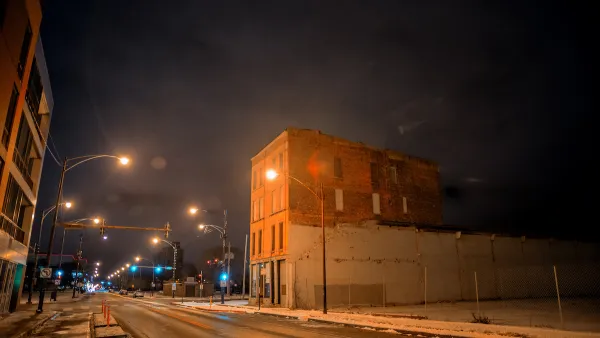
Report: One-Third of Vacant Lots in Chicago Near Transit
Vacant lots pose challenges for the city’s goals of promoting transit-oriented development.

Planetizen Federal Action Tracker
A weekly monitor of how Trump’s orders and actions are impacting planners and planning in America.

The state-sanctioned urbicide of Austin
People don’t kill cities. Freeways do.

US to reduce Colorado River water deliveries to Mexico
A new Colorado Treaty amendment reduces Mexico’s Colorado River water allocation by 250,000 acre feet.

5 New England states march closer to 800 megawatt wind energy project
Securing federal approval for the project may be complicated under the Trump administration, which has historically been hostile towards domestic wind power.

Baltimore to break ground on $50 million Transit Priority Project
The project will bring faster bus trips, safer streets and better bike connections to Baltimore.

Airbnb launches $250 million 'last-dollar financing' housing accelerator, makes first investment in Austin
The company will put $6.4 million towards affordable housing development in Texas’ capital.

FREE Course: Walkable City 1: Why Walkability?
After describing his path towards focusing on walkability as the essence of good planning, Jeff Speck marches through his five principal reasons for making more walkable places.
Reinventing Malls: Planning Alchemy—Turning Gray Fields Into Gold
The course focuses on the opportunities and imperatives that shape reinvention of mall sites.

Eagle County Government
Harvard University Graduate School of Design
Nashville Planning Department
The Architects Foundation
University of Cincinnati Online
The Pocatello Development Authority
The Urban Renewal Agency of the City of Pocatello
Journal of the American Planning Association