One year into a pilot program to reduce encampments by offering housing and services to residents, almost three-quarters of participants have moved into housing.


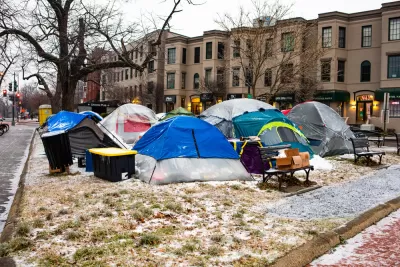
According to an article by Chelsea Cirruzzo in Axios, Washington, D.C.’s Coordinated Assistance and Resources for Encampments (CARE) pilot program, aimed at reducing homelessness in the District, has seen roughly 72 percent of program participants entering into temporary housing leases.
“The program focused on four of the largest encampments — and offered some residents one-year leases with the intention of moving them into permanent housing,” Cirruzzo writes. “Among the four sites, 100 of the 139 eligible people received leases, according to Deputy Mayor for Health and Human Services Wayne Turnage. The remaining 39 either opted out of the pilot, no longer reside at the encampment, or are still working with outreach to find housing.”
Cirruzzo notes the limitations of the program: “Only residents who had been on a list of individuals waiting for housing were offered leases, so the pilot did not account for everyone living within these encampments.”
Advocates for unhoused people have criticized the District’s approach to clearing homeless encampments through forceful sweeps, Cirruzzo notes. “Miriam’s Kitchen and Pathways to Housing DC, the CARE housing contractors, tell Axios that they oppose permanently closing encampments because it can be traumatizing for residents.” Sweeps can also be counterproductive, reducing trust in government entities and making unhoused people more reluctant to accept or seek out services.
FULL STORY: D.C.'s homeless encampment plan, 1 year later

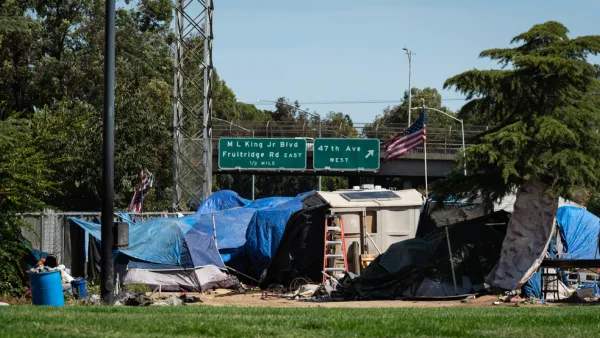
Judge Bars Sacramento Encampment Sweeps
Advocates for unhoused people are calling on the city and county to provide more resources for supportive housing, open more cooling centers, and build more shelter beds.
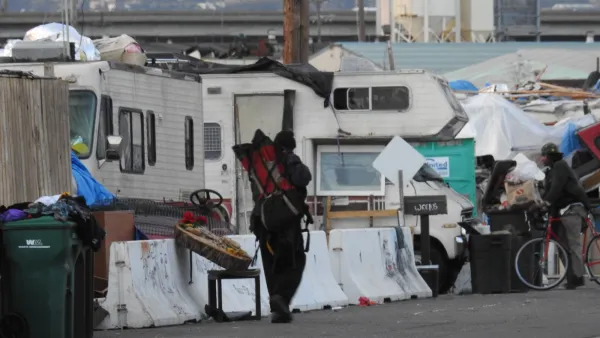
Oakland Mayor, City Council Offer ‘Radically Different’ Plans for Reducing Homelessness
Mayor Barbara Lee wants to reduce encampment sweeps and focus on improving sanitation while city council members want to increase enforcement, particularly against illegally parked RVs.

California Sues Norwalk Over Shelter Moratorium
The state says the city of Norwalk’s prohibition on new shelters and transitional and supportive housing violates anti-discrimination and fair housing laws.

The state-sanctioned urbicide of Austin
People don’t kill cities. Freeways do.

US to reduce Colorado River water deliveries to Mexico
A new Colorado Treaty amendment reduces Mexico’s Colorado River water allocation by 250,000 acre feet.

New Jersey’s second-largest city bans standalone data centers
Jersey City will continue to allow co-location facilities, such as those meant for research institutions that store their own data.

Amtrak not solely to blame for New Jersey commuter rail's unreliability, report finds
A new study from the Garden State Initiative found that NJ Transit’s budget grew 20% across a 4 year period, but reliability declined significantly over the same period.

EPA erases limits on planet-warming pollution from power plants
Under Monday’s plan, power plants would still have some limits on how much mercury, arsenic and other contaminants they can emit.

Phoenix announces new on-demand transit service, more frequent RAPID buses
Both new services will launch in October, and are part of Phoenix's Project Effective Access Solutions for Easing Congestion.

FREE Course: Walkable City 1: Why Walkability?
After describing his path towards focusing on walkability as the essence of good planning, Jeff Speck marches through his five principal reasons for making more walkable places.
Reinventing Malls: Planning Alchemy—Turning Gray Fields Into Gold
The course focuses on the opportunities and imperatives that shape reinvention of mall sites.

Eagle County Government
Harvard University Graduate School of Design
Nashville Planning Department
The Architects Foundation
University of Cincinnati Online
The Pocatello Development Authority
The Urban Renewal Agency of the City of Pocatello
Journal of the American Planning Association