The agency will assess ways to more effectively use its surface parking lots and encourage more mixed-use development near transit hubs.


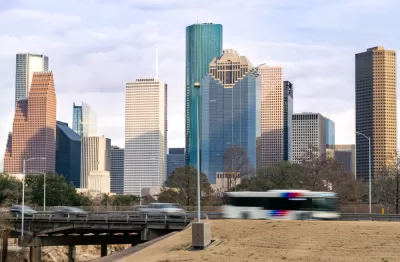
Houston’s Metropolitan Transit Authority is considering developing some of its ‘park and ride’ properties(largely surface parking lots) into housing and commercial space, reports Dug Begley in the Houston Chronicle.
“The [Metro] board in August created a subcommittee tasked with joint development and land use, which met for the first time Sept. 14. Staff, meanwhile, issued a request for information to developers, the first step in seeing if any have ideas for using Metro spaces.” As Begley writes, “If Metro can find private partners to better use its land, or build on it while maintaining its use for transit, the agency can add more value than just concrete lots, and better connect its transit centers to the surrounding area.”
Encouraging development on properties adjacent to transit stations is nothing new for other agencies, such as Dallas Area Rapid Transit, which instituted a transit-oriented development policy in 1989. “Critics, however, point out that for all of DART’s attempts to drive living and retail space toward its 93 miles of light rail lines, its ridership has not benefited. A station in the developed enclave of Las Colinas, aimed at bringing urban design to a suburban setting, is among the agency's lowest in terms of daily riders.”
Elsewhere, TODs have had more success. “Washington Metropolitan Area Transit Authority long has sought out deals that put transit stations into core shopping and residential areas,” Begley points out, and the practice of integrating transit stations with other uses is common in other countries.
Read the full story: Metro eases into land development, aiming to connect transit, housing and jobs

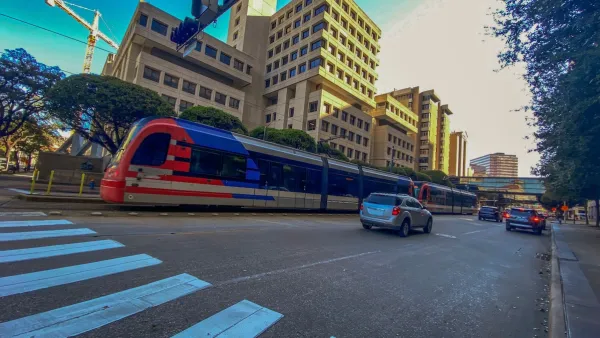
Houston Metro Plan Centers Safety, Accessibility
A new plan from the city’s transit agency focuses on improving the rider experience and boosting safety, but remains uncommitted to previous plans to build new BRT lines.
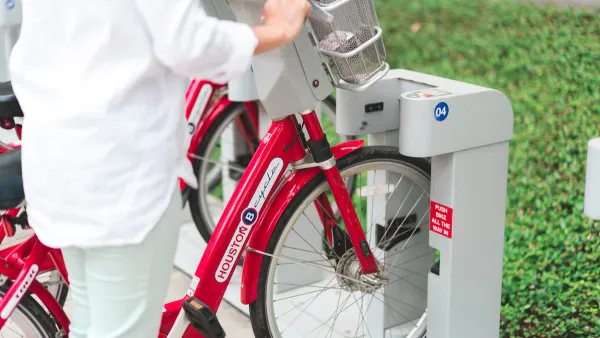
Houston Could Launch New Bike Share
Metro is considering a contract with a new operator that would focus bike share service on major transit hubs.
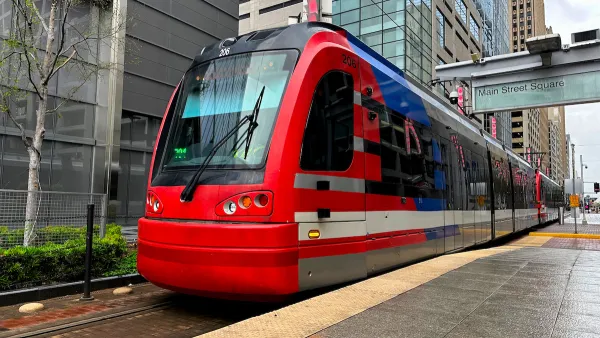
Houston Metro Adds Shuttle Buses, Trains for Beyoncé Concert
Transit surges during major concerts and sporting events are becoming a trend, prompting cities to add specialized transit service to handle extra crowds.

Planetizen Federal Action Tracker
A weekly monitor of how Trump’s orders and actions are impacting planners and planning in America.

California plans to bury El Niño’s downpour
If the state plays its cards right, it may be able to store a billion acre-feet of El Niño’s water in aquifers.

Desperate measures: Advocates weigh draining Lake Powell to fill Colorado River
Draining the reservoir could reduce evaporation losses by a couple hundred thousand acre-feet.

Chicago Avenue bridge construction delays enrages city leaders
The bridge has been closed since 2025. The city originally aimed to re-open it in December, and now expects to finish construction in 2027.

NYC bus network redesign speeds up Queens buses
Rush routes have seen a 4.6% speed increase after the redesign.

California High-Speed Rail Authority picks trainset manufacturer
The California High-Speed Rail Authority aims to start servicing passengers by 2033.

FREE Course: Walkable City 1: Why Walkability?
After describing his path towards focusing on walkability as the essence of good planning, Jeff Speck marches through his five principal reasons for making more walkable places.
Reinventing Malls: Planning Alchemy—Turning Gray Fields Into Gold
The course focuses on the opportunities and imperatives that shape reinvention of mall sites.

City of Rosemead
Rutgers University, Edward J. Bloustein School of Planning and Public Policy
One Hundred Miles
Hunter College, City University of New York (CUNY)
The Architects Foundation
University of Cincinnati Online
City of Cambridge
Montrose County
The Pocatello Development Authority