City records show that Spokane has issued few permits for duplexes, triplexes, and other forms of mid-density housing.


In an analysis published on the City of Spokane’s website, Kevin Freibott notes the conspicuous absence of permits for ‘missing middle housing’ in the city, a housing type which many advocates say could ease the nation’s housing crisis by gently increasing density in residential neighborhoods and providing more opportunities for renters and homeowners.
According to Freibott, “Duplexes, triplexes, fourplexes and townhomes were popular in the first half of the twentieth century but have since become harder to develop, largely due to changes in regulations and policies around housing.” Freibott continues, “Data going back to 2008 shows the City has permitted very few of these housing types in comparison to single-family homes and apartment buildings.”
To promote more construction of missing middle housing, Spokane has developed Shaping Spokane Housing, a toolkit that “seeks to build opportunities and choices in our future land use and zoning decisions.”
“The lack of missing middle housing production illustrates where new or updated policy may increase our capacity for housing and result in some new housing that caters to the diverse needs across our community.”
Read the full story: Permit History Shows Missing Middle Housing Gap
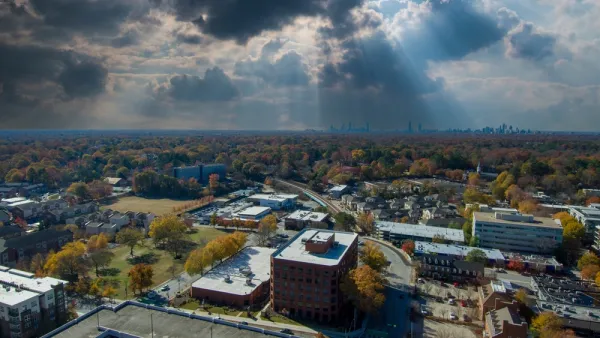
Decatur Moves Closer to Legalizing Duplexes, ‘Missing Middle Housing’
A proposal to permit multifamily housing units in areas previously zoned for single-family homes passed its first hurdle, but requires a second vote to go into effect.
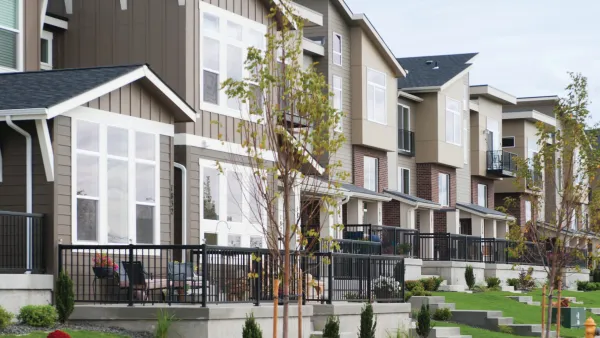
'Missing middle housing' accounted for nearly 20% of Spokane permits in 2025
Recent laws making it easier and less costly to build smaller residential buildings are having their intended effect.

The Trouble With QUIMBY
The idea of “quality urbanism in my back yard” has its uses, but should not be used to limit housing supply.

Desperate measures: Advocates weigh draining Lake Powell to fill Colorado River
Draining the reservoir could reduce evaporation losses by a couple hundred thousand acre-feet.

Eastern Nebraska is running out of electricity
Data centers and electrification are straining eastern Nebraska’s grid, throttling economic development.

Move over, LA: St. Louis gears up for Olympics, invests millions in downtown redevelopment
The Missouri city will host the 2028 Olympic soccer group stage and knockout matches.

Bill to overhaul energy permitting clears Senate
The Bipartisan American Affordability and Jobs Act of 2026 still needs to pass the House of Representatives.

MTA sends Dem leaders a wish list to mend Trump’s damages
Requests include exempting new train and bus components from tariffs and increasing transit security funding.

Mass. votes against statewide minimum lot size for single-family homes
Over 2 million residents voted on Question 7; it was decided by just over 30,000 votes.

FREE Course: Walkable City 1: Why Walkability?
After describing his path towards focusing on walkability as the essence of good planning, Jeff Speck marches through his five principal reasons for making more walkable places.
Reinventing Malls: Planning Alchemy—Turning Gray Fields Into Gold
The course focuses on the opportunities and imperatives that shape reinvention of mall sites.

City of Rosemead
Rutgers University, Edward J. Bloustein School of Planning and Public Policy
One Hundred Miles
University of Michigan School for Environment and Sustainability (SEAS)
Hunter College, City University of New York (CUNY)
The Architects Foundation
City of Cambridge
The Pocatello Development Authority
The Urban Renewal Agency of the City of Pocatello