The county completed the draft environmental impact study for a monorail and people mover planned as part of its rapid transit system.


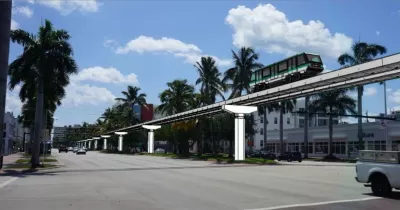
According to an article in The Next Miami, Miami-Dade County has issued the draft environmental study for a rapid transit line that would connect downtown Miami and Miami Beach as part of the Strategic Miami Area Rapid Transit (SMART) Program. “The study covers the Beach Corridor Trunkline from the existing Metromover system in Downtown Miami to 5th Street and Washington Avenue in the City of Miami Beach.”
The project would include a monorail to Miami Beach and a “Metromover-type system” to the city’s Design District.
As noted in the study’s executive summary, “The purpose of this project is to increase the person-throughput to the Beach Corridor’s major origins and destinations via a rapid transit technology. The need for the project is the extensive population growth throughout the study area, resulting in ever-increasing traffic congestion and the demand for enhanced access to the area’s employment centers, facilities and services.”
Critics of the project question the price tag, which ballooned to over $1 billion from the original estimate of $587 million.
FULL STORY: Studies Completed For Miami Beach Rapid Transit, People Mover To Design District

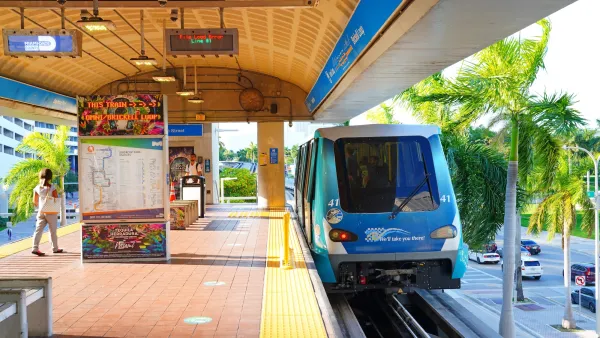
Miami-Dade budget proposes draining rail fund, bus service cuts
The county mayor says the diversion of rail funds is necessary to prevent deeper service cuts.
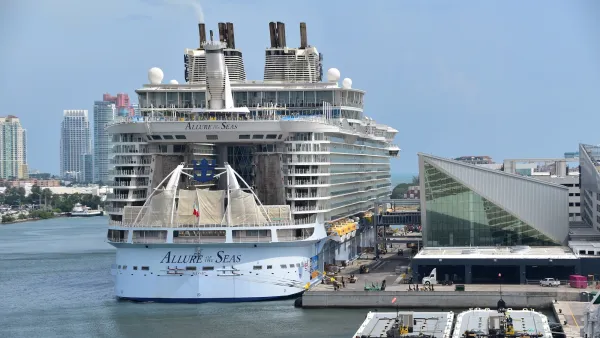
Miami Considers Airport-to-Port Train to Ease Cruise Ship Traffic
Miami’s port is one of the world’s busiest cruise ship terminals.

Miami to Launch America's First Fully Electric Bus Rapid Transit Line
The project, led by Miami-Dade County, will link Dadeland South to Florida City via a 20-mile dedicated lane.

Planetizen Federal Action Tracker
A weekly monitor of how Trump’s orders and actions are impacting planners and planning in America.

The state-sanctioned urbicide of Austin
People don’t kill cities. Freeways do.

US to reduce Colorado River water deliveries to Mexico
A new Colorado Treaty amendment reduces Mexico’s Colorado River water allocation by 250,000 acre feet.

5 New England states march closer to 800 megawatt wind energy project
Securing federal approval for the project may be complicated under the Trump administration, which has historically been hostile towards domestic wind power.

Baltimore to break ground on $50 million Transit Priority Project
The project will bring faster bus trips, safer streets and better bike connections to Baltimore.

Airbnb launches $250 million 'last-dollar financing' housing accelerator, makes first investment in Austin
The company will put $6.4 million towards affordable housing development in Texas’ capital.

FREE Course: Walkable City 1: Why Walkability?
After describing his path towards focusing on walkability as the essence of good planning, Jeff Speck marches through his five principal reasons for making more walkable places.
Reinventing Malls: Planning Alchemy—Turning Gray Fields Into Gold
The course focuses on the opportunities and imperatives that shape reinvention of mall sites.


Eagle County Government
Harvard University Graduate School of Design
Nashville Planning Department
The Architects Foundation
University of Cincinnati Online
The Pocatello Development Authority
The Urban Renewal Agency of the City of Pocatello
Journal of the American Planning Association