The city will use revenue from a 20-cent hike in street parking fees to subsidize transit and bike share passes for low-income residents.


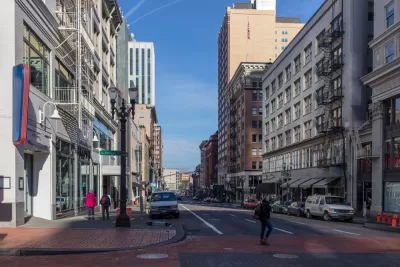
A new 20 cent per spot “climate fee” for street parking in downtown Portland, Oregon is “intended to remind people of ‘the externalized costs of driving (including greenhouse gas emissions, traffic congestion, and use of roadway space),’” writes Helen Huiskes in Willamette Week.
The fee was the brainchild of a city task force, which met for a year to find ways to “address the climate crisis by reducing driving, while also addressing the historic inequities in our transportation system,” says PBOT spokeswoman Hannah Schafer.
The fee is the first part of a package of strategies recommended by the task force. “Schafer says the bureau expects to raise $2 million in the first year, and use that money provide transit passes to people living in affordable housing and give Biketown rides to people receiving social services.” According to the article, “City Hall has not created exemptions for low-income drivers—although the task force suggested it try.”
Read the full story: Parking Fee Hike Will Fund Low-Income Transit Rides

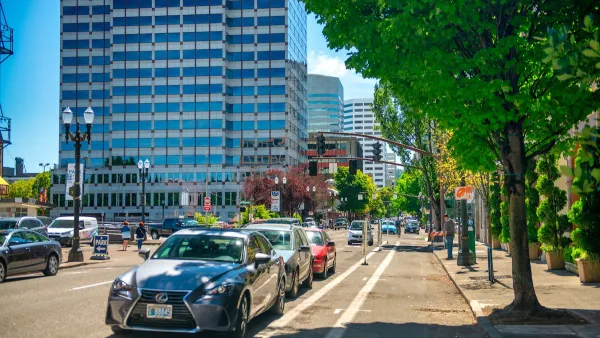
Portland Raises Parking Fees to Pay for Street Maintenance
The city is struggling to bridge a massive budget gap at the Bureau of Transportation, which largely depleted its reserves during the Civd-19 pandemic.

Has Anyone at USDOT Read Donald Shoup?
USDOT employees, who are required to go back to the office, will receive free parking at the agency’s D.C. offices — flying in the face of a growing research body that calls for pricing parking at its real value.
Portland Transportation Bureau Faces ‘Existential’ Cuts
PBOT’s director says the agency’s impending budget shortfall could imperil even basic transportation and infrastructure services.

Planetizen Federal Action Tracker
A weekly monitor of how Trump’s orders and actions are impacting planners and planning in America.

California plans to bury El Niño’s downpour
If the state plays its cards right, it may be able to store a billion acre-feet of El Niño’s water in aquifers.

Chicago breaks ground on $3 billion megadevelopment
The new neighborhood, titled Foundry Park, will one day host 3,700 residences.

California High-Speed Rail Authority CEO resigns after $600,000 scandal
Under Ian Choudri, the authority used taxpayer dollars to fund first class flights and trips to nightclubs.

Want to study the Missouri River? Soon, you may need unanimous approval from 10 states
Legislation would require 10 governors’ permission to study or build projects moving water outside the basin.

Desperate measures: Advocates weigh draining Lake Powell to fill Colorado River
Draining the reservoir could reduce evaporation losses by a couple hundred thousand acre-feet.

FREE Course: Walkable City 1: Why Walkability?
After describing his path towards focusing on walkability as the essence of good planning, Jeff Speck marches through his five principal reasons for making more walkable places.
Reinventing Malls: Planning Alchemy—Turning Gray Fields Into Gold
The course focuses on the opportunities and imperatives that shape reinvention of mall sites.

City of Rosemead
Rutgers University, Edward J. Bloustein School of Planning and Public Policy
One Hundred Miles
Hunter College, City University of New York (CUNY)
The Architects Foundation
University of Cincinnati Online
City of Cambridge
Montrose County
The Pocatello Development Authority