As more vacationers opt for private lake homes or rental cabins, developers in northern Wisconsin are converting motels into badly needed worker housing.



Local employers and investors in northern Wisconsin are converting motels to long-term housing in an effort to improve affordable housing options for local workers and residents. As Erin Gottsacker reports for WXPR, “This conversion from motel to apartment complex will likely become more and more common, says Eric Schoessow, who has worked in real estate in the Northwoods for decades.”
According to Schoessow, “People are getting out of the business because of what’s going on with Vrbo and vacation rentals. It’s taken away from the mom-and-pop motels. So, what do you do with them when you sell them? You have to utilize them for housing and that’s what I think a lot of people can do and should do.”
Local employers are also recognizing the need. “Rick Wilson, the owner of Pukall Lumber Company in Minocqua, says he converted a motel into affordable housing because his employees could not find anywhere to live.” The units were fully rented out within two weeks. As Gottsacker writes, “Because many Northwoods townships are hesitant to build new apartment complexes, [Schoessow] says this is one of the most obvious ways to provide more affordable housing.”
In cities and states around the country, policymakers are looking to hotels as a resource for boosting affordable housing and providing emergency or long-term housing. During the COVID-19 pandemic, California’s Project Roomkey provided thousands of units of temporary housing in hotels and motels to people experiencing homelessness.
FULL STORY: Developers convert vacant motels to apartment units to tackle affordable housing shortage

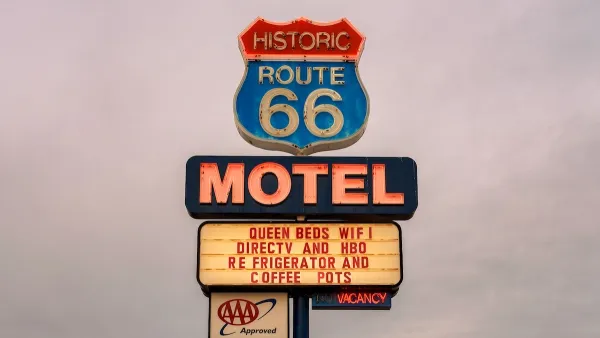
Albuquerque Route 66 Motels Become Affordable Housing
A $4 million city fund is incentivizing developers to breathe new life into derelict midcentury motels.
Naples Motel Could Become 110 Housing Units
A proposal to convert a Super 8 motel to housing was unanimously supported by the city’s planning commission.
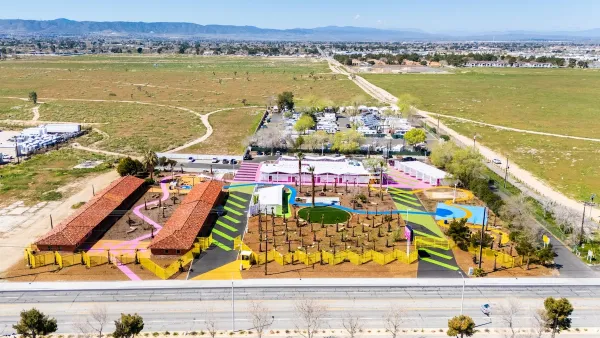
Two California Motels Transformed into Transitional Housing
Unlike most transitional housing, which is aimed at individuals, a project in the Southern California desert caters to families.

Planetizen Federal Action Tracker
A weekly monitor of how Trump’s orders and actions are impacting planners and planning in America.

The state-sanctioned urbicide of Austin
People don’t kill cities. Freeways do.

US to reduce Colorado River water deliveries to Mexico
A new Colorado Treaty amendment reduces Mexico’s Colorado River water allocation by 250,000 acre feet.

Mamdani overhauls NYC's Vision Zero plan with 100 new policy goals
The overhaul aims to reduce traffic deaths and make streets safer for pedestrians, cyclists and drivers through lower speed limits, new safety infrastructure and more.

Amtrak not solely to blame for New Jersey commuter rail's unreliability, report finds
A new study from the Garden State Initiative found that NJ Transit’s budget grew 20% across a 4 year period, but reliability declined significantly over the same period.

EPA erases limits on planet-warming pollution from power plants
Under Monday’s plan, power plants would still have some limits on how much mercury, arsenic and other contaminants they can emit.

FREE Course: Walkable City 1: Why Walkability?
After describing his path towards focusing on walkability as the essence of good planning, Jeff Speck marches through his five principal reasons for making more walkable places.
Reinventing Malls: Planning Alchemy—Turning Gray Fields Into Gold
The course focuses on the opportunities and imperatives that shape reinvention of mall sites.

Eagle County Government
Harvard University Graduate School of Design
Nashville Planning Department
The Architects Foundation
University of Cincinnati Online
The Pocatello Development Authority
The Urban Renewal Agency of the City of Pocatello
Journal of the American Planning Association