Closed and struggling malls around the country are being repurposed as healthcare centers.


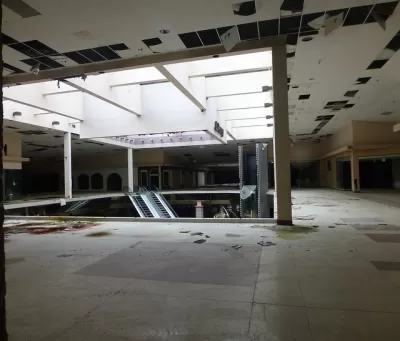
Sprawling suburban malls have fallen on hard times lately. But as Blake Farmer reports, the largely defunct complexes are serving a new function: healthcare. “What big-city health systems need most is something shopping malls have plenty of: space and parking. They offer convenience for patients and practitioners, as well as costing less than expanding an existing hospital campus.”
According to the article, “Nationwide, 32 enclosed malls house health care services in at least part of their footprint, according to a database kept by Ellen Dunham-Jones, a Georgia Tech urban design professor.” Many of these opened during the pandemic, writes Farmer, “but medicine’s reuse of retail space is more than pandemic opportunism, according to a November article in the Harvard Business Review. The three authors suggest the rise of telemedicine and continued push toward outpatient procedures will make malls increasingly attractive locations for health care.”
Meanwhile, “Mall locations remain desirable. Many are even more convenient to dense populations and interstates than when they were built nearly 50 years ago, before surrounding suburbs filled in.” And the demographics make sense, too: “These areas are no longer filled primarily with young families, who first flocked to the planned neighborhoods and shopping centers built in the 1970s.” Now, “The adults are still in the suburbs, but the kids have long since grown,’ Dunham-Jones said. And now those aging parents who remain are ‘pretty heavy-duty health care consumers.’”
FULL STORY: Some struggling shopping malls in the U.S. are being converted into health clinics

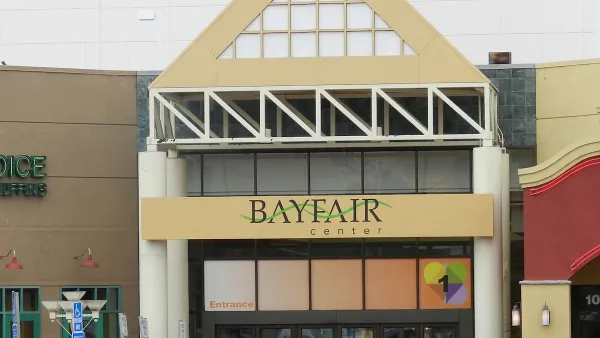
Mall Redevelopment in Silicon Valley
Dead malls across the Bay Area are being transformed into R&D centers, housing, and transportation hubs.
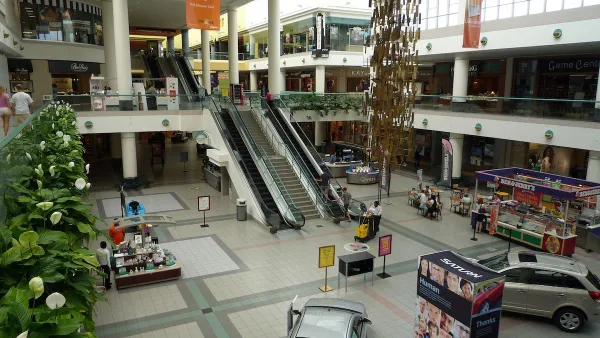
The Mall Is Dead — Long Live the Mall
The American shopping mall may be closer to its original vision than ever.

Can Pickleball Save Dying Malls?
The popular sport is getting backlash for taking over parks and other facilities. Now, the industry is partnering with mall developers to transform old department stores into pickleball courts.

Planetizen Federal Action Tracker
A weekly monitor of how Trump’s orders and actions are impacting planners and planning in America.

The state-sanctioned urbicide of Austin
People don’t kill cities. Freeways do.

US to reduce Colorado River water deliveries to Mexico
A new Colorado Treaty amendment reduces Mexico’s Colorado River water allocation by 250,000 acre feet.

5 New England states march closer to 800 megawatt wind energy project
Securing federal approval for the project may be complicated under the Trump administration, which has historically been hostile towards domestic wind power.

Baltimore to break ground on $50 million Transit Priority Project
The project will bring faster bus trips, safer streets and better bike connections to Baltimore.

Airbnb launches $250 million 'last-dollar financing' housing accelerator, makes first investment in Austin
The company will put $6.4 million towards affordable housing development in Texas’ capital.

FREE Course: Walkable City 1: Why Walkability?
After describing his path towards focusing on walkability as the essence of good planning, Jeff Speck marches through his five principal reasons for making more walkable places.
Reinventing Malls: Planning Alchemy—Turning Gray Fields Into Gold
The course focuses on the opportunities and imperatives that shape reinvention of mall sites.

Eagle County Government
Harvard University Graduate School of Design
Nashville Planning Department
The Architects Foundation
University of Cincinnati Online
The Pocatello Development Authority
The Urban Renewal Agency of the City of Pocatello
Journal of the American Planning Association