Toledo is one of the last corners of Ohio to approve a transit funding sales tax. In effect, voters committed to raise about twice as much as existing property levies currently generate for the Toledo Area Regional Transit Authority.



Toledo-area voters approved a new half-percent sales tax to fund the Toledo Area Regional Transit Authority (TARTA), reports David Patch in a paywalled article for the Toledo Blade.
"With 100 percent of Lucas County precincts reporting, preliminary results showed the Toledo Area Regional Transit Authority proposal to collect a half-percent sales tax throughout the county carrying 54.9 percent of ballots cast, while in Rossford, preliminary final results showed almost exactly 60 percent of voters — 749 to 500 — supporting it," writes Patch.
TARTA officials "credited the sales tax’s success to supporters’ understanding the agency’s need for a more robust revenue stream to enable plans for better service," according to Patch.
The source article [paywall] includes more detail on what TARTA plans to do with the funding generated by the new half-cent sales tax—all currently up for discussion as part of the TARTA Next planning process. The sales tax is expected to generate about $32 million in annual revenue, "more than double the $13.5 million TARTA now receives from its levies," according to Patch. With the passage of the sales tax, the existing levies will be rescinded.
Read the full story: Voters pass TARTA measure with new funding structure [paywall]


Why Gwinnett County Rejected a Transit Tax Again
Coronavirus and a heavy rail project doomed a transit sales tax in Gwinnett County, Georgia, according to this election post-mortem.
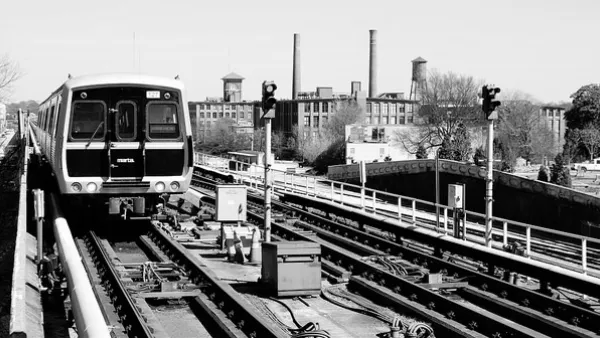
Transit Sales Tax Hinges on Local Control in Suburban Atlanta
Gwinnett County voters living have rejected proposals to pay taxes for the MARTA transit system before, so the latest proposal for a transit sales tax is going to great lengths to prove its local control bonafides.
Transit Funding Decisions Delayed in Cobb County, Georgia
Cobb County is supposed to join a new regional transit authority called The Atl, but it hasn't chosen how to fund its participation yet.

Planetizen Federal Action Tracker
A weekly monitor of how Trump’s orders and actions are impacting planners and planning in America.

California plans to bury El Niño’s downpour
If the state plays its cards right, it may be able to store a billion acre-feet of El Niño’s water in aquifers.

Desperate measures: Advocates weigh draining Lake Powell to fill Colorado River
Draining the reservoir could reduce evaporation losses by a couple hundred thousand acre-feet.

California city breaks ground on transit connector
The project includes three mobility hubs and a pedestrian bridge.

After public outcry, Massachusetts city releases housing development tracker
Cambridge’s tracker currently shows 250 housing projects in various stages of development.

40 years after approval, Chicago breaks ground on new park
The park honors Jean Baptiste Point du Sable, the city’s first permanent non-native settler.

FREE Course: Walkable City 1: Why Walkability?
After describing his path towards focusing on walkability as the essence of good planning, Jeff Speck marches through his five principal reasons for making more walkable places.
Reinventing Malls: Planning Alchemy—Turning Gray Fields Into Gold
The course focuses on the opportunities and imperatives that shape reinvention of mall sites.

City of Rosemead
Rutgers University, Edward J. Bloustein School of Planning and Public Policy
One Hundred Miles
Hunter College, City University of New York (CUNY)
The Architects Foundation
University of Cincinnati Online
City of Cambridge
Montrose County
The Pocatello Development Authority