As ridership revenues drop, more agencies are looking to diversify their income sources by leasing agency-owned land to developers.


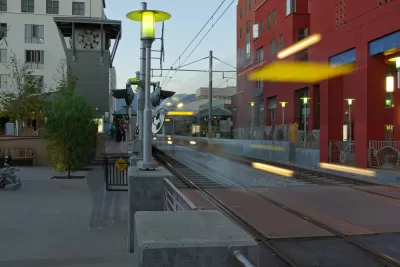
With ridership "plummeting" during the pandemic, cash-strapped transit agencies are turning to leasing real estate to recover lost revenue, reports Jenni Bergal. "Many large transit agencies already have their own real estate departments and for years have been leasing property—often parking lots near rail stations—to development companies," with rent subsidizing operations and maintenance. Encouraging transit-oriented development near stations is "seen as a way not only to create a long-term revenue stream, but also to increase ridership, minimize traffic congestion and help communities by providing jobs and housing, some of it affordable, near transit."
"Agencies have been experimenting with scrapping or reducing fares or adding service to bring back riders and ensure access for disadvantaged communities. During the pandemic, the majority of people who continued to ride buses and trains were essential workers with low incomes, often people of color." The shift toward cheaper or free fares, along with the precipitous fall in ridership caused by the pandemic, has "prompted many transit agencies to look at various ways to diversify their funding beyond relying on fareboxes and federal, state and local dollars."
"[S]ome transit agencies that have gotten into the real estate business are trying to develop affordable housing projects. They often lease to private developers, but sometimes they work with nonprofits, community groups or local governments." Jessie O'Malley Solis, an agency program manager for the Santa Clara Valley Transportation Authority, says "transit-oriented development offers the agency the opportunity to fund normal operations as well as service improvements and enhancements" that will prove solid investments in the system's future.
FULL STORY: Transit Agencies Lease Real Estate to Generate Much-Needed Cash

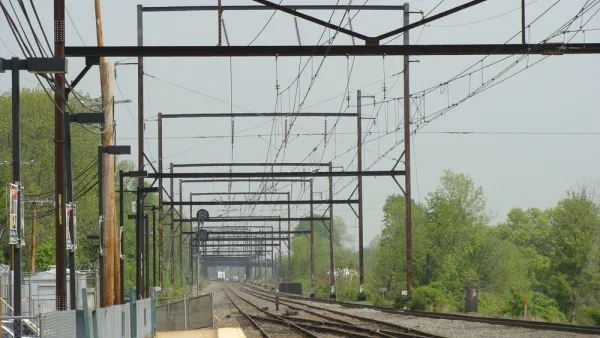
Transit Agencies Look to Land Development to Increase Revenue
With ridership revenue down, agencies seek to diversify their revenue stream by taking a more active role in developing agency-owned land.

LA Metro Opposes TOD Law, Fearing Backlash to Transit Expansion
Metro wants an exemption from California’s new housing law, despite the law’s potential to increase ridership by putting more housing near transit stations.
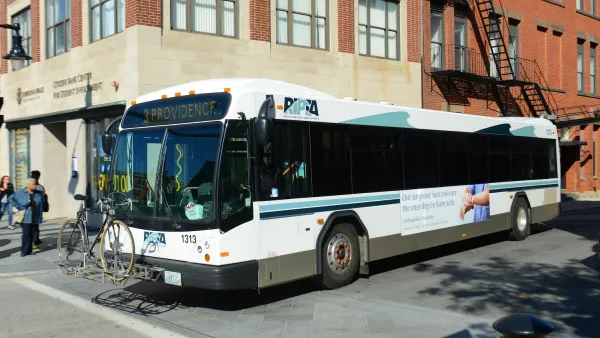
Rhode Island Transit Offers Landlords Free Holiday Transit Passes for Tenants
A pilot program from RIPTA will distribute free monthly passes for December and January.

Planetizen Federal Action Tracker
A weekly monitor of how Trump’s orders and actions are impacting planners and planning in America.

The state-sanctioned urbicide of Austin
People don’t kill cities. Freeways do.

US to reduce Colorado River water deliveries to Mexico
A new Colorado Treaty amendment reduces Mexico’s Colorado River water allocation by 250,000 acre feet.

5 New England states march closer to 800 megawatt wind energy project
Securing federal approval for the project may be complicated under the Trump administration, which has historically been hostile towards domestic wind power.

Baltimore to break ground on $50 million Transit Priority Project
The project will bring faster bus trips, safer streets and better bike connections to Baltimore.

Airbnb launches $250 million 'last-dollar financing' housing accelerator, makes first investment in Austin
The company will put $6.4 million towards affordable housing development in Texas’ capital.

FREE Course: Walkable City 1: Why Walkability?
After describing his path towards focusing on walkability as the essence of good planning, Jeff Speck marches through his five principal reasons for making more walkable places.
Reinventing Malls: Planning Alchemy—Turning Gray Fields Into Gold
The course focuses on the opportunities and imperatives that shape reinvention of mall sites.

Eagle County Government
Harvard University Graduate School of Design
Nashville Planning Department
The Architects Foundation
University of Cincinnati Online
The Pocatello Development Authority
The Urban Renewal Agency of the City of Pocatello
Journal of the American Planning Association