An analysis of searches for walking directions shows dramatic increases in walking in cities across the country.


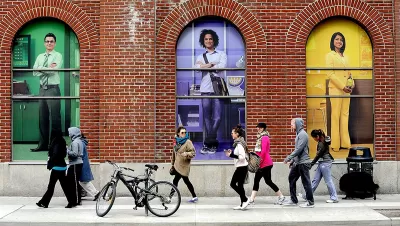
Based on data from Apple's Mobility Report, walking increased during the pandemic in every region of the country, surging 122 percent in the Midwest. As reported by Patrick McGregor, as pandemic restrictions began to wind down, searches for walking directions increased at dramatic rates.
Because public transit puts people in close proximity to others in enclosed spaces, "it’s more appealing, and frankly, healthy, to walk, bike or scoot to your destination rather than crowding on a subway train."
"[R]esidents of Milwaukee and Virginia Beach, Va., are walking more than ever — both reaching highs of 178% and 187% in July, respectively, and far outpacing any other increases in driving anywhere else in the country." Meanwhile, "walking searches in Jacksonville, Fla.; Sacramento, Calif.; and Phoenix are continuing to climb, even after rebounding completely by June of 2020. Those searches are up 70%, 65% and 48%, respectively, compared to January 13, 2020."
In some cities, such as Boston, Austin, Chicago, and New York City, public transit use has also bounced back to above pre-pandemic levels. "Overall, it appears that we’re moving more and more as a nation. And, while this data doesn’t include air travel or hotel bookings, looking for directions is a very strong indicator of traveling — regardless of the means."
Read the full story: People are Choosing to Walk More Than Ever, According to Apple Mobility Trends

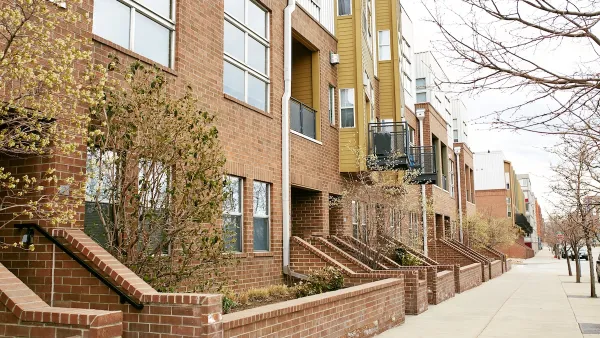
Denver to Shift Sidewalk Repair Work to City, Funded by Property Owners
The city is shifting from a piecemeal approach to sidewalk repairs that charged property owners with doing the work to a more streamlined, city-led process.
When ‘Prioritizing All Modes’ Is a Lie
In many cases, it’s impossible to prioritize the safety of pedestrians and other vulnerable road users without sacrificing some speed.
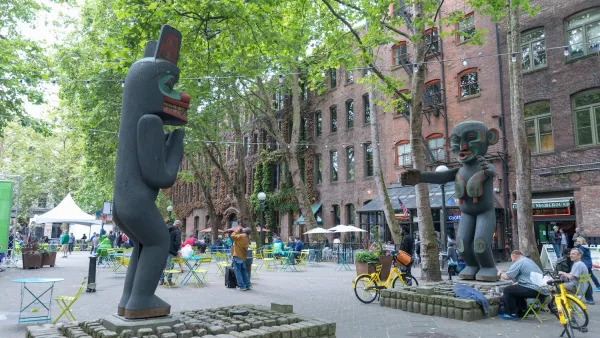
Seattle's Pioneer Square to become pedestrian zone during World Cup
The city will restrict car traffic and street parking in areas around Lumen Field on match days.

Planetizen Federal Action Tracker
A weekly monitor of how Trump’s orders and actions are impacting planners and planning in America.

Northwest rail fans eager for Sept. 30 debut of Amtrak’s Airo fleet
Get ready for that new train smell and more seats. But they won’t go faster or run more frequently on the Cascades route in Washington and Oregon.
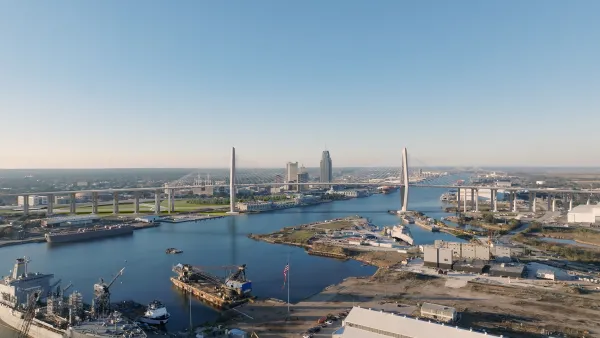
Alabama scores up to $2.5 billion federal loan for largest infrastructure project in state’s history
The Mobile River Bridge and Bayway Project aims to ease congestion at Alabama’s worst bottleneck.

Novel study finds extreme state-by-state disparity in housing construction timelines
The first comprehensive working paper on U.S. construction timelines also found that the permitting process for multi-family projects has slowed nationwide.

California may destroy its beaches trying to save homes from El Niño
Boulders and seawalls can protect homes from waves, but ultimately destroy sandy beaches.

California high-speed rail accomplishes only one legislative goal in 2026
The majority of the agency's failed pitches were never developed into written proposals.

FREE Course: Walkable City 1: Why Walkability?
After describing his path towards focusing on walkability as the essence of good planning, Jeff Speck marches through his five principal reasons for making more walkable places.
Reinventing Malls: Planning Alchemy—Turning Gray Fields Into Gold
The course focuses on the opportunities and imperatives that shape reinvention of mall sites.

City of Thousand Oaks
City of Wisconsin Rapids
Harvard University Graduate School of Design
The Architects Foundation
University of Cincinnati Online
Northern Illinois Transit Authority (NITA)
The Pocatello Development Authority
The Urban Renewal Agency of the City of Pocatello