The Elevation Community Land Trust's unusual ownership structure and strong initial fundraising have given it a solid footing in the Denver area.



Oscar Perry Abello assesses the impact of a unique community land trust helping Denver families get into affordable homes. As Elevation Community Land Trust public partnerships and legal director Tiana Patterson explains, the trust's split ownership structure "is what makes it possible for the land trust to keep the cost of homeownership affordable for you and for the next buyer after you." To qualify for an Elevation home, "your current household income can only be up to a certain amount — up to 80% of area median income, or $78,500 for a household of four in Denver. More importantly, the trust keeps the deed to the land, while extending a 99-year ground lease to you as the owner of the home or a housing unit on that land."
Through this model, "[t]he land trust has sold more than 60 homes since inception in 2017. Elevation Community Land Trust’s goal is to acquire or develop and sell 1,000 homes in Colorado by 2027." David Ogunsanya, vice president of real estate for the land trust, says "[t]he need is great, so we can’t just focus on one thing. There are families that might need a condo just to start out. There are families where a town home might be perfect for them until they move to something else. Some people need single family homes."
Most CLTs focus on housing, with around 20,000 rentals and 15,000 homes represented in the U.S. today. The community land trust model, which dates back to 1969 in Albany, Georgia, "was started by Black civil rights leaders in the 1960s as a direct result of being shut out of the traditional real estate market." Land trusts frequently work with local public agencies to acquire parcels and receive grants. "Unlike most other community land trusts, Elevation Community Land Trust hasn’t had to worry too much about initial funding. It started out in 2017 with $24 million in seed funding from a coalition of local funders, including the Colorado Health Foundation, the Denver Foundation, Bohemian Foundation, and Gary Community Investments, which also served as the incubator for the land trust." Elevation hopes to become self-sufficient once their portfolio reaches 1,000 homes, with each homeowner contributing a $100 monthly fee to the land trust.
FULL STORY: An Unusual Community Land Trust in Colorado Is Making Its Mark

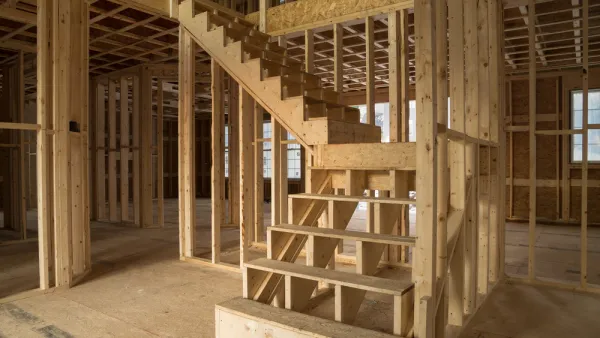
Denver Condo Project Aims for 'Permanent Affordability'
More often the province of rental housing, affordability policies are limited in the for-sale market. A partnership in Denver aims to change that with a mixed-use project including at least 86 condos destined to be "permanently affordable."
Community Land Trusts Offer Relief From High Housing Costs
The nonprofit model is becoming more popular as communities seek ways to reduce housing costs.
Land Trusts Preserve Affordability, but for Whom?
An analysis of buildings bought by the city for a community land trust in Boston reveals that many prior residents were evicted just before the sales.

The state-sanctioned urbicide of Austin
People don’t kill cities. Freeways do.

US to reduce Colorado River water deliveries to Mexico
A new Colorado Treaty amendment reduces Mexico’s Colorado River water allocation by 250,000 acre feet.

New Jersey’s second-largest city bans standalone data centers
Jersey City will continue to allow co-location facilities, such as those meant for research institutions that store their own data.

Amtrak not solely to blame for New Jersey commuter rail's unreliability, report finds
A new study from the Garden State Initiative found that NJ Transit’s budget grew 20% across a 4 year period, but reliability declined significantly over the same period.

EPA erases limits on planet-warming pollution from power plants
Under Monday’s plan, power plants would still have some limits on how much mercury, arsenic and other contaminants they can emit.

Phoenix announces new on-demand transit service, more frequent RAPID buses
Both new services will launch in October, and are part of Phoenix's Project Effective Access Solutions for Easing Congestion.

FREE Course: Walkable City 1: Why Walkability?
After describing his path towards focusing on walkability as the essence of good planning, Jeff Speck marches through his five principal reasons for making more walkable places.
Reinventing Malls: Planning Alchemy—Turning Gray Fields Into Gold
The course focuses on the opportunities and imperatives that shape reinvention of mall sites.

Eagle County Government
Harvard University Graduate School of Design
Nashville Planning Department
The Architects Foundation
University of Cincinnati Online
The Pocatello Development Authority
The Urban Renewal Agency of the City of Pocatello
Journal of the American Planning Association