The safety of Champlain Towers South was compromised to make more room for parking, according to an investigation by the Miami Herald in consultation with four engineers and a general contractor.


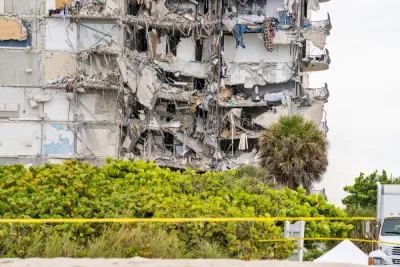
Sarah Blaskey, Aaron Leibowitz, and Bern Cornack report the bombshell findings of a new study into the building conditions that caused the collapse of the Champlain Towers in Surfside, Florida in July.
Champlain Towers South was poorly designed, even for the 1970s when the plans were originally drawn and codes were less rigorous, according to an analysis of building plans, applicable building codes and photos of the debris performed by the Miami Herald in consultation with four engineers and a general contractor.
Most of the column designs were too narrow to safely accommodate the amount of reinforcing steel called for in the plans at the basement and ground floors, especially at the critical areas where the columns connected to the slab, engineers’ calculations based on the building code requirements at the time show.
The column-to-slab connection would have been stronger if the building had been constructed to code, and the narrow columns were built to allow more space for parking, according to the experts consulted by the Herald.
The deck — which sat on skinny columns to maximize parking space below — was barely designed with enough strength to support a pool party, much less the layers of pavers and standing water that loaded it down over the decades, calculations by engineers using figures from the 1970s show.
The article includes more detail on the construction deficiencies and failures to build to code discovered in the analysis. Some of the findings of the report, especially regarding the column-to-slab connection, echo the findings of earlier photo analysis by The New York Times.
Read the full story: Surfside tower was flawed from day one. Designs violated the code, likely worsened collapse
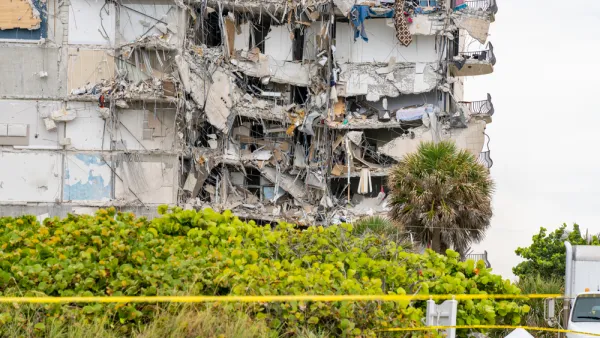
The Problem With Miami Beach's High-Rises
Last year's Miami Beach condo collapse could portend more tragedy to come if developers don't address the risks of aging buildings and climate change.
Surfside Collapse Highlights Florida's 'Unique Vulnerabilities'
A coastal geologist urges state leaders and residents to start planning for 'managed retreat' away from the coastal communities most vulnerable to sea level rise.
How New Safety Legislation Will Impact Florida Condo Market
New regulations aimed at preventing disasters like the Surfside condo collapse are forcing a reckoning on the part of property owners who may struggle to afford required repairs and upgrades.

Planetizen Federal Action Tracker
A weekly monitor of how Trump’s orders and actions are impacting planners and planning in America.

California plans to bury El Niño’s downpour
If the state plays its cards right, it may be able to store a billion acre-feet of El Niño’s water in aquifers.

Desperate measures: Advocates weigh draining Lake Powell to fill Colorado River
Draining the reservoir could reduce evaporation losses by a couple hundred thousand acre-feet.

Chicago voters approve permanent festival grounds, penalty for vacant property owners
Currently, major summer and fall festivals take over public parks for weeks at a time, drawing criticism from nearby residents

NYC votes to cut outdoor dining red tape, speed up permitting
New York City also voted to allow the Department of Transportation to begin work on urgent projects before notifying elected officials.

California appears to reject Prop. 45
The proposition would have expanded the projects that qualify for a streamlined environmental review, effectively paring down the California Environmental Quality Act.

FREE Course: Walkable City 1: Why Walkability?
After describing his path towards focusing on walkability as the essence of good planning, Jeff Speck marches through his five principal reasons for making more walkable places.
Reinventing Malls: Planning Alchemy—Turning Gray Fields Into Gold
The course focuses on the opportunities and imperatives that shape reinvention of mall sites.

City of Rosemead
Rutgers University, Edward J. Bloustein School of Planning and Public Policy
One Hundred Miles
Hunter College, City University of New York (CUNY)
The Architects Foundation
University of Cincinnati Online
City of Cambridge
Montrose County
The Pocatello Development Authority