Because many rent relief programs prioritize tenants actively facing eviction, some Ohio landlords are using eviction to speed up the process.


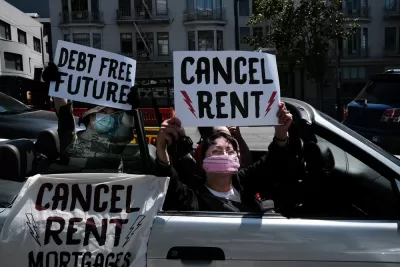
In spite of federal eviction moratoriums, reports Kriston Capps, "Columbus-area landlords have filed nearly 17,000 evictions in the 16 months since the start of the pandemic, according to Princeton University’s Eviction Lab," with some happening for a surprising reason: "[s]ome landlords are taking their tenants to court in order to speed the delivery of federal rent relief."
"For the City of Columbus and Franklin County, rent relief funds are distributed by IMPACT Community Action, a nonprofit organization (one that was operating out of the convention center for the last year). A memo from the Willis Law Firm, dated March 11 and available on the Columbus Apartment Association website, advises landlords who are eager to get a federal bailout for renters in arrears to move immediately to evict."
The memo notes, "IMPACT has typically been slow when it comes to paying out rental assistance before an eviction is filed. We have found that the number 1 way and the quickest way to get assistance for a tenant is to actually file an eviction because the tenant can meet face-to-face with IMPACT at court." Meanwhile, "[s]ome aid programs under the CARES Act required tenants to have an eviction notice in order to get rental assistance," and federal help has been slow to arrive: "Just 7% of the $565 million designated for Ohio in the first round of emergency rental assistance reached Ohio renters by the end of June, according to the latest figures from the U.S. Treasury Department."
According to tenant advocates,"this legal strategy lines up with a longstanding practice by large landlords to rely on courts to settle their disputes." Now, "[w]ith another eight weeks added to the eviction moratorium, there is more time to get the money out to tenants in need.," but "even if the landlord is made whole, some damage is done, since tenants bear the mark of an eviction filing on their rental history even when the case is dismissed or if the tenant wins the case."
FULL STORY: To Get Federal Rent Relief From Tenants, Landlords File Evictions Against Them


Rents Rise in New York City Even as Eviction Crisis Mounts
Although many tenants are still waiting for rental assistance funds to avoid eviction, rents are rising steadily in the city's wealthiest boroughs.
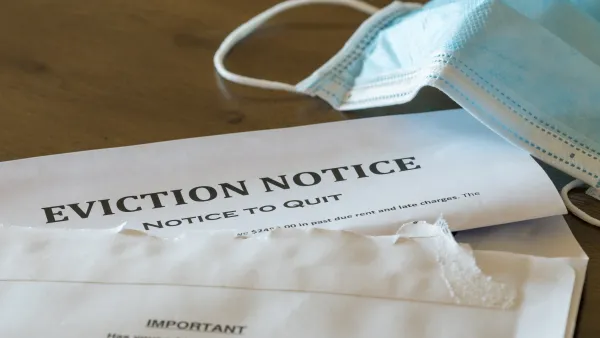
Evictions Surge as Protections End
With pandemic assistance funding running out, many U.S. renters face the threat of eviction, with families with children at a disproportionately high risk for losing their housing.
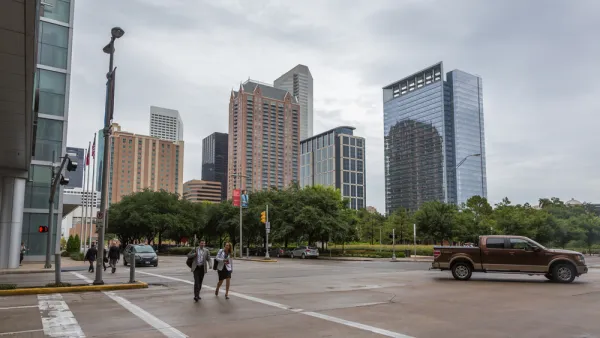
As Rental Assistance Ends, Houston Sees Eviction Filings Rise
More Houston households face evictions as landlords seek to recover back rent accrued during the last two years of the pandemic.

Planetizen Federal Action Tracker
A weekly monitor of how Trump’s orders and actions are impacting planners and planning in America.

The state-sanctioned urbicide of Austin
People don’t kill cities. Freeways do.

US to reduce Colorado River water deliveries to Mexico
A new Colorado Treaty amendment reduces Mexico’s Colorado River water allocation by 250,000 acre feet.

Mamdani overhauls NYC's Vision Zero plan with 100 new policy goals
The overhaul aims to reduce traffic deaths and make streets safer for pedestrians, cyclists and drivers through lower speed limits, new safety infrastructure and more.

Amtrak not solely to blame for New Jersey commuter rail's unreliability, report finds
A new study from the Garden State Initiative found that NJ Transit’s budget grew 20% across a 4 year period, but reliability declined significantly over the same period.

EPA erases limits on planet-warming pollution from power plants
Under Monday’s plan, power plants would still have some limits on how much mercury, arsenic and other contaminants they can emit.

FREE Course: Walkable City 1: Why Walkability?
After describing his path towards focusing on walkability as the essence of good planning, Jeff Speck marches through his five principal reasons for making more walkable places.
Reinventing Malls: Planning Alchemy—Turning Gray Fields Into Gold
The course focuses on the opportunities and imperatives that shape reinvention of mall sites.

Eagle County Government
Harvard University Graduate School of Design
Nashville Planning Department
The Architects Foundation
University of Cincinnati Online
The Pocatello Development Authority
The Urban Renewal Agency of the City of Pocatello
Journal of the American Planning Association