In a park-poor neighborhood, vacant lots provide an untapped opportunity for small-scale parks.


When residents of Houston's Third Ward saw an opportunity to transform a vacant city-owned lot into a neighborhood park, it sparked the idea for an entire network of pocket parks that could provide much-needed hyper-local green spaces in a park-poor area, writes Andy Olin for the Kinder Institute. As part of the city's Complete Communities Initiative, Third Ward residents identified one of their goals as "ensuring area families can access a park within a 10-minute walk," a goal which requires "an additional 21 acres of park space" in the area.
"In recent years, research increasingly has shown the importance and advantages of small-scale parks in providing access to quality green space close to home. The benefits range from improving health and fitness, reducing traffic and pollution and mitigating the effects of climate change, to empowering communities and making them more sociable, and building relationships between residents and city officials." Pocket parks complement, rather than replace, larger city parks and green spaces. A study of Tokyo residents' park usage patterns concluded that "to optimize public health in cities," large parks "need to be supplemented with even smaller, hyperlocal green spaces such as pocket parks." The National Recreation and Park Association (NRPA) identifies four key qualities of a successful pocket park: "They are accessible; allow people to engage in activities; are comfortable spaces and have a good image; and finally, are sociable places: one where people meet each other and take people to when they come to visit."
Advocates of pocket parks face some significant hurdles in their effort to build out a network of small parks maintained by, in many cases, local civic organizations. In addition to funding and day-to-day maintenance, the managing organization has to contend with liability issues and insurance. "We’re still exploring what it all takes," said Shannon Buggs, director of the city's Complete Communities program, "but it’s been complicated."
This Tuesday, "Houston Public Works and the Houston Parks and Recreation Department (HPARD) reached an agreement to transfer a vacant lot that has been targeted by the civic club for use as a pocket park over to the parks department." The 5,000-square-foot property can now become a park, paving the way for more projects like it.
FULL STORY: Can city-owned vacant lots fill the need for park equity in Houston?

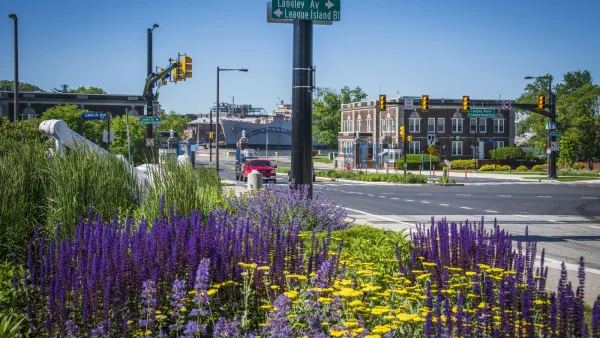
Philadelphia sees 29% drop in gun violence near new green spaces
A city-backed program that cleans up blighted and vacant lots is creating new public spaces and reducing crime in surrounding communities.
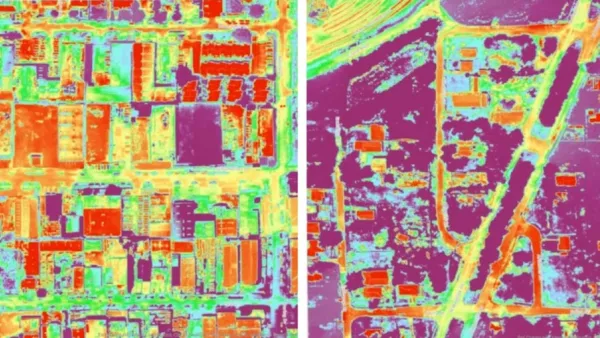
Study: Houston’s Vacant Lots Worsen Heat Island Effect
Paved lots and abandoned buildings can raise surrounding surface temperatures as much as 20 degrees, according to a new study.

Study: How Urban Parks Can Support Biodiversity
Conservation and recreation can go hand in hand in urban green spaces designed to serve both humans and local wildlife.

The state-sanctioned urbicide of Austin
People don’t kill cities. Freeways do.

US to reduce Colorado River water deliveries to Mexico
A new Colorado Treaty amendment reduces Mexico’s Colorado River water allocation by 250,000 acre feet.

New Jersey’s second-largest city bans standalone data centers
Jersey City will continue to allow co-location facilities, such as those meant for research institutions that store their own data.

Amtrak not solely to blame for New Jersey commuter rail's unreliability, report finds
A new study from the Garden State Initiative found that NJ Transit’s budget grew 20% across a 4 year period, but reliability declined significantly over the same period.

EPA erases limits on planet-warming pollution from power plants
Under Monday’s plan, power plants would still have some limits on how much mercury, arsenic and other contaminants they can emit.

Phoenix announces new on-demand transit service, more frequent RAPID buses
Both new services will launch in October, and are part of Phoenix's Project Effective Access Solutions for Easing Congestion.

FREE Course: Walkable City 1: Why Walkability?
After describing his path towards focusing on walkability as the essence of good planning, Jeff Speck marches through his five principal reasons for making more walkable places.
Reinventing Malls: Planning Alchemy—Turning Gray Fields Into Gold
The course focuses on the opportunities and imperatives that shape reinvention of mall sites.

Eagle County Government
Harvard University Graduate School of Design
Nashville Planning Department
The Architects Foundation
University of Cincinnati Online
The Pocatello Development Authority
The Urban Renewal Agency of the City of Pocatello
Journal of the American Planning Association