The U.S. Department of Housing and Urban Development's grant funding program that integrates public housing investments with the surrounding neighborhood is moving ahead.


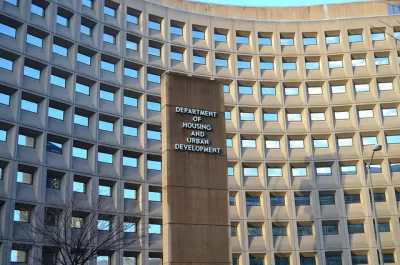
"The U.S. Department of Housing and Urban Development has identified five applicants as finalists to compete for FY20 Choice Neighborhoods Implementation Grants to transform public and/or other HUD-assisted housing, as well as the surrounding neighborhood," according to an announcement from the U.S. Department of Housing and Urban Development (HUD).
The city of Detroit, Cuyahoga Metropolitan Housing Authority, Housing Authority of the city of Camden (new jersey), Housing Authority of the city of Fort Myers (Florida), and the Lewiston Housing Authority (Maine) will compete for individual grants of up to $35 million.
The list of five finalists was culled from a pool of 20 applicants.
The announcement includes more on the process and goals of the Choice Neighborhoods grant program, which was targeted by the Trump administration for cuts during its time in office. The three goals of the program are listed as follows:
- Housing: Replace distressed public and assisted housing with high-quality mixed-income housing that is well-managed and responsive to the needs of the surrounding neighborhood;
- People: Improve outcomes of households living in the target housing related to employment and income, health, and children’s education; and
- Neighborhood: Create the conditions necessary for public and private reinvestment in distressed neighborhoods to offer the kinds of amenities and assets, including safety, good schools, and commercial activity, that are important to families’ choices about their community.
For background on the project at the center of Detroit's application see a (paywalled) article published by Crain's Detroit Business in November 2020.
FULL STORY: FY20 Choice Neighborhoods Implementation Grants Competition Finalists Identified

Choice Neighborhood Planning Grants Announced for 5 U.S. Cities
A federal grant program designed to support holistic and socially-focused planning projects at the neighborhood level has announced the winners of its most recent round of competitive grant funding.

Singapore Housing Lessons for the Biden Administration
Singapore's carefully designed public housing that supports mixed-incomes, green space, and access to high-quality transportation is a good benchmark for the Biden administration's new push to root out systemic racism in the housing market.
HUD Toolkit Supports Landlords Supporting Residents Through the Coming Economic Hardships
The eviction moratorium put into effect by the CARES Act, applying to residents in public housing authority and Housing Choice Voucher programs, is set to expire later this month.

The state-sanctioned urbicide of Austin
People don’t kill cities. Freeways do.

US to reduce Colorado River water deliveries to Mexico
A new Colorado Treaty amendment reduces Mexico’s Colorado River water allocation by 250,000 acre feet.

New Jersey’s second-largest city bans standalone data centers
Jersey City will continue to allow co-location facilities, such as those meant for research institutions that store their own data.

Amtrak not solely to blame for New Jersey commuter rail's unreliability, report finds
A new study from the Garden State Initiative found that NJ Transit’s budget grew 20% across a 4 year period, but reliability declined significantly over the same period.

EPA erases limits on planet-warming pollution from power plants
Under Monday’s plan, power plants would still have some limits on how much mercury, arsenic and other contaminants they can emit.

Phoenix announces new on-demand transit service, more frequent RAPID buses
Both new services will launch in October, and are part of Phoenix's Project Effective Access Solutions for Easing Congestion.

FREE Course: Walkable City 1: Why Walkability?
After describing his path towards focusing on walkability as the essence of good planning, Jeff Speck marches through his five principal reasons for making more walkable places.
Reinventing Malls: Planning Alchemy—Turning Gray Fields Into Gold
The course focuses on the opportunities and imperatives that shape reinvention of mall sites.

Eagle County Government
Harvard University Graduate School of Design
Nashville Planning Department
The Architects Foundation
University of Cincinnati Online
The Pocatello Development Authority
The Urban Renewal Agency of the City of Pocatello
Journal of the American Planning Association