As the pandemic continues to disrupt life in the United States, some Taiwanese Americans are rebuilding their lives abroad.


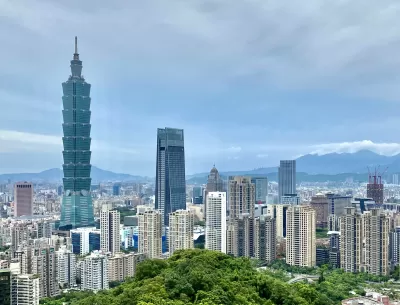
As schools and businesses in the United States shuttered to prevent the spread of COVID-19 last year, some Californians looked abroad to find a new home. For Taiwanese-Americans like Welly Yang, choosing to move his family to Taiwan just made sense. "We really thought it was important for the kids to attend school in person, experience their cultural roots, and quite honestly, so that we could all live a normal life surrounded by other human beings," Yang told Ralph Jennings of the Los Angeles Times. "Taiwan controlled its coronavirus caseload nearly a year ago by inspecting inbound flights, quarantining all arrivals and tracing the contacts of anyone with COVID-19. Taiwan has reported just under 1,000 cases and 10 deaths since the start of the worldwide pandemic."
The "de facto" Taiwanese consulate in Los Angeles "issued 858 Taiwan passports last year compared with 219 in 2019," writes Jennings. Some Taiwanese Americans who traveled to Taiwan in January 2020 to observe the Lunar New Year just stayed abroad. "Relatives who live here offer the transplants a valuable head start to learn about the island that their parents left decades ago when Taiwan was poorer and more politically volatile." With the economy largely open, jobs and business partners are easy to find.
The transition can be rocky, too. Many Taiwanese Americans experience culture shock after having been away from the culture for decades, and their English-speaking children "adapt slowly to local schools if they’re not fluent in Mandarin." Occasionally, "conflicts manifest between Taiwanese who have never lived abroad and returnees" who "complain that too many transactions depend on personal relationships."
Despite having to make some major adjustments, returnees like YouTube co-founder Steve Chen find that "the rewards outweigh the challenges." In Taiwan, he said, his family could "continue our lives as we knew it."
FULL STORY: To escape the pandemic and lockdowns, Californians resettle in Taiwan


How Remote Work Could Reshape American Cities
If projections about remote work hold true, the resulting migration could shift economic centers, disperse housing market pressures, and transform the politics of small communities.

D.C., San Francisco Lead Pandemic Work From Home Trend
Remote work increased threefold during the pandemic, but the numbers vary significantly from city to city and region to region. Almost half of D.C.-area employees, for example, worked from home in 2021, according to American Community Survey data.

Remote Work Is Here To Stay
Based on available data, working from home is likely to remain a popular option with a high percentage of workers, changing the ways and places Americans live, work, and travel.

The state-sanctioned urbicide of Austin
People don’t kill cities. Freeways do.

US to reduce Colorado River water deliveries to Mexico
A new Colorado Treaty amendment reduces Mexico’s Colorado River water allocation by 250,000 acre feet.

New Jersey’s second-largest city bans standalone data centers
Jersey City will continue to allow co-location facilities, such as those meant for research institutions that store their own data.

Amtrak not solely to blame for New Jersey commuter rail's unreliability, report finds
A new study from the Garden State Initiative found that NJ Transit’s budget grew 20% across a 4 year period, but reliability declined significantly over the same period.

EPA erases limits on planet-warming pollution from power plants
Under Monday’s plan, power plants would still have some limits on how much mercury, arsenic and other contaminants they can emit.

Phoenix announces new on-demand transit service, more frequent RAPID buses
Both new services will launch in October, and are part of Phoenix's Project Effective Access Solutions for Easing Congestion.

FREE Course: Walkable City 1: Why Walkability?
After describing his path towards focusing on walkability as the essence of good planning, Jeff Speck marches through his five principal reasons for making more walkable places.
Reinventing Malls: Planning Alchemy—Turning Gray Fields Into Gold
The course focuses on the opportunities and imperatives that shape reinvention of mall sites.


Eagle County Government
Harvard University Graduate School of Design
Nashville Planning Department
The Architects Foundation
University of Cincinnati Online
The Pocatello Development Authority
The Urban Renewal Agency of the City of Pocatello
Journal of the American Planning Association