Mayor Francis Suarez thinks the tunnel could alleviate congestion, but critics argue the city's rising water table makes tunneling too expensive and impractical.


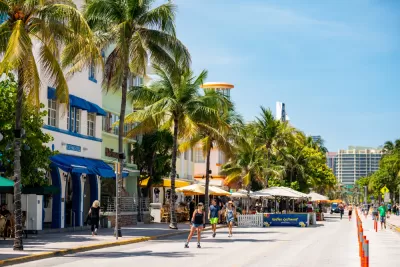
Despite the city's reputation as a "sinkhole capital," Miami Mayor Francis Suarez plans to "seek federal funding for an Elon Musk-built underground car tunnel to curb traffic," reports Denise Pellegrini in Bloomberg Quint. Ignoring longstanding concerns about the high water table in the area, "Suarez has become the chief local advocate" for the tunnel and hopes that the federal government will "involve itself" in the project. Although the roads are controlled by the county rather than the city, the mayor hopes his enthusiasm will lead to more momentum for the tunnel.
"After meeting with executives from Boring, who are already building a tunnel for self-driving Teslas in Las Vegas, Suarez said he is thinking about a similar transportation system that could potentially connect Brickell to downtown, Grand Central Station, Miami World Center, the Omni area, Wynwood, and Little Haiti." Anticipating a funding shortfall, "Suarez is also already pursuing a company-funded model for the project," writes Pellegrini. "Suarez thinks Musk may agree to build a user-fee based tunnel system in Miami, and says such systems could become widely popular across the country." While the mayor points to a "Boring project in Chicago [that] is set up under a similar concept," that project has been almost certainly scrapped.
FULL STORY: Miami Mayor to Seek Federal Funding for Proposed Elon Musk Tunnel

Two Boring Co. Projects Appear to Bite the Dust
References to the Dugout Loop, in Los Angeles, and the Baltimore-to-Washington Loop have been removed from the Boring Company's website.
Elon Musk Wants to Dig Tunnels in America's 'Sinkhole Capital'
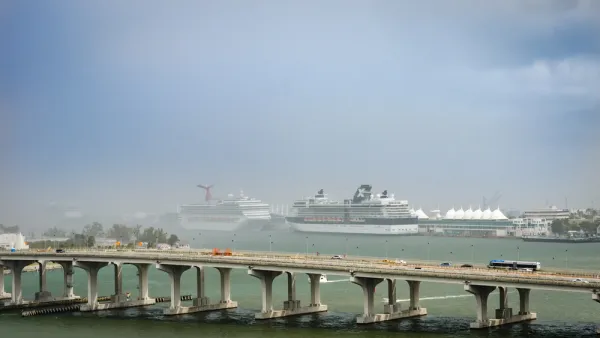
Musk claims the tunnels could ease traffic and "be an example to the world," but experts caution that underground work in Miami is expensive and unpredictable.
Elon Musk and BART Go Toe to Toe (on Twitter)
Transit agencies and advocates are developing a genre of criticism that could be described as calling Elon Musk on his BS. Musk still has plenty of support on social media.

Planetizen Federal Action Tracker
A weekly monitor of how Trump’s orders and actions are impacting planners and planning in America.

The state-sanctioned urbicide of Austin
People don’t kill cities. Freeways do.

US to reduce Colorado River water deliveries to Mexico
A new Colorado Treaty amendment reduces Mexico’s Colorado River water allocation by 250,000 acre feet.

Mamdani overhauls NYC's Vision Zero plan with 100 new policy goals
The overhaul aims to reduce traffic deaths and make streets safer for pedestrians, cyclists and drivers through lower speed limits, new safety infrastructure and more.

Amtrak not solely to blame for New Jersey commuter rail's unreliability, report finds
A new study from the Garden State Initiative found that NJ Transit’s budget grew 20% across a 4 year period, but reliability declined significantly over the same period.

EPA erases limits on planet-warming pollution from power plants
Under Monday’s plan, power plants would still have some limits on how much mercury, arsenic and other contaminants they can emit.

FREE Course: Walkable City 1: Why Walkability?
After describing his path towards focusing on walkability as the essence of good planning, Jeff Speck marches through his five principal reasons for making more walkable places.
Reinventing Malls: Planning Alchemy—Turning Gray Fields Into Gold
The course focuses on the opportunities and imperatives that shape reinvention of mall sites.

Eagle County Government
Harvard University Graduate School of Design
Nashville Planning Department
The Architects Foundation
University of Cincinnati Online
The Pocatello Development Authority
The Urban Renewal Agency of the City of Pocatello
Journal of the American Planning Association