A housing policy debate is taking place on the editorial pages of Cincinnati publications.



Cincinnati voters will be asked to decide on an amendment to the city charter to guarantee $50 million in annual funding for Cincinnati's Housing Trust Fund in an election on May 4.
A pair of dueling opinion pieces, one by Cincinnati Enquirer Columnist Jason Williams [paywall] and another by guest opinion writers Sister Carren Herring and Kathleen Wade.
Here's the premise for the latter opinion, referencing the former:
Voters need to be well-informed in order to make the best decision for all Cincinnatians. Enquirer columnist Jason Williams erroneously equates funding the Housing Trust Fund with defunding our police department in his Feb. 26 column. He claims "the same folks who are behind this (charter amendment)…don't care about safe neighborhoods," and that their sole agenda is to "defund the police."
After clarifying the political coalition behind the amendment, Herring and Wade present the evidence of the need for more action on affordable housing by the city of Cincinnati. "The average rent for a one-bedroom apartment in the city of Cincinnati is $1,357 per month," for example, leaving large portions of the working class out of the range of affordability. "Over 100,000 households in Hamilton County pay over 30% of their income for housing. The top five job types in the Cincinnati region do not pay enough to afford housing over 30% of income."
FULL STORY: Opinion: Ignoring housing crisis will drain Cincinnati's budget

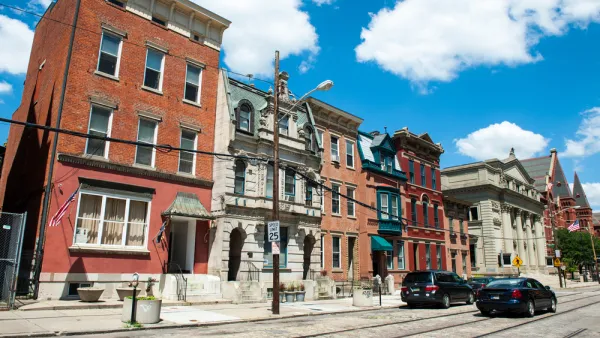
Voters Reject Cincinnati's Affordable Housing Ballot Issue
A charter amendment that would have guaranteed funding for the Cincinnati Housing trust Fund was soundly defeated by voters in a citywide election last week.

Affordable Housing Needs Assessed Ahead of Cincinnati's May Election
Cincinnati voters will consider Issue 3 at the ballot box on May 4, potentially guaranteeing $50 million in annual funding for the city's Housing Trust Fund.

Proposed Ohio Budget Preserves Housing Trust Fund
The Senate-approved budget also creates two new programs aimed at encouraging housing construction.

The state-sanctioned urbicide of Austin
People don’t kill cities. Freeways do.

US to reduce Colorado River water deliveries to Mexico
A new Colorado Treaty amendment reduces Mexico’s Colorado River water allocation by 250,000 acre feet.

New Jersey’s second-largest city bans standalone data centers
Jersey City will continue to allow co-location facilities, such as those meant for research institutions that store their own data.

Amtrak not solely to blame for New Jersey commuter rail's unreliability, report finds
A new study from the Garden State Initiative found that NJ Transit’s budget grew 20% across a 4 year period, but reliability declined significantly over the same period.

EPA erases limits on planet-warming pollution from power plants
Under Monday’s plan, power plants would still have some limits on how much mercury, arsenic and other contaminants they can emit.

Phoenix announces new on-demand transit service, more frequent RAPID buses
Both new services will launch in October, and are part of Phoenix's Project Effective Access Solutions for Easing Congestion.

FREE Course: Walkable City 1: Why Walkability?
After describing his path towards focusing on walkability as the essence of good planning, Jeff Speck marches through his five principal reasons for making more walkable places.
Reinventing Malls: Planning Alchemy—Turning Gray Fields Into Gold
The course focuses on the opportunities and imperatives that shape reinvention of mall sites.

Eagle County Government
Harvard University Graduate School of Design
Nashville Planning Department
The Architects Foundation
University of Cincinnati Online
The Pocatello Development Authority
The Urban Renewal Agency of the City of Pocatello
Journal of the American Planning Association