Just shy of a year after Sidewalk Labs pulled the plug on its "smart city" experiment for Quayside, Waterfront Toronto has a released a request for qualifications to move forward with a new, "people-centered" vision for the waterfront.


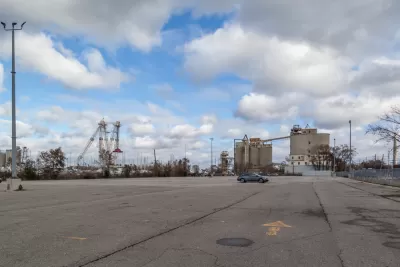
Waterfront Toronto has launched a new international competition seeking a development partner for land in the Quayside area of the city—land previously planned for "smart city" experimentation by Sidewalk Labs, a subsidiary of Google parent company Alphabet.
After Sidewalk Labs canceled its plans in May 2020, citing the economic uncertainty of the pandemic as an obstacle for financial viability for the project. But the proposal was beset by controversy and a skeptical public throughout its process (which began in 2017 and produced a master plan in 2019).
According to a press release from Waterfront Toronto, the new project will strive for lofty design ambitions while also creating a sustainable community for people of all ages, backgrounds, abilities and incomes. "The first step in this effort is to issue a Request for Qualifications (RFQ) to identify potential development proponents with the proven experience, design portfolio, financial resources, and shared vision necessary to bring Quayside to reality," according ot the press release.
An article by Leyland Cecco, writing for The Guardian, focuses on the new "people-centered vision" for Quayside. The article inclues a soundbite from Mike Lydon, who says the failed Sidewalk Labs plan for Quayside is a cautionary tale for cities flirting with "smart city" technology. "To bet the farm on technology that redesigns our entire streets and relies on apps and sensors doesn’t really jive with how human beings actually use public spaces – and how they want to live in cities," says Lydon in the article.
FULL STORY: Toronto swaps Google-backed, not-so-smart city plans for people-centred vision


Decision on Sidewalk Labs' Plan for Toronto Waterfront Delayed
The spread of the coronavirus has delayed one of the most closely watched planning projects in North America.

Waterfront Toronto Greenlights Most of Sidewalk Labs' Quayside Master Plan
An evaluation committee made up of Waterfront Toronto staff has given a green light for the Sidewalk Labs master plan for Toronto to proceed to the next stages of planning.
Master Plan for Quayside 'Smart City' Released by Sidewalk Labs and Waterfront Toronto
The long-awaited master plan for Quayside in Toronto was released to the public today.

Planetizen Federal Action Tracker
A weekly monitor of how Trump’s orders and actions are impacting planners and planning in America.

The state-sanctioned urbicide of Austin
People don’t kill cities. Freeways do.

US to reduce Colorado River water deliveries to Mexico
A new Colorado Treaty amendment reduces Mexico’s Colorado River water allocation by 250,000 acre feet.

Mamdani overhauls NYC's Vision Zero plan with 100 new policy goals
The overhaul aims to reduce traffic deaths and make streets safer for pedestrians, cyclists and drivers through lower speed limits, new safety infrastructure and more.

Amtrak not solely to blame for New Jersey commuter rail's unreliability, report finds
A new study from the Garden State Initiative found that NJ Transit’s budget grew 20% across a 4 year period, but reliability declined significantly over the same period.

EPA erases limits on planet-warming pollution from power plants
Under Monday’s plan, power plants would still have some limits on how much mercury, arsenic and other contaminants they can emit.

FREE Course: Walkable City 1: Why Walkability?
After describing his path towards focusing on walkability as the essence of good planning, Jeff Speck marches through his five principal reasons for making more walkable places.
Reinventing Malls: Planning Alchemy—Turning Gray Fields Into Gold
The course focuses on the opportunities and imperatives that shape reinvention of mall sites.

Eagle County Government
Harvard University Graduate School of Design
Nashville Planning Department
The Architects Foundation
University of Cincinnati Online
The Pocatello Development Authority
The Urban Renewal Agency of the City of Pocatello
Journal of the American Planning Association