The events of the past year shows that the law of supply and demand applies to urban housing, and that gentrification can, in fact, be subdued.



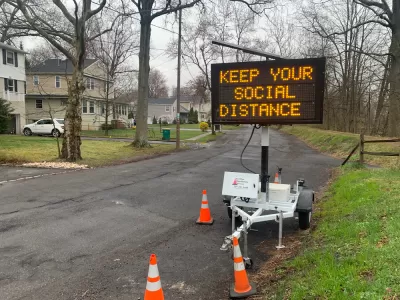
When I think of Not In My Back Yard (NIMBY) opposition to new housing, I used to think of conservative suburban homeowners, who believed that new housing would lower their property values. But in New York and other left-leaning cities, NIMBYism has mutated: rather than claiming that new housing lowers property values, some progressives argue that the laws of supply and demand become inverted in cities. The law of supply and demand suggests that a significant increase in housing supply lowers rents—but left-NIMBYs claim that new private housing actually makes housing more expensive, by making urban neighborhoods more appealing or by increasing land prices. Instead of supporting both public and private development, these progressives argue that only government-subsidized "affordable" housing should be encouraged, and that market-rate housing should be made more difficult to build.
I have already criticized some of these arguments in other articles.* The purpose of this post is to ask: does COVID-19 change anything?
In particular, it seems to me that demand for housing in parts of New York City seems to have decreased significantly. Last spring, about 5 percent of New Yorkers left the city at least temporarily—mostly residents of the city's richest neighborhoods. By a strange coincidence, this was followed by a significant decline in rents in parts of the city—especially well-off areas near the city's major business districts (downtown and midtown Manhattan). For example, last spring I agreed to pay $3550 for a one-bedroom apartment in Midtown; today, one-bedroom apartments in my building rent for as little as $2800. My building is not unique; in Manhattan generally, median asking rents have decreased by over 20 percent (from $3500 in December 2019 to just under $2800 in December 2020).
A logical explanation of this change is that because of the fear of COVID-19 infection, many workers have (like me) began to work from home. People who work from home have no reason to live near the office when they could pay lower rents somewhere else. And because a disproportionate share of office jobs are in Manhattan, demand for Manhattan apartments has decreased the most, causing rents to go down.
Thus, the law of supply and demand works as most economists might expect, and the core claim of left-NIMBYism (supply-and-demand denialism) has been debunked. Conversely, rents have not fallen so rapidly in areas far from business districts: in Staten Island, rents actually increased in 2020.
Opposition to new housing is not driven just by an abstract fear of higher rents, but a more specific fear of gentrification: some fear that new housing will lead to an influx of affluent renters, which in turn will lead to displacement of less affluent city residents. As I have written some years ago, the extent of gentrification may have been exaggerated by the popular press: even expensive cities like New York are far more poverty-ridden than their suburbs. But even if I was wrong then, rent trends suggest that over the past year, middle—and upper-class people have been leaving expensive cities rather than gentrifying them—so concerns about gentrification and displacement are no longer realistic, at least for the time being. (On the other hand, it is unclear how significant or long-lasting this trend is.)
Another pillar of left-NIMBYism is that there is no need for markets to provide new housing, because government should and will step in. Because even a massive reduction in market rents will not help the poorest New Yorkers, I think more public housing would be a fine idea. However, I am less optimistic about this than I was a year ago, for the simple reason that state and local governments have far less money to throw around; for example, New York has a $15 billion shortfall. Because of COVID-19, unemployment has increased, causing a decrease in tax revenues of most (if not all types). And if there really is an upper-class exodus from cities like New York, tax bases will continue to dwindle even more. The federal government has been sympathetic this year—but aid to state and local governments is far less popular than other social programs. For example, Senate Republicans have been eager to support direct aid to individuals, but have been far less interested in supporting state and local governments. Thus, it seems unlikely that the federal government can be counted on for long-term aid.
In sum, the three pillars of progressive NIMBYism are 1) the law of supply and demand does not apply to urban housing; 2) because gentrification is running wild; and 3) a massive investment in public housing is a politically practical alternative to market-rate housing. All of these pillars seem even less connected to reality now than they did before COVID-19.
*See for example, this article, this article and this article, as well as blog posts here and here. In addition, quite a bit of economics scholarship supports the idea that new housing lowers rents—such as this paper and this paper.

A Pro-Development Argument in the Great Housing Debate
In the ongoing and contentious debate about whether market-rate development is a cure or a disease, another writer comes down on the side of more supply, no matter the cost.

Aspen Presses Pause on New Construction, Short-Term Rentals
Residents and elected officials of the famously wealthy mountain town of Aspen don't like the way the city is headed.

Double-Digit Housing Price Increases Tied to Supply Imbalance in Denver
Expensive homes dominated the metro Denver real estate market in 2020.

Planetizen Federal Action Tracker
A weekly monitor of how Trump’s orders and actions are impacting planners and planning in America.

Amtrak, CN end decades-long dispute with eight-year agreement
The new operating agreement establishes an updated framework for the companies to work together, including processes to resolve disputes.

Northwest rail fans eager for Sept. 30 debut of Amtrak’s Airo fleet
Get ready for that new train smell and more seats. But they won’t go faster or run more frequently on the Cascades route in Washington and Oregon.

LAX SkyLink opening delayed again, contractor won’t commit to new deadline
The project was supposed to open its doors to the public in 2023.

Caltrain may slash over one-third of its stations
If Bay Area voters reject two transit tax measures, Caltrain, BART and AC Transit will see steep service cuts.

A 'dangerous' precedent: North Carolina successfully pressures communities into voting for toll roads
Two mayors resigned from the Charlotte Regional Transportation Planning Organization after it voted in favor of the toll roads.

FREE Course: Walkable City 1: Why Walkability?
After describing his path towards focusing on walkability as the essence of good planning, Jeff Speck marches through his five principal reasons for making more walkable places.
Reinventing Malls: Planning Alchemy—Turning Gray Fields Into Gold
The course focuses on the opportunities and imperatives that shape reinvention of mall sites.

City of Thousand Oaks
City of Wisconsin Rapids
Harvard University Graduate School of Design
The Architects Foundation
University of Cincinnati Online
The Pocatello Development Authority
The Urban Renewal Agency of the City of Pocatello

