The Vancouver Empty Homes Tax will soon be three times as high as it was when adopted in 2017.


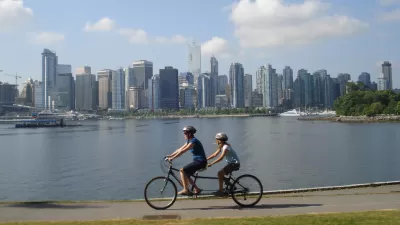
"The empty homes tax in Vancouver will more than double next year," reports Alyse Kotyk. "Council voted in favour of increasing the tax from 1.25 per cent to three per cent for 2021."
The city adopted the tax in 2017 to control the cost of housing in the expensive city (along with a foreign buyer tax) by removing incentives for speculation, starting the tax originally at 1 percent, according to Kotyk.
Another article by Eric Zimmer details the results of the Empty Homes Tax on several key housing market metrics: "According to the city, there has been a 25% reduction in the number of vacant properties recorded between 2017 and 2019. Of the 1,989 properties declared vacant in 2018, 41% were converted to occupied status last year."
The Empty Homes Tax has also raised revenue for new affordable housing projects totaling $61.3 million, along with another $25 million for the 2019-2022 Community Housing Incentive Program, "which provides grants to non-profit housing operators to improve the affordability of social housing and co-op housing projects," according to Zimmer.
Another article by CBC News cites analysis by the Canada Mortgage and Housing Corporation that credits the tax with pushing 5,000condominiums to the rental market in 2019, including 3,000 units in Downtown Vancouver alone.
FULL STORY: Vancouver's empty home tax is increasing to 3% next year

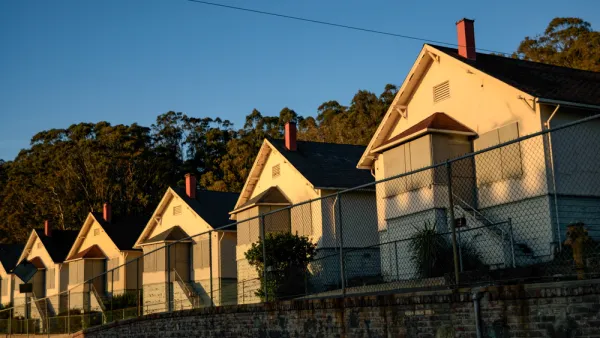
Vacancy Taxes as a Response to the Housing Crisis
Could vacancy taxes solve multiple housing challenges at once?
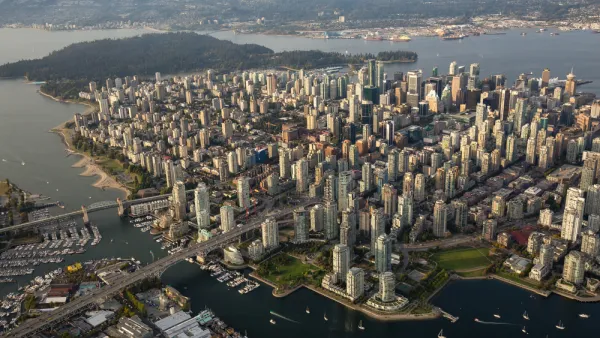
Luxury Condos for Sale in Vancouver as Non-Resident Owners Balk at New Taxes
A tax on non-resident property owners is working as it's intended, as a wave of luxury condo units hit the real estate market all over the city of Vancouver.
Vancouver's New 10-Year Housing Strategy Focuses on Rentals
Vancouver is famous for high-rises and a decidedly urban quality of life, but housing prices are still skyrocketing. A new ten-year housing strategy proposes a few drastic measures to rebalance the market's scales.

The state-sanctioned urbicide of Austin
People don’t kill cities. Freeways do.

US to reduce Colorado River water deliveries to Mexico
A new Colorado Treaty amendment reduces Mexico’s Colorado River water allocation by 250,000 acre feet.

New Jersey’s second-largest city bans standalone data centers
Jersey City will continue to allow co-location facilities, such as those meant for research institutions that store their own data.

Amtrak not solely to blame for New Jersey commuter rail's unreliability, report finds
A new study from the Garden State Initiative found that NJ Transit’s budget grew 20% across a 4 year period, but reliability declined significantly over the same period.

EPA erases limits on planet-warming pollution from power plants
Under Monday’s plan, power plants would still have some limits on how much mercury, arsenic and other contaminants they can emit.

Phoenix announces new on-demand transit service, more frequent RAPID buses
Both new services will launch in October, and are part of Phoenix's Project Effective Access Solutions for Easing Congestion.

FREE Course: Walkable City 1: Why Walkability?
After describing his path towards focusing on walkability as the essence of good planning, Jeff Speck marches through his five principal reasons for making more walkable places.
Reinventing Malls: Planning Alchemy—Turning Gray Fields Into Gold
The course focuses on the opportunities and imperatives that shape reinvention of mall sites.

Eagle County Government
Harvard University Graduate School of Design
Nashville Planning Department
The Architects Foundation
University of Cincinnati Online
The Pocatello Development Authority
The Urban Renewal Agency of the City of Pocatello
Journal of the American Planning Association