A new electric aerial gondola system is being proposed to transport baseball fans and concert goers from Union Station over the Los Angeles State Historic Park to Dodger Stadium.


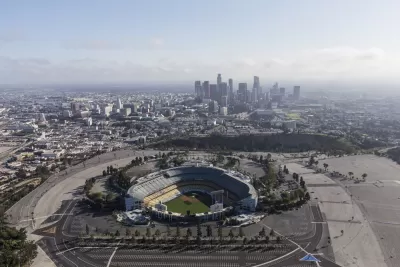
A private company has proposed a $125-million electric aerial gondola system to ferry baseball fans and concert goers from Union Station over the park to Dodger Stadium. While this may sound like an exciting idea that is almost like a new Disneyland ride, community activists have weighed in with a variety of concerns.
As reported by Louis Sahagan, this proposal is controversial because of its potential impacts on the Los Angeles State Historic Park and its patrons. The project currently offers two competing proposals: the southern Broadway alignment and the Spring Street alignment. Both would encroach upon and cross portions of the park with a passenger tower, stanchions, aerial cables and gondola cars able to transport some 5,500 people per hour from Union Station to the stadium in about seven minutes. The Spring Street alignment would be the most impactful to the park’s recreational opportunities, views, and archaeological resources, according to California State Parks officials.
To understand why the park is so significant, one would have to study its history and the long, difficult process involved in its creation. In the 1990s, the 32-acre property had become a legal battleground when the city of Los Angeles planned to turn it into a warehouse center. Activists and community residents opposed the warehouse proposal and demanded a park instead. Eventually, State Parks was able to acquire the property for park purposes in 2001. The park was built 16 years later with $20 million in voter-approved bond funds and touted as a model for solving land use battles in urban areas.
FULL STORY: Proposed aerial tram for Dodger fans ignites controversy at Los Angeles State Historic Park

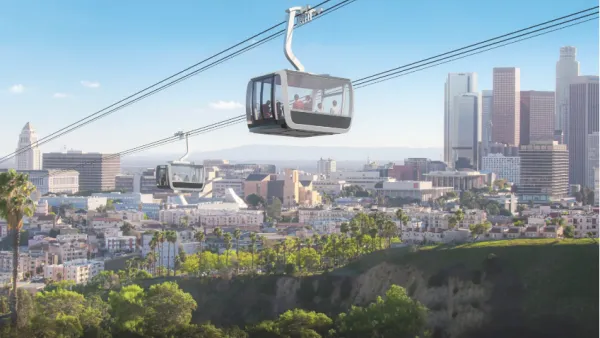
Dodger Stadium Gondola Completes Draft Environmental Impact Report
No World Series? At least Dodger fans can imagine themselves soaring over the traffic jams on the way to and from Dodger stadium in a new gondola.
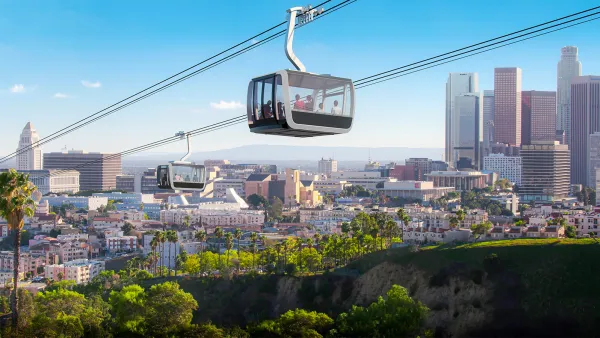
LA Metro Approves Controversial Dodger Stadium Gondola Plan
The vote came after a contentious meeting in which dozens of speakers, including three city council members, spoke against the proposed aerial taxi.
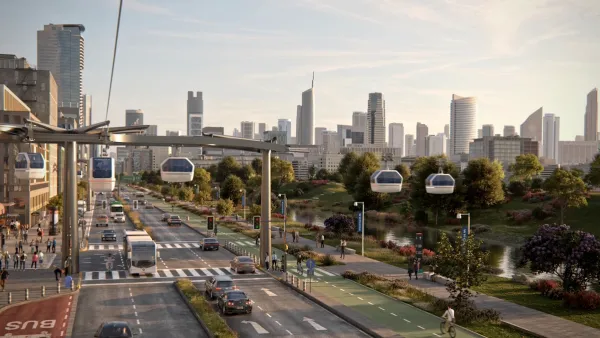
Anaheim Proposes Gondola Connecting Disneyland, Stadiums, Transit Center
The as-yet-unfunded project would connect major attractions along the city’s main artery.

Planetizen Federal Action Tracker
A weekly monitor of how Trump’s orders and actions are impacting planners and planning in America.

The state-sanctioned urbicide of Austin
People don’t kill cities. Freeways do.

US to reduce Colorado River water deliveries to Mexico
A new Colorado Treaty amendment reduces Mexico’s Colorado River water allocation by 250,000 acre feet.

Mamdani overhauls NYC's Vision Zero plan with 100 new policy goals
The overhaul aims to reduce traffic deaths and make streets safer for pedestrians, cyclists and drivers through lower speed limits, new safety infrastructure and more.

Amtrak not solely to blame for New Jersey commuter rail's unreliability, report finds
A new study from the Garden State Initiative found that NJ Transit’s budget grew 20% across a 4 year period, but reliability declined significantly over the same period.

EPA erases limits on planet-warming pollution from power plants
Under Monday’s plan, power plants would still have some limits on how much mercury, arsenic and other contaminants they can emit.

FREE Course: Walkable City 1: Why Walkability?
After describing his path towards focusing on walkability as the essence of good planning, Jeff Speck marches through his five principal reasons for making more walkable places.
Reinventing Malls: Planning Alchemy—Turning Gray Fields Into Gold
The course focuses on the opportunities and imperatives that shape reinvention of mall sites.

Eagle County Government
Harvard University Graduate School of Design
Nashville Planning Department
The Architects Foundation
University of Cincinnati Online
The Pocatello Development Authority
The Urban Renewal Agency of the City of Pocatello
Journal of the American Planning Association