Research shows that road asphalt exposed to heat and sunlight may eventually become a significant emissions source.


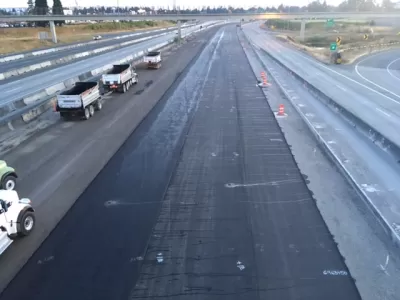
A new study reports that asphalt emits significant amounts of pollutants in hot conditions. "[Researchers] observed that asphalt emissions doubled when the temperature increased from 40C to 60C — levels the material often reaches in summer," reports Rhi Storer.
When road asphalt was exposed to both solar radiation and heat, to mimic outdoor summer conditions, the researchers found a 300 percent increase in emissions. The release of secondary organic aerosols has been shown to have public health impacts, notes Storer.
While most traffic-related pollution comes from vehicle sources, the impact of cars and trucks may decrease as gross polluters are phased out. As a result, asphalt emissions may contribute more to air pollution as urban areas grow—45 percent of the surface area in the United States is paved—and temperatures rise due to climate change.
FULL STORY: Asphalt roads make city air pollution worse in summer, study finds

Study: Pavement covers 40% of Phoenix
A new study reveals how ultrafine particles emitted by pavement worsen air quality.
Report: 75% of NYC warehouses are in 'disadvantaged communities'
Low-income New Yorkers are 1.2 times more likely to live within half a mile of a warehouse.
Study: Airborne tire pollution is harmful to human health
Rubber particles that wear off tires combine with other chemicals to create harmful airborne pollutants.

Planetizen Federal Action Tracker
A weekly monitor of how Trump’s orders and actions are impacting planners and planning in America.

The state-sanctioned urbicide of Austin
People don’t kill cities. Freeways do.

US to reduce Colorado River water deliveries to Mexico
A new Colorado Treaty amendment reduces Mexico’s Colorado River water allocation by 250,000 acre feet.

5 New England states march closer to 800 megawatt wind energy project
Securing federal approval for the project may be complicated under the Trump administration, which has historically been hostile towards domestic wind power.

Baltimore to break ground on $50 million Transit Priority Project
The project will bring faster bus trips, safer streets and better bike connections to Baltimore.

Airbnb launches $250 million 'last-dollar financing' housing accelerator, makes first investment in Austin
The company will put $6.4 million towards affordable housing development in Texas’ capital.

FREE Course: Walkable City 1: Why Walkability?
After describing his path towards focusing on walkability as the essence of good planning, Jeff Speck marches through his five principal reasons for making more walkable places.
Reinventing Malls: Planning Alchemy—Turning Gray Fields Into Gold
The course focuses on the opportunities and imperatives that shape reinvention of mall sites.

Eagle County Government
Harvard University Graduate School of Design
Nashville Planning Department
The Architects Foundation
University of Cincinnati Online
The Pocatello Development Authority
The Urban Renewal Agency of the City of Pocatello
Journal of the American Planning Association