The Camp Fire in California devasted the town of Paradise. As rebuilding progresses, local leaders are looking to protect the town using nature-based fire resilience strategies.


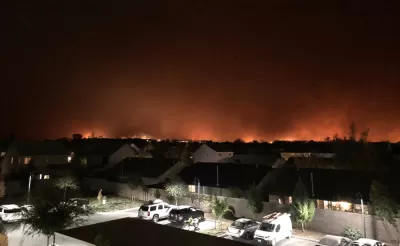
Laura Bliss reports on resiliency plans for Paradise, California, where in 2018 the Camp Fire destroyed the town, displaced 27,000 residents, and killed 85 people. Instead of the common managed retreat approach, Paradise is looking to prevention and mitigation strategies that assume people will live in areas vulnerable to wildfires.
The Paradise Recreation and Park District is starting to acquire land and develop a greenbelt that would surround Paradise. "If the nascent plan is fully realized, a moat of green acreage could provide space for respite and play. It would also serve as a fuel break, an unofficial urban growth boundary, and an access point for crews to manage the area with landscaping, prescribed burning, and fire containment for when the next blaze comes," writes Bliss.
The plan still faces many challenges, including a lack of clear leadership and regulations as well as the financial resources needed to acquire and replant the land. Greenbelts are also a less conventional way to address the threat of wildfires.
"That points to the importance of pooling different sources of knowledge for managing fire — including firefighters, planners, residents, and the Indigenous people who originally settled and managed this part of North America — to develop new strategies for living on the front lines of a warming planet," adds Bliss.
Read the full story: The Price of Saving Paradise
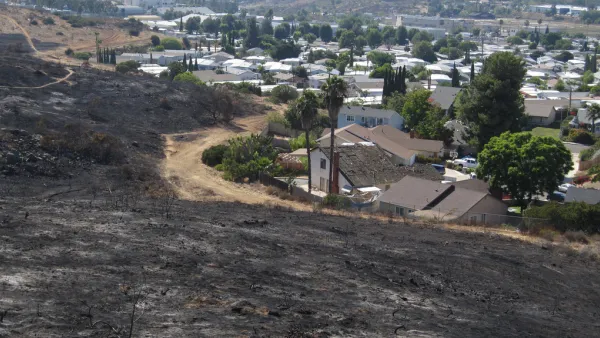
A New Approach to Wildfire Resilience: Property Buy Backs, Fire Resistant Parks
The city of Paradise is employing a natural hazard mitigation strategy long practiced in flood zones. The idea could be expanded in other places where wildland meets human development.
California's Fastest Growing City: Paradise
Paradise, California—devastated by the deadly Camp Fire of 2018—is attracting new and returning residents as the city rebuilds its housing stock.
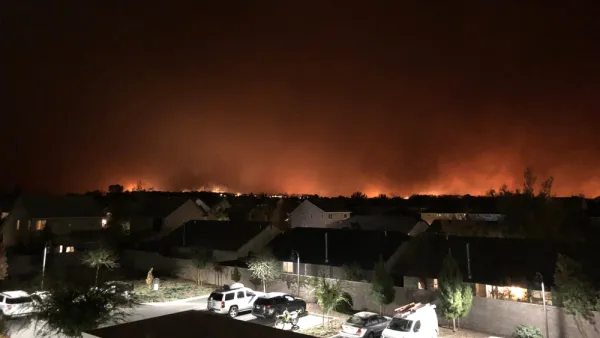
Paradise Was Prepared for the Camp Fire, Report Says. It Wasn't Enough.
Sobering findings from a thorough examination of the causes of the 2018 Camp Fire.

Planetizen Federal Action Tracker
A weekly monitor of how Trump’s orders and actions are impacting planners and planning in America.

California plans to bury El Niño’s downpour
If the state plays its cards right, it may be able to store a billion acre-feet of El Niño’s water in aquifers.

Desperate measures: Advocates weigh draining Lake Powell to fill Colorado River
Draining the reservoir could reduce evaporation losses by a couple hundred thousand acre-feet.

In Texas, data centers are swallowing promised parkland
Residents who moved to Taylor, Texas for a rural community now have to contend with three data centers in their backyard.

How a Chicago-sized wind farm beat the odds and powered on
The project spanned five presidential administrations and a standoff with a U.S. military base.

MTA gives itself 30 days to transform pit into basketball court
The site has been under construction since 2022; the city originally estimated it would finish the court in 2024.

FREE Course: Walkable City 1: Why Walkability?
After describing his path towards focusing on walkability as the essence of good planning, Jeff Speck marches through his five principal reasons for making more walkable places.
Reinventing Malls: Planning Alchemy—Turning Gray Fields Into Gold
The course focuses on the opportunities and imperatives that shape reinvention of mall sites.

City of Rosemead
Rutgers University, Edward J. Bloustein School of Planning and Public Policy
One Hundred Miles
Hunter College, City University of New York (CUNY)
The Architects Foundation
University of Cincinnati Online
City of Cambridge
Montrose County
The Pocatello Development Authority