As soon as a few years from now, electric sedans will cost the same as an equivalent gas vehicle. A team at Carnegie Mellon University is researching how long it will take for other types of electric vehicles to catch up.


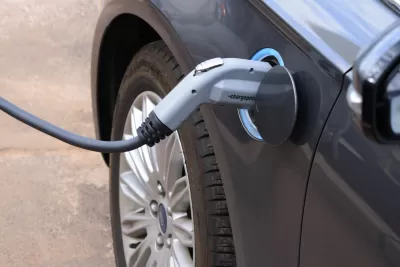
A team of researchers at Carnegie Mellon University, led by Venkat Viswanathan, developed a model to track the cost of components of electric vehicle batteries to understand the total cost and predict changes. "At some point, probably sooner than you expect, the price of an all-electric vehicle will fall far enough to equal the cost of an equivalent gasoline vehicle," writes Dan Gerino. Gerino reports that this equivalent cost (a $100 per kilowatt-hour battery price) could come as soon as 2023 and certainly by 2025. As of 2019, the kilowatt-hour battery price was as low as $156 as compared to over $1,000 kilowatt-hour battery price in the early 2010s.
"Viswanathan said cost parity will arrive first for small sedans that now sell for $30,000 or less. It will take longer for automakers to develop electric trucks and SUVs that cost about the same as similar gasoline models," reports Gerino. Given the extra towing power of SUVs, batteries made for larger vehicles amount to greater costs. The future addition of new electric SUV models should transform the market in which EVs account for only 2% of new vehicles sold.
FULL STORY: Inside Clean Energy: How Soon Will An EV Cost the Same as a Gasoline Vehicle? Sooner Than You Think.

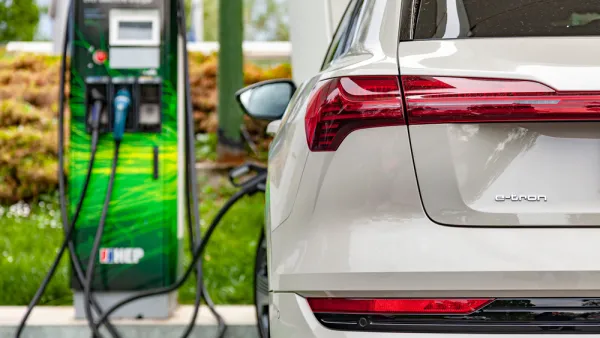
When ‘Zero Emission Vehicles’ Aren’t
The growing popularity of large, heavy SUVS—and the energy needed to produce and operate them—could limit the environmental gains made by electric vehicles.
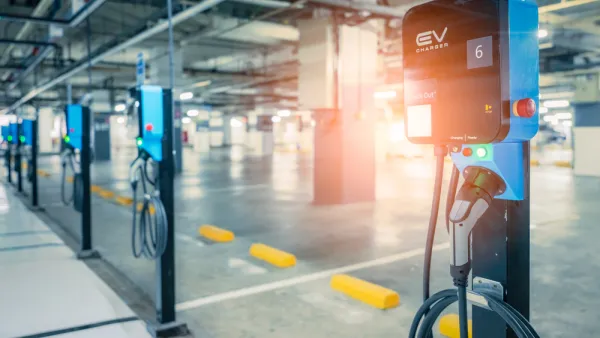
Dramatic Decline in New EV Models to Qualify for Federal Tax Credit
The Treasury Department released long-awaited rules required by the historic Inflation Reduction Action on March 31 that will determine which electric vehicle models purchased after April 17 will qualify for a federal credit up to $7,500.
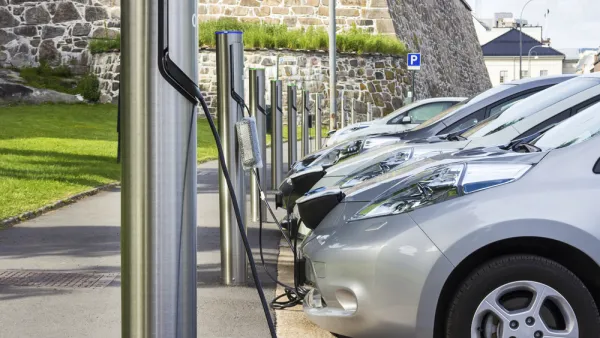
American Jobs to Build Electric Vehicles Excludes Miners
Mining jobs needed to produce the metals for processing into battery parts used to build electric vehicles in America will not be developed in the U.S. but in Australia, Brazil and Canada, mainly to avoid battles with environmentalists.

Planetizen Federal Action Tracker
A weekly monitor of how Trump’s orders and actions are impacting planners and planning in America.

The state-sanctioned urbicide of Austin
People don’t kill cities. Freeways do.

US to reduce Colorado River water deliveries to Mexico
A new Colorado Treaty amendment reduces Mexico’s Colorado River water allocation by 250,000 acre feet.

5 New England states march closer to 800 megawatt wind energy project
Securing federal approval for the project may be complicated under the Trump administration, which has historically been hostile towards domestic wind power.

Baltimore to break ground on $50 million Transit Priority Project
The project will bring faster bus trips, safer streets and better bike connections to Baltimore.

Airbnb launches $250 million 'last-dollar financing' housing accelerator, makes first investment in Austin
The company will put $6.4 million towards affordable housing development in Texas’ capital.

FREE Course: Walkable City 1: Why Walkability?
After describing his path towards focusing on walkability as the essence of good planning, Jeff Speck marches through his five principal reasons for making more walkable places.
Reinventing Malls: Planning Alchemy—Turning Gray Fields Into Gold
The course focuses on the opportunities and imperatives that shape reinvention of mall sites.

Eagle County Government
Harvard University Graduate School of Design
Nashville Planning Department
The Architects Foundation
University of Cincinnati Online
The Pocatello Development Authority
The Urban Renewal Agency of the City of Pocatello
Journal of the American Planning Association