Now is the time to invest in public transit as the correct coronavirus pandemic transportation solution.


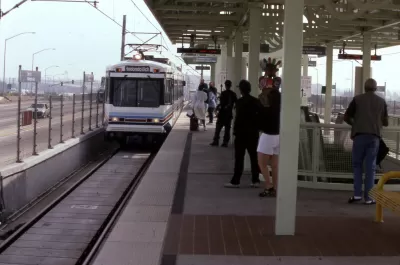
Arturo Ardila-Gomez sees public transit as the savior of the coronavirus-caused transportation dilemma. Inaccurately demonized as a prime location for disease-spreading contact, mass transit is not responsible for increasing COVID-19 cases, says Ardila-Gomez. "Since the beginning of the pandemic, most public transport operators have quickly stepped up to the plate and taken concrete action to make transit systems COVID-safe for staff and passengers."
Ardila-Gomez suggests that now is the time to adapt transportation infrastructure and that "transport providers must adapt their operations to minimize the overlap of the three Cs: Closed and Crowded spaces, and Close contact situations." In the long-term, transit providers will need to rethink the way cities are served and take measures to plan for future health emergencies, being ready with such interventions as pop-up bus lanes at a moment's notice. Transit preparedness is essential to ensuring that people at all income levels are able to navigate the city effectively, says Ardila-Gomez.
Read the full story: In the fight against COVID-19, public transport should be the hero, not the villain

What Is the Future for Transit After COVID? - A Debate
Critic Randal O'Toole and advocate Todd Litman debate how communities should plan for public transit in the post pandemic future. Should it contract or expand?
Falling Transit Ridership 'Disastrous' for Greenhouse Gas Reductions
With ridership at record lows and agencies struggling to stay afloat, public transit around the world will need robust investment to recover after the pandemic.
The Realities of Pandemic Public Transit Service
Recent analysis by TransitCenter quantifies the effects of the pandemic for the 150 largest U.S. transit systems.

Planetizen Federal Action Tracker
A weekly monitor of how Trump’s orders and actions are impacting planners and planning in America.

California plans to bury El Niño’s downpour
If the state plays its cards right, it may be able to store a billion acre-feet of El Niño’s water in aquifers.

Chicago breaks ground on $3 billion megadevelopment
The new neighborhood, titled Foundry Park, will one day host 3,700 residences.

Satanic place names
From streams and lakes to valleys and canyons, I mapped more than 1,000 places named after the Devil.

California High-Speed Rail Authority CEO resigns after $600,000 scandal
Under Ian Choudri, the authority used taxpayer dollars to fund first class flights and trips to nightclubs.

Want to study the Missouri River? Soon, you may need unanimous approval from 10 states
Legislation would require 10 governors’ permission to study or build projects moving water outside the basin.

FREE Course: Walkable City 1: Why Walkability?
After describing his path towards focusing on walkability as the essence of good planning, Jeff Speck marches through his five principal reasons for making more walkable places.
Reinventing Malls: Planning Alchemy—Turning Gray Fields Into Gold
The course focuses on the opportunities and imperatives that shape reinvention of mall sites.

City of Rosemead
Rutgers University, Edward J. Bloustein School of Planning and Public Policy
One Hundred Miles
Hunter College, City University of New York (CUNY)
The Architects Foundation
University of Cincinnati Online
City of Cambridge
Montrose County
The Pocatello Development Authority