California State Legislature committee approved AB 3030 in May, adopting a plan to save 30% of land and sea from development by the year 2030. The Convention on Biological Diversity is likely to follow in adopting the 30 by 30 framework.


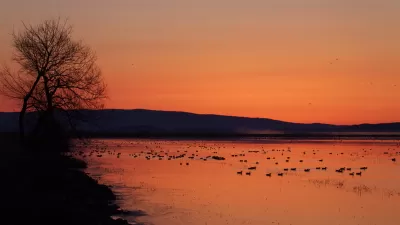
Last year, an international group of scientists published an article in Science Advances proposing a "Global Deal for Nature," a plan to save biodiversity by protecting nearly 30% of the world's waters and lands by 2030. "They wrote that setting aside nearly one-third of the planet from human development could avert 'points of no return' for many species and ecosystems," reports Sammy Roth. The Convention on Biological Diversity is expected to adopt the preventative plan.
Roth reflects: "You may have heard the statistic that the U.S. loses a football field’s worth of nature every 30 seconds. The data point can start to sound meaningless if you hear it too often, but stop and think about it. Every 30 seconds? That’s astounding." California's recently Assembly Bill 3030 cites the statistic and sets state-wide legislation adopting the framework.
Global Deal for Nature authors consider the "30 by 30" goal as a starting point, hoping to extend the effort to 50% by 2050.
Read the full story: Boiling Point: The ’30 by 30' plan to save the natural world

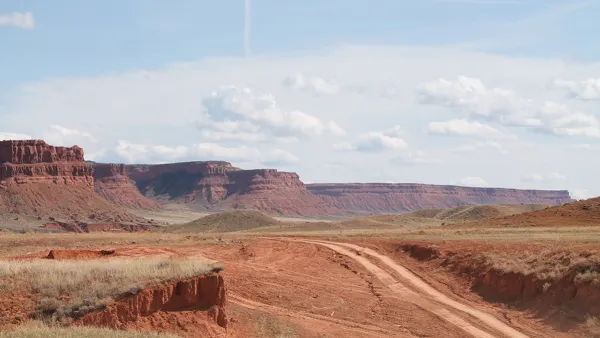
Assessing Biden's '30 by 30' Conservation Plan
The president's ambitious commitment to protect 30% of U.S. land and water by 2030 might be too broad in attempting to satisfy all land users.
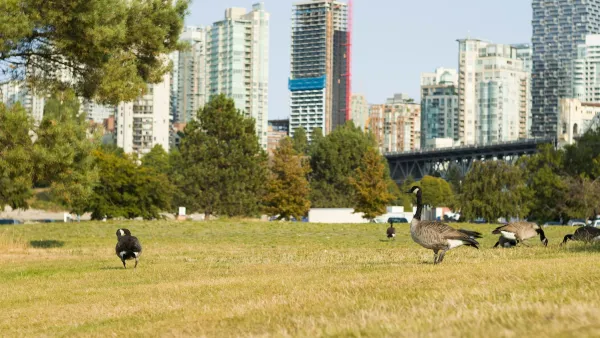
Study: How Urban Parks Can Support Biodiversity
Conservation and recreation can go hand in hand in urban green spaces designed to serve both humans and local wildlife.
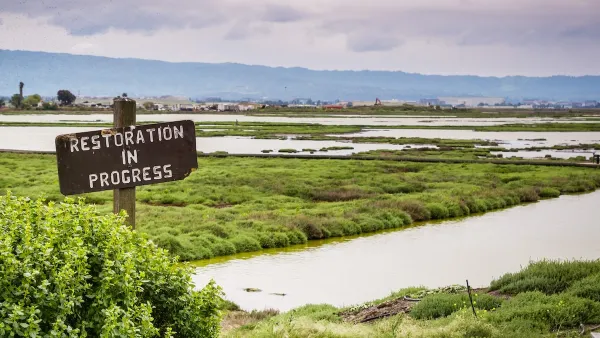
Nature-Based Solutions for Sustainable Climate Action
These solutions offer cost-effective, sustainable methods to combat climate change, but require government action to reallocate subsidies, integrate natural assets into financial systems, and develop biodiversity credit markets.

Planetizen Federal Action Tracker
A weekly monitor of how Trump’s orders and actions are impacting planners and planning in America.

The state-sanctioned urbicide of Austin
People don’t kill cities. Freeways do.

US to reduce Colorado River water deliveries to Mexico
A new Colorado Treaty amendment reduces Mexico’s Colorado River water allocation by 250,000 acre feet.

Nation's most wind-powered state turns to coal as data centers increase energy demand
For the first time in decades, Iowa has increased its generation of coal power.

NYC cools commuters with city's first rain garden above a bus stop
New York City officials say the plants in the rain garden can absorb 16 gallons of rainwater during heavy storms.

Brightline West’s future may rely on $6 billion federal loan
The company has until Nov. 2 to make a $400 million equity investment into its proposed high-speed rail line.

FREE Course: Walkable City 1: Why Walkability?
After describing his path towards focusing on walkability as the essence of good planning, Jeff Speck marches through his five principal reasons for making more walkable places.
Reinventing Malls: Planning Alchemy—Turning Gray Fields Into Gold
The course focuses on the opportunities and imperatives that shape reinvention of mall sites.

Greater Baltimore Committee
Eagle County Government
Harvard University Graduate School of Design
The Architects Foundation
University of Cincinnati Online
The Pocatello Development Authority
The Urban Renewal Agency of the City of Pocatello
Journal of the American Planning Association