Lawmakers in Washington state fell short of passing comprehensive legislation this year to meet long-term goals of reducing greenhouse gas emissions.



Washington State has failed to pass measures needed to meet its ambitious goals of reducing greenhouse gas emissions this year.
"This year’s Legislature did make it an official state goal to reduce production of planet-warming gases by 45% within the next decade and by 95% by 2050 as compared with 1990 levels. The old goals allowed more greenhouse gas emissions to go on longer, and reached a 70% reduction only by midcentury," Katherine Long reports.
Critics say that while the goal-setting legislation from the state shows an acknowledgment of the challenge, legislators have failed to enact policy changes that can achieve those goals. Climate Solutions' Washington director Vlad Gutman-Britten sees the 2020 law-making session as a "comprehensive failure" on climate change action and argues that the few bills that were passed are not enough.
Governor Jay Inslee’s climate and sustainability senior policy adviser Reed Schuler notes the lack of inexpensive opportunities to reduce emissions. His office supports a clean fuel standard as the most cost-effective strategy to reduce carbon emissions from transportation, a policy Inslee would adopt next year if he remains in office.
FULL STORY: Climate bills in WA a ‘comprehensive failure’ in 2020, critics say

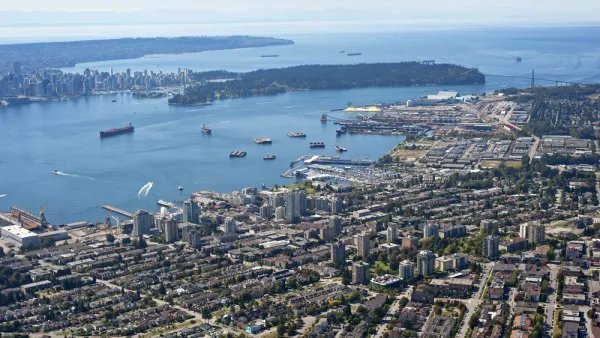
For Vancouver’s Carbon Footprint Reduction Plan, 2030 is the New 2040
Four months after formally recognizing climate change as an emergency, the Vancouver City Council considers six large-scale changes to dramatically reduce city-wide carbon emissions.
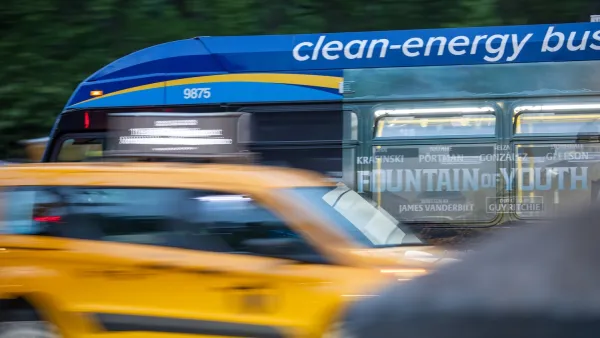
FTA Kills ‘Social Cost of Carbon’ in Transit Grant Criteria
The Capital Investments Grant program will no longer factor in the future impacts of carbon emissions.
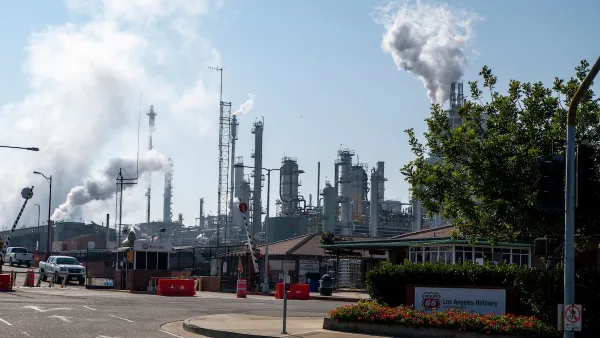
California’s Cap and Trade Program Up in the Air
The state’s carbon trading program is being attacked as ineffective from one side and overly onerous from the other.

Planetizen Federal Action Tracker
A weekly monitor of how Trump’s orders and actions are impacting planners and planning in America.

The state-sanctioned urbicide of Austin
People don’t kill cities. Freeways do.

US to reduce Colorado River water deliveries to Mexico
A new Colorado Treaty amendment reduces Mexico’s Colorado River water allocation by 250,000 acre feet.

5 New England states march closer to 800 megawatt wind energy project
Securing federal approval for the project may be complicated under the Trump administration, which has historically been hostile towards domestic wind power.

Baltimore to break ground on $50 million Transit Priority Project
The project will bring faster bus trips, safer streets and better bike connections to Baltimore.

Airbnb launches $250 million 'last-dollar financing' housing accelerator, makes first investment in Austin
The company will put $6.4 million towards affordable housing development in Texas’ capital.

FREE Course: Walkable City 1: Why Walkability?
After describing his path towards focusing on walkability as the essence of good planning, Jeff Speck marches through his five principal reasons for making more walkable places.
Reinventing Malls: Planning Alchemy—Turning Gray Fields Into Gold
The course focuses on the opportunities and imperatives that shape reinvention of mall sites.

Eagle County Government
Harvard University Graduate School of Design
Nashville Planning Department
The Architects Foundation
University of Cincinnati Online
The Pocatello Development Authority
The Urban Renewal Agency of the City of Pocatello
Journal of the American Planning Association