In every phase of transit development, arts and culture strategies can be employed to inform and enhance the process. Here are examples from three different transit projects around the country.


First Stop: Arkansas—Springdale, Arkansas, is growing. Home to the world’s second largest meat processing corporation and a national freight and shipping company, the city has seen its population double over the past 20 years, according to the U.S. Census. The larger northwest Arkansas region—headquarters of Walmart—is also growing, putting the issues of vehicular traffic, access to jobs, and displacement at the top of some people’s minds.
One of those people is Erika Wilhite, a social practice artist and founder of Artist’s Laboratory Theater, a community-based, site-specific theater company in Northwest Arkansas. Wilhite and Antony Ramos, a digital storyteller, are the creative partners behind a series of art-inspired sessions, activities, and presentations that they hope will influence details of Connect Northwest Arkansas, a 10-year transit development plan that is currently in the proposal stage. The projects are part of their work as newly named Arts, Culture, and Transportation Fellows with Transportation for America, an initiative designed to give art professionals opportunities for hands-on learning about the transportation planning and design process in their respective regions. The 11 fellows, working in four cities, will also learn how to better integrate arts and culture practices into transportation projects.
In a region where some of the cities’ bus lines don’t run on weekends, and none that operate past 7 p.m., new thinking around transit is highly anticipated. “There are people [who] are transit-dependent in all of our cities, and the current system—with all of its different levels of effectiveness and accessibility, [is] still not enough,” says Wilhite.
. . .
FULL STORY: Integrating Arts and Culture Strategies into Transit Plans

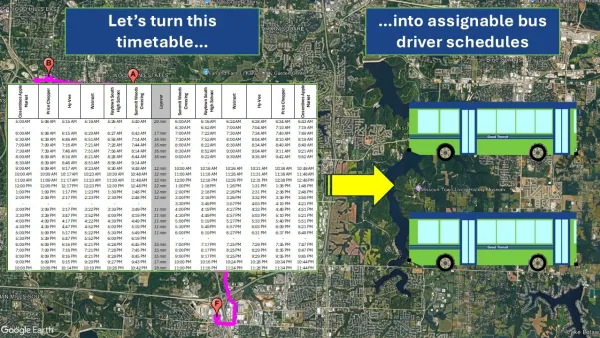
Transit Scheduling 101: Building the operator schedule
A transit operator’s work goes beyond just driving the bus.
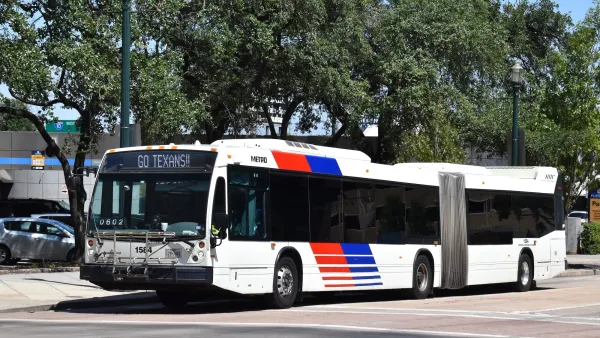
A Love Letter to the Articulated Bus
An ode to the bendy boys, by far the wackiest of the specialized vehicles you might find at a transit authority.
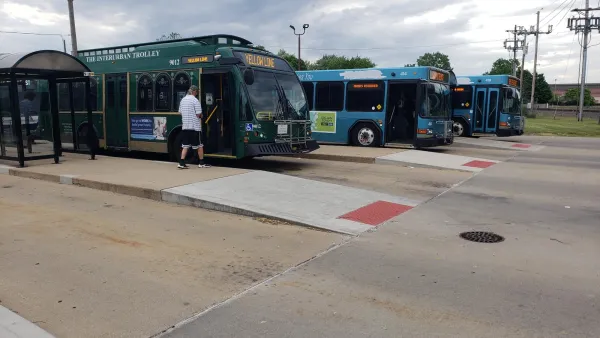
Transit Scheduling 101: Never Cheat the Layover!
Letting drivers take their bathroom break keeps buses running on time, prevents burnout, and might even save the world from tech-fueled social entropy. Why risk it?!

Planetizen Federal Action Tracker
A weekly monitor of how Trump’s orders and actions are impacting planners and planning in America.

The state-sanctioned urbicide of Austin
People don’t kill cities. Freeways do.

US to reduce Colorado River water deliveries to Mexico
A new Colorado Treaty amendment reduces Mexico’s Colorado River water allocation by 250,000 acre feet.

5 New England states march closer to 800 megawatt wind energy project
Securing federal approval for the project may be complicated under the Trump administration, which has historically been hostile towards domestic wind power.

Baltimore to break ground on $50 million Transit Priority Project
The project will bring faster bus trips, safer streets and better bike connections to Baltimore.

Airbnb launches $250 million 'last-dollar financing' housing accelerator, makes first investment in Austin
The company will put $6.4 million towards affordable housing development in Texas’ capital.

FREE Course: Walkable City 1: Why Walkability?
After describing his path towards focusing on walkability as the essence of good planning, Jeff Speck marches through his five principal reasons for making more walkable places.
Reinventing Malls: Planning Alchemy—Turning Gray Fields Into Gold
The course focuses on the opportunities and imperatives that shape reinvention of mall sites.

Eagle County Government
Harvard University Graduate School of Design
Nashville Planning Department
The Architects Foundation
University of Cincinnati Online
The Pocatello Development Authority
The Urban Renewal Agency of the City of Pocatello
Journal of the American Planning Association