All these newfangled devices and no universal nomenclature.


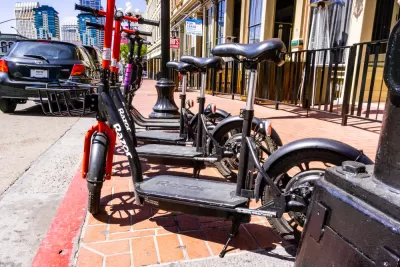
Leila Hawa, Annie Chang, and John MacArthur address an ongoing challenge facing planners and public officials trying to get a grasp on emerging transportation modes, such as electric scooters, electric bikes, hoverboards, and more.
At this stage, decision-makers are still working to understand the impacts of micromobility and how to incorporate it into the fabric of cities. Confusion about how to classify these new vehicles and services and what to call them is contributing to vague regulations or a total lack thereof.
An international organization has stepped into to bring some rationality to the subject:
To address this challenge, SAE International, an international standards organization for mobility engineering, has established a common set of terminologies for describing micromobility vehicles, called 'J3194 – Taxonomy and Classification of Powered Micromobility.'"
According to the article, the J3194 taxonomy both captures the current state of micromobility and to accommodate future innovations in the field. A graphic summary of the SAE J3194 standard are included in the article.
FULL STORY: Micromobility Needs a Shared Vocabulary

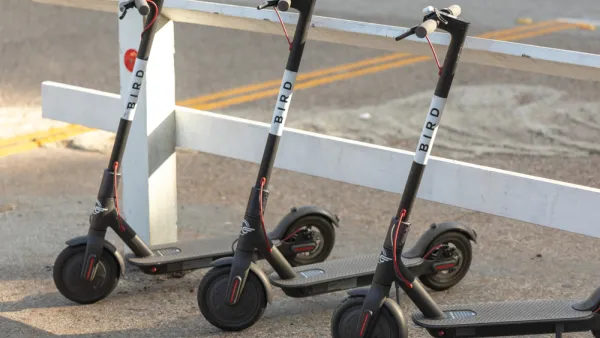
Scooter-Share Company Tosses Financial Reports
Bird was counting money in customers’ digital “wallets” as revenue, and has admitted that financial statements from 2020 and 2021 “should no longer be relied upon.”
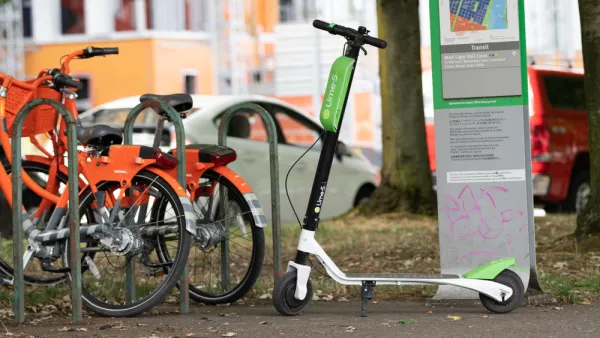
The State of the Micromobility Industry
The North American Bikeshare Association released the first-ever state of the industry report for active forms of micromobility—i.e., bike share and electric scooter rental companies.
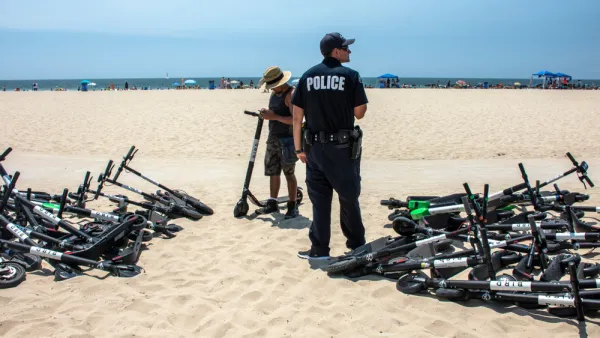
An Atlas of E-Scooter Policies
Introducing the Micromobility Policy Atlas.

Planetizen Federal Action Tracker
A weekly monitor of how Trump’s orders and actions are impacting planners and planning in America.

The state-sanctioned urbicide of Austin
People don’t kill cities. Freeways do.

US to reduce Colorado River water deliveries to Mexico
A new Colorado Treaty amendment reduces Mexico’s Colorado River water allocation by 250,000 acre feet.

5 New England states march closer to 800 megawatt wind energy project
Securing federal approval for the project may be complicated under the Trump administration, which has historically been hostile towards domestic wind power.

Baltimore to break ground on $50 million Transit Priority Project
The project will bring faster bus trips, safer streets and better bike connections to Baltimore.

Airbnb launches $250 million 'last-dollar financing' housing accelerator, makes first investment in Austin
The company will put $6.4 million towards affordable housing development in Texas’ capital.

FREE Course: Walkable City 1: Why Walkability?
After describing his path towards focusing on walkability as the essence of good planning, Jeff Speck marches through his five principal reasons for making more walkable places.
Reinventing Malls: Planning Alchemy—Turning Gray Fields Into Gold
The course focuses on the opportunities and imperatives that shape reinvention of mall sites.

Eagle County Government
Harvard University Graduate School of Design
Nashville Planning Department
The Architects Foundation
University of Cincinnati Online
The Pocatello Development Authority
The Urban Renewal Agency of the City of Pocatello
Journal of the American Planning Association