Over the last decade, many historic buildings and cultural institutions throughout New York City have disappeared. The result has been the transformation of neighborhoods and the city’s character.


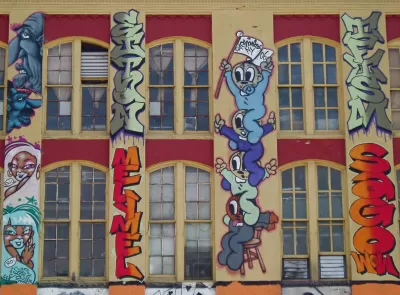
Nathan Kensinger looks at ten buildings that have disappeared from New York City in the last decade, and the effect of those losses on neighborhoods. "As new development projects and rezonings reshaped the city, it also lost countless historic buildings and cultural institutions; dive bars, bungalows, churches, and even entire neighborhoods were wiped off the map."
In Harlem, Manhattanville is an industrial neighborhood that is quickly disappearing as Columbia University expands its campus. The loss, says Kensinger, is buildings and other structures that capture the essence of the city and connect the present to the past. "What has been erased in Manhattanville is the same type of vernacular architecture that is vanishing throughout New York City: diners and tenement buildings, cobblestone streets and slaughterhouses, auto body shops and horse stables.”
He writes about a variety of other places that are completely or mostly gone, including the Cedar Grove Beach Club in Staten Island, the 5 Pointz warehouse and graffiti haven in Long Island City, and the S.W. Bowne Grain Storehouse on the Gowanus Canal.
"New York has always been a dynamic place that changes and reinvents itself. But these recent developments represent something different, where billionaires and politicians conspired to maximize private profits and enrich private developers by destroying thousands of small businesses and dozens of neighborhoods," notes Kensinger.
FULL STORY: A decade of destruction in New York City

Mayor de Blasio Stresses Affordable Housing in State of the City Address
In his State of the City Address on Feb. 3, the New York City mayor made it clear that his overriding priority is affordable housing. He targeted six neighborhoods in all five boroughs where development will be required to include affordable housing.
NYC needs 700,000 new homes to resolve housing crisis, report states
The report gave every neighborhood a non-binding development target.
Staten Island Resists ‘City of Yes’ Zoning Reforms
One year after New York City approved major zoning changes, some residents continue to fight increased density.

Planetizen Federal Action Tracker
A weekly monitor of how Trump’s orders and actions are impacting planners and planning in America.

The state-sanctioned urbicide of Austin
People don’t kill cities. Freeways do.

US to reduce Colorado River water deliveries to Mexico
A new Colorado Treaty amendment reduces Mexico’s Colorado River water allocation by 250,000 acre feet.

5 New England states march closer to 800 megawatt wind energy project
Securing federal approval for the project may be complicated under the Trump administration, which has historically been hostile towards domestic wind power.

Baltimore to break ground on $50 million Transit Priority Project
The project will bring faster bus trips, safer streets and better bike connections to Baltimore.

Airbnb launches $250 million 'last-dollar financing' housing accelerator, makes first investment in Austin
The company will put $6.4 million towards affordable housing development in Texas’ capital.

FREE Course: Walkable City 1: Why Walkability?
After describing his path towards focusing on walkability as the essence of good planning, Jeff Speck marches through his five principal reasons for making more walkable places.
Reinventing Malls: Planning Alchemy—Turning Gray Fields Into Gold
The course focuses on the opportunities and imperatives that shape reinvention of mall sites.

Eagle County Government
Harvard University Graduate School of Design
Nashville Planning Department
The Architects Foundation
University of Cincinnati Online
The Pocatello Development Authority
The Urban Renewal Agency of the City of Pocatello
Journal of the American Planning Association