New York Times analysis quantifies the environmental regulations at risk under the actions of the Trump administration.


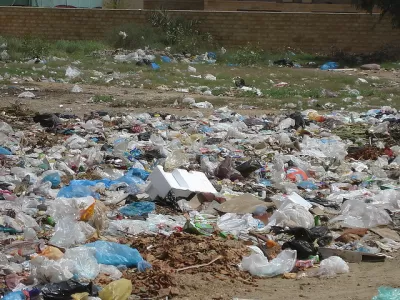
Nadja Popovich, Livia Albeck-Ripka, and Kendra Pierre-Louis survey the wave of antiregulation actions by the Trump adninsitration—specifically anti-environmental regulation. The Trump administration is rolling back 95 environmental regulations in all.
"His administration, with help from Republicans in Congress, has often targeted environmental rules it sees as burdensome to the fossil fuel industry and other big businesses," according to the article."
The article breaks down the environmental rollbacks by categories (e.g., air pollution and emissions, infrastructure and planning, water pollution, and more), noting how many of each variety of rollback are completed or still in progress.
As noted in the article, the Trump administration's action to rollback environmental regulations haven't always lived up to legal scrutiny, and, as a report by New York University researchers [pdf] published in March 2019 predicts, the rollbacks will likely result in increased greenhouse gas emissions and public health risks.
Read the full story: 95 Environmental Rules Being
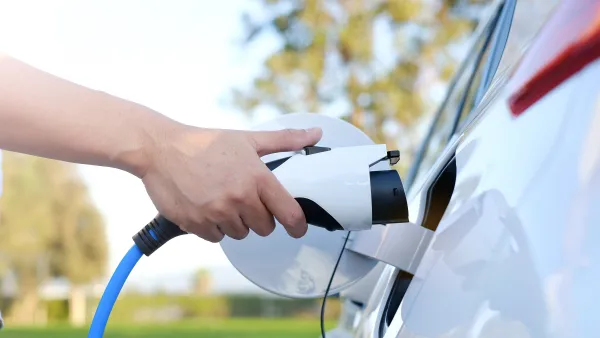
Undoing Biden's EV Rule
The partisan divide over how government should reduce greenhouse gas emissions was on full display after the Biden administration finalized its emissions standards rule for light and medium duty vehicles on March 20.
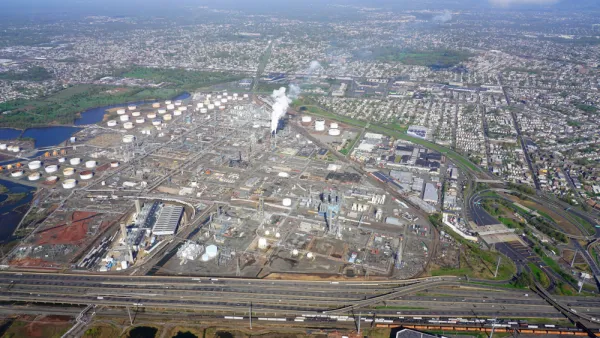
Supreme Court Guts the U.S. EPA’s Ability to Limit Carbon Emissions
The consequences of this ruling have long been foretold. With the U.S. Environmental Protection Agency now officially barred from the fight against climate change, Congress will have to act to reduce carbon emissions.
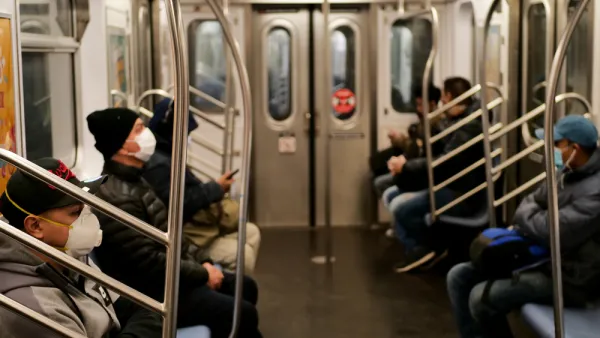
CDC's New Face Mask Requirement on Transit Takes Effect Tuesday
Travelers will be required to properly wear a face mask when riding all forms of public transportation, e.g., ride-share, bus, train, ferry, or plane. The rule applies to transportation hubs and boarding platforms. Not just any face-covering will do.

Planetizen Federal Action Tracker
A weekly monitor of how Trump’s orders and actions are impacting planners and planning in America.

California plans to bury El Niño’s downpour
If the state plays its cards right, it may be able to store a billion acre-feet of El Niño’s water in aquifers.

Desperate measures: Advocates weigh draining Lake Powell to fill Colorado River
Draining the reservoir could reduce evaporation losses by a couple hundred thousand acre-feet.

In Texas, data centers are swallowing promised parkland
Residents who moved to Taylor, Texas for a rural community now have to contend with three data centers in their backyard.

How a Chicago-sized wind farm beat the odds and powered on
The project spanned five presidential administrations and a standoff with a U.S. military base.

MTA gives itself 30 days to transform pit into basketball court
The site has been under construction since 2022; the city originally estimated it would finish the court in 2024.

FREE Course: Walkable City 1: Why Walkability?
After describing his path towards focusing on walkability as the essence of good planning, Jeff Speck marches through his five principal reasons for making more walkable places.
Reinventing Malls: Planning Alchemy—Turning Gray Fields Into Gold
The course focuses on the opportunities and imperatives that shape reinvention of mall sites.

City of Rosemead
Rutgers University, Edward J. Bloustein School of Planning and Public Policy
One Hundred Miles
Hunter College, City University of New York (CUNY)
The Architects Foundation
University of Cincinnati Online
City of Cambridge
Montrose County
The Pocatello Development Authority