A representative of the Regional Plan Association calls for Connecticut's political leadership to go even further in changing the transportation and land use planning paradigm in the state.


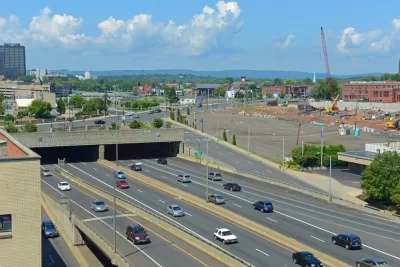
Melissa Kaplan-Macey, vice president of state programs and Connecticut director at the Regional Plan Association, writes an opinion piece for the Hartford Courant making the case for a paradigm shift in transportation funding in the Constitution State.
The opinion piece follows shortly on the heals of Connecticut Governor Ned Lamont releasing a new $21 billion capital investment plan called CT2030, which Kaplan-Macey describes as a good, but not perfect, start to achieving the changes called for in the article.
The overarching goal of the plan is to reduce commute times and improve commuter experience. It includes highway improvement projects that seek to reduce congestion, rail improvement projects that speed commutes and limited bus transit investment. It proposes funding these improvements with a mix of federal low-interest loans and revenue from a long-overdue electronic tolling system.
Here's the "not perfect" part:
But the state should reconsider its pursuit of highway expansions that induce traffic and increase air pollution. Instead, the state should manage demand on existing roadways and invest in public transit.
To make the case for an urban focus on transportation spending and additional public transit investments, Kaplan-Macey explains induced demand, cites the rising demand for walkable neighborhoods with access to public transit, laments Connecticut's historic neglect of its urban centers, and builds a counter argument for the already emerging Republican opposition to the CT2030 proposal.
FULL STORY: We should invest in urban centers, not expand highways to get around them.

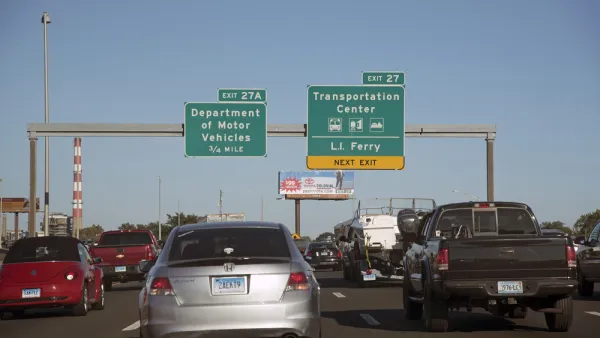
Criticism for Connecticut's $21 Billion Transportation Spending Plan
Transit advocates don't see much to like in the state of Connecticut's big transportation spending plan—just more of the same.

Five Borough Bikeway Plan Released
The Regional Plan Association is calling on New York City to implement an ambitious plan to transform the city into a world class city for biking—for the benefit of the public health and economic realities of the pandemic and beyond.

‘Tempe Tomorrow’ Plans for Expected Population Growth
Tempe planners are preparing a General Plan update scheduled for voter approval in March 2024.

The state-sanctioned urbicide of Austin
People don’t kill cities. Freeways do.

US to reduce Colorado River water deliveries to Mexico
A new Colorado Treaty amendment reduces Mexico’s Colorado River water allocation by 250,000 acre feet.

New Jersey’s second-largest city bans standalone data centers
Jersey City will continue to allow co-location facilities, such as those meant for research institutions that store their own data.

Amtrak not solely to blame for New Jersey commuter rail's unreliability, report finds
A new study from the Garden State Initiative found that NJ Transit’s budget grew 20% across a 4 year period, but reliability declined significantly over the same period.

EPA erases limits on planet-warming pollution from power plants
Under Monday’s plan, power plants would still have some limits on how much mercury, arsenic and other contaminants they can emit.

Phoenix announces new on-demand transit service, more frequent RAPID buses
Both new services will launch in October, and are part of Phoenix's Project Effective Access Solutions for Easing Congestion.

FREE Course: Walkable City 1: Why Walkability?
After describing his path towards focusing on walkability as the essence of good planning, Jeff Speck marches through his five principal reasons for making more walkable places.
Reinventing Malls: Planning Alchemy—Turning Gray Fields Into Gold
The course focuses on the opportunities and imperatives that shape reinvention of mall sites.

Eagle County Government
Harvard University Graduate School of Design
Nashville Planning Department
The Architects Foundation
University of Cincinnati Online
The Pocatello Development Authority
The Urban Renewal Agency of the City of Pocatello
Journal of the American Planning Association