Community-based public-private partnerships are bringing green infrastructure jobs to Prince George’s County and cleaning up the Chesapeake Bay.


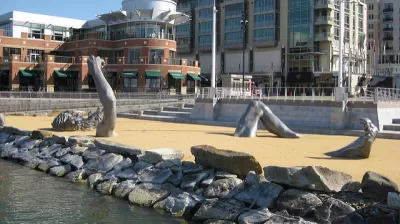
Kristina Twigg reports on the Clean Water Partnership in Prince George’s County in Maryland, an effort to reduce stormwater runoff while also bringing jobs to the county and local companies. "With nearly 100 more projects currently in the design and construction phases, the Clean Water Partnership is well over halfway to its ultimate goal of retrofitting 4,000 acres to capture stormwater."
By 2018, the initial $100-million, three-year program had treated 2,000 acres of rooftops and pavement and was $8 million under budget. "From student-planted rain gardens at county schools to upgraded lakes in beloved community greenspaces, these improvements together capture and clean more than 1.6 billion gallons of runoff per year," notes Twigg.
The investment in the local community has also been successful, adds Twigg. "County residents performed more than 50 percent of hours worked on the program, and 80 percent of the program dollars went to local, small, minority-owned businesses."
FULL STORY: Bringing Cleaner Water, Green Jobs to D.C.‘s Suburbs

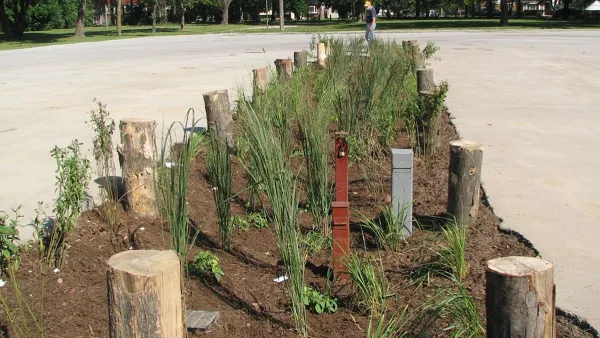
Unique Public-Private Partnership Tackles Stormwater Infrastructure in Maryland
By combining the resources of the public and private sectors, Prince George County was able to greatly reduce the costs required to retrofit an aging stormwater system.
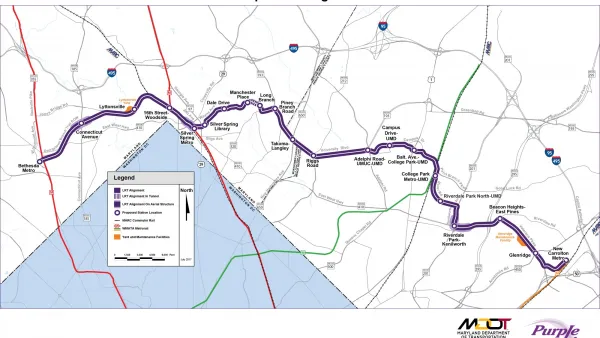
Maryland's Purple Line Gets the Green Light Again
The public-private partnership behind the Purple Line light rail project in Maryland fell apart in September, and has this past week been revived.
Purple Line Construction Halts in Maryland as Contractor Woes Deepen
Purple Line Transit Partners, the contractors managing construction of the beleaguered Purple Line in Maryland, have begun to walk off the job as a dispute about cost overruns brings the project to a screeching halt.

Planetizen Federal Action Tracker
A weekly monitor of how Trump’s orders and actions are impacting planners and planning in America.

The state-sanctioned urbicide of Austin
People don’t kill cities. Freeways do.

US to reduce Colorado River water deliveries to Mexico
A new Colorado Treaty amendment reduces Mexico’s Colorado River water allocation by 250,000 acre feet.

Brightline West’s future may rely on $6 billion federal loan
The company has until Nov. 2 to make a $400 million equity investment into its proposed high-speed rail line.

LA Metro’s ultimatum: no extra buses for LA28 if federal funding isn’t imminently secured
If Metro does not provide additional buses, LA28 organizers will have to find a new way to manage Olympic traffic. LA28’s budget does not include a line item for transit.

Colorado’s Largest Data Center Could Rise Next to Homes — Without a Public Hearing
The proposed campus would consume 11 times the power of Denver International Airport; as it has across the country, opposition mounts.

FREE Course: Walkable City 1: Why Walkability?
After describing his path towards focusing on walkability as the essence of good planning, Jeff Speck marches through his five principal reasons for making more walkable places.
Reinventing Malls: Planning Alchemy—Turning Gray Fields Into Gold
The course focuses on the opportunities and imperatives that shape reinvention of mall sites.

Eagle County Government
Harvard University Graduate School of Design
Nashville Planning Department
The Architects Foundation
University of Cincinnati Online
The Pocatello Development Authority
The Urban Renewal Agency of the City of Pocatello
Journal of the American Planning Association