A former resident of the iconic neighborhood reflects on its past, present, and future.


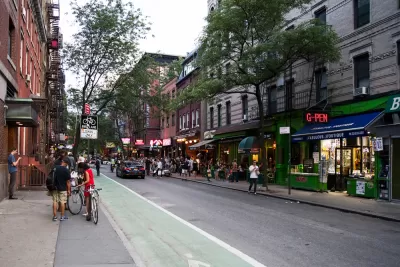
In a feature piece, Susannah Jacob recounts her experience living in New York’s West Village and describes the social, economic, and cultural changes in the neighborhood in recent years. She also looks back and traces notable shifts in the neighborhood, including its transformation from a working-class, immigrant enclave to a white bohemian one in the 1960s.
Gentrification began to transform the West Village long before other New York neighborhoods, but the more recent influx of extreme wealth has changed the area drastically. Jacob looks at the numbers—widening income disparities, an increase in single-family homes as apartment buildings disappear, and a surge in businesses catering to the area’s high-income residents:
There are fewer manufacturing, wholesale trade, healthcare, social assistance, and arts and entertainment businesses. Most of the old factory buildings that housed defunct businesses have either been converted into condominiums and mansions or turned into high-rise modern buildings bearing the names of their former enterprises, such as the Superior Ink building, now a luxury condo development overlooking the Hudson River, the Babaco Alarm building, now a mansion, and, most grotesquely, the former Village Nursing Home, which previously had 200 beds for the neighborhood’s elderly and is now the site of a handful of full-floor apartments (between 2006 and 2016, lower Manhattan lost more than half of its certified long-term care facility beds, DNAinfo has reported).
She also talks to longtime residents and employees of surviving businesses about how the character and feel of the West Village have changed over time. People who grew up in the neighborhood recall that crime and drugs were issues in the 1970s and 1980s, but housing was affordable and the mix of residents created a vibrancy and sense of community that the West Village lacks today.
"With its churn of stores appearing then disappearing and the rich who come and go like a traveling circus, the neighborhood had come to seem to me a symbol of impermanence driven by wealth. At first glance, its increasing emptiness—vacant commercial spaces blighted by skyrocketing rents, shells of brownstones, and luxury apartments unoccupied for fifty weeks a year—suggested a place on the precipice of becoming something else. In time, I understood that the neighborhood’s emptiness is simply its deepening condition," notes Jacob.
Read the full story: What Happened to the West Village?

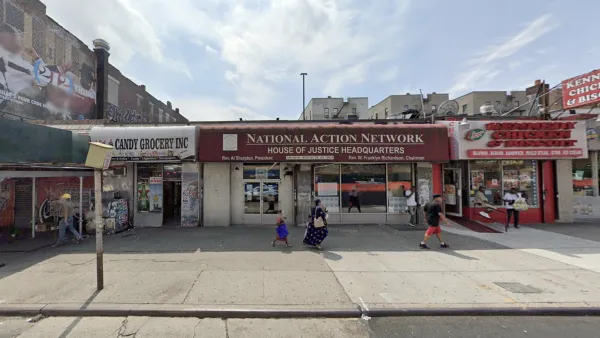
Market Rate Condos Could Replace Harlem Towers Proposal
After facing community opposition and a call for more deeply affordable housing units, developers withdrew their proposal for Harlem’s One45, prompting questions about the future of the site.
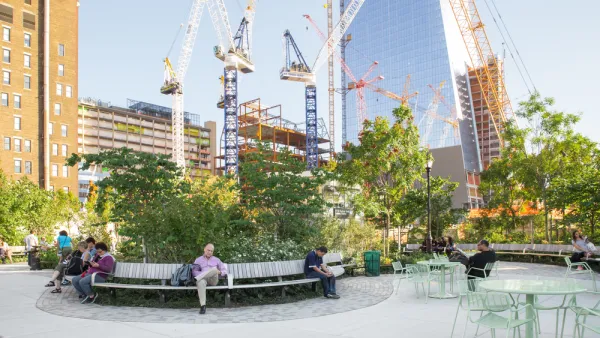
NYC Planning Head Defends Growth-Oriented Policies
Acknowledging anti-development sentiments currently simmering at an "all-time high," New York's planning director Marisa Lago defended de Blasio administration policies like mandatory inclusionary housing.
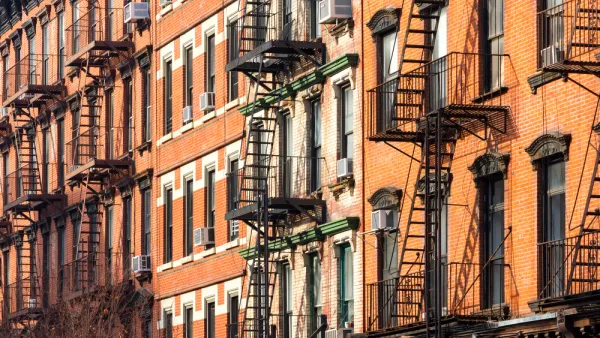
One Fourth of East Harlem Housing Set to Lose Affordability
The area could lose up to 500 units of affordable housing every year for the next 30 years if the city doesn't extend existing protections.

Planetizen Federal Action Tracker
A weekly monitor of how Trump’s orders and actions are impacting planners and planning in America.

California plans to bury El Niño’s downpour
If the state plays its cards right, it may be able to store a billion acre-feet of El Niño’s water in aquifers.

Chicago breaks ground on $3 billion megadevelopment
The new neighborhood, titled Foundry Park, will one day host 3,700 residences.

Satanic Place Names
From streams and lakes to valleys and canyons, I mapped more than 1,000 places named after the Devil.

California High-Speed Rail Authority CEO resigns after $600,000 scandal
Under Ian Choudri, the authority used taxpayer dollars to fund first class flights and trips to nightclubs.

Want to study the Missouri River? Soon, you may need unanimous approval from 10 states
Legislation would require 10 governors’ permission to study or build projects moving water outside the basin.

FREE Course: Walkable City 1: Why Walkability?
After describing his path towards focusing on walkability as the essence of good planning, Jeff Speck marches through his five principal reasons for making more walkable places.
Reinventing Malls: Planning Alchemy—Turning Gray Fields Into Gold
The course focuses on the opportunities and imperatives that shape reinvention of mall sites.

City of Rosemead
Rutgers University, Edward J. Bloustein School of Planning and Public Policy
One Hundred Miles
Hunter College, City University of New York (CUNY)
The Architects Foundation
University of Cincinnati Online
City of Cambridge
Montrose County
The Pocatello Development Authority