A new study, jointly produced by the American Public Transportation Association (APTA) and the National Association of Realtors (NAR), finds evidence of dramatic increases in the value of real estate located proximate to public transit.


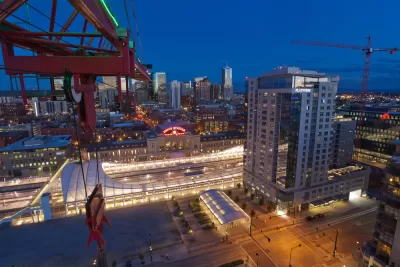
"Property values of residential and commercial buildings increase dramatically when located close to transit, according to a joint study from the American Public Transportation Association (APTA) and the National Association of Realtors (NAR)," according to an article by Chris Teale.
Analyzing data from seven metropolitan regions (Boston; Eugene, OR; Hartford, CT; Los Angeles; Minneapolis-St. Paul; Phoenix; and Seattle),
"[t]he associations found that residential properties within a half-mile of public transit options (heavy rail, light rail, commuter rail and bus rapid transit) had a 4%-24% higher median sale price between 2012 and 2016." Similarly located commercial properties also gained value during the same time period.
Another key finding of the study pertained to the savings of residents who live near transit.
Now the question is how effective cities will be leveraging that knowledge to mitigate ongoing crises of climate change and housing affordability.
FULL STORY: Property values 'thrive' near transit, study finds

Transit Agencies Seeking Federal Help as Ridership Plummets
Two of the most transit rich regions in the United States have sounded alarms about the need for federal relief as transit ridership plummets as workers stay home or avoid public transit. The APTA is supporting the cause.
Millennials Leaving Their Mark on Suburbia
How will millennial homebuyers change suburbia, or will they? Realtors observe that millennials relocating from the city look for parts of their urban lifestyle, e.g., walkable neighborhoods, yet they also have traditional suburban tastes.
King County Metro adds 3,000 weekly bus trips, more connections to rail
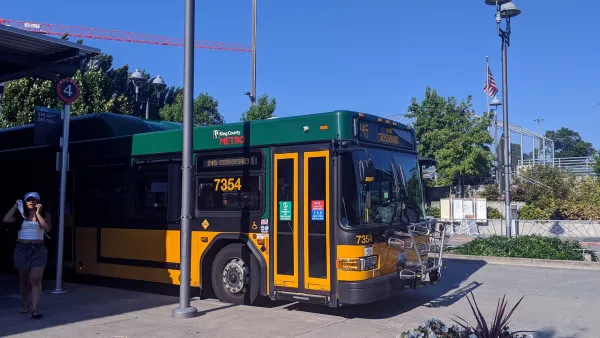
King County Metro and Sound Transit are both making major adjustments to their bus networks to improve light rail connectivity across the region.

Planetizen Federal Action Tracker
A weekly monitor of how Trump’s orders and actions are impacting planners and planning in America.

The state-sanctioned urbicide of Austin
People don’t kill cities. Freeways do.

US to reduce Colorado River water deliveries to Mexico
A new Colorado Treaty amendment reduces Mexico’s Colorado River water allocation by 250,000 acre feet.

Brightline West’s future may rely on $6 billion federal loan
The company has until Nov. 2 to make a $400 million equity investment into its proposed high-speed rail line.

LA Metro’s ultimatum: no extra buses for LA28 if federal funding isn’t imminently secured
If Metro does not provide additional buses, LA28 organizers will have to find a new way to manage Olympic traffic. LA28’s budget does not include a line item for transit.

Colorado’s Largest Data Center Could Rise Next to Homes — Without a Public Hearing
The proposed campus would consume 11 times the power of Denver International Airport; as it has across the country, opposition mounts.

FREE Course: Walkable City 1: Why Walkability?
After describing his path towards focusing on walkability as the essence of good planning, Jeff Speck marches through his five principal reasons for making more walkable places.
Reinventing Malls: Planning Alchemy—Turning Gray Fields Into Gold
The course focuses on the opportunities and imperatives that shape reinvention of mall sites.

Eagle County Government
Harvard University Graduate School of Design
Nashville Planning Department
The Architects Foundation
University of Cincinnati Online
The Pocatello Development Authority
The Urban Renewal Agency of the City of Pocatello
Journal of the American Planning Association