The Bloede Dam was the most downstream of a series of three dams on the Patapsco River in the Patapsco Valley State Park in Maryland. Now all three dams have been removed, concluding with the Bloede Dam, and the river runs free.


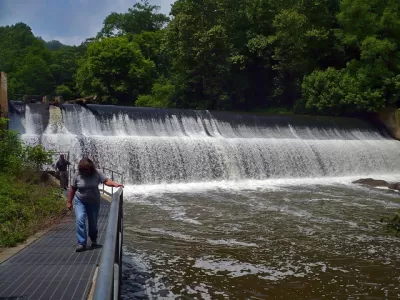
Jessie Thomas Blate writes to commemorate the completion of a dam removal project on the Patapsco River in Maryland.
American Rivers undertook the project to remove the Bloede Dam on the Patapsco River in Patapsco Valley State Park in Maryland.
"American Rivers removed two dams upstream in 2010—Simkins Dam and Union Dam. Finally, more than 65 miles of spawning habitat for blueback herring, alewife, American shad, hickory shad and more than 183 miles for American eel have been reconnected in the Patapsco," according to Thomas Blate.
The article includes photos of the site in its current state, ready for outdoor recreation but also still in a fragile state of recovery.
For more background on the project, see also a news article by Cody Boteler, published in the Baltimore Sun in August 2019, and an opinion piece by Richard B. Karel, published by The Washington Post in June 2019.

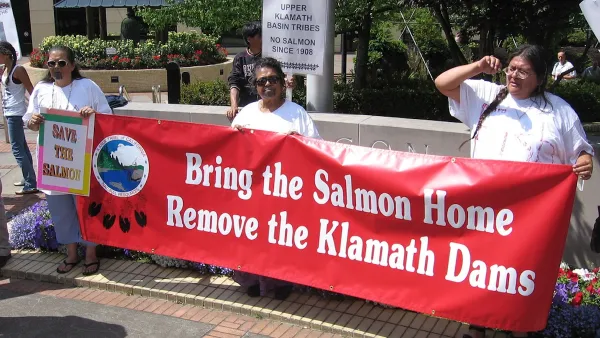
Last Dam in Klamath River Removal Project Comes Down
Salmon can now move freely along the river and its tributaries for the first time in over a century.
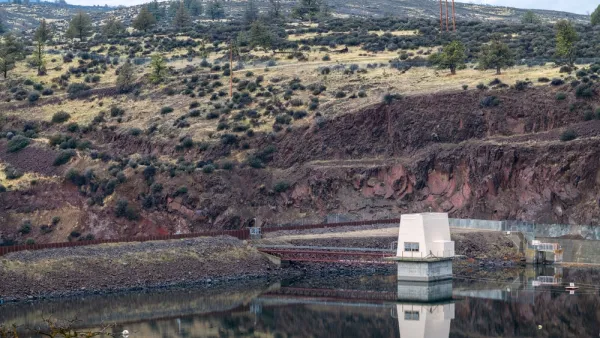
Largest Dam Removal in U.S. History Clears Final Regulatory Hurdle
Four dams are coming down along the Klamath River. The final decision to remove the dams is a milestone political and legal victory for indigenous tribes living in Southern Oregon and Northern California.
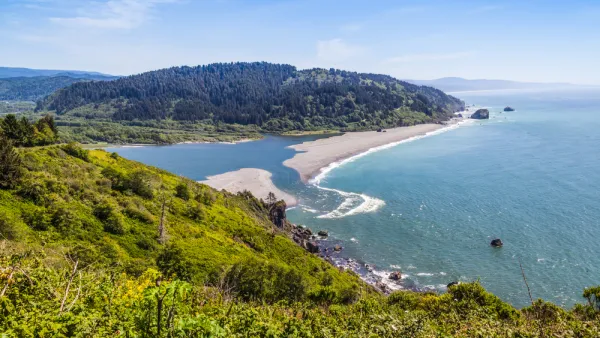
Dams on the Way Out on Two California Rivers
The largest dam removal project in U.S. history is about to commence on the Klamath River. Due to a recent development, a dam on the Eel River is also on expected for decommission.

Planetizen Federal Action Tracker
A weekly monitor of how Trump’s orders and actions are impacting planners and planning in America.

The state-sanctioned urbicide of Austin
People don’t kill cities. Freeways do.

US to reduce Colorado River water deliveries to Mexico
A new Colorado Treaty amendment reduces Mexico’s Colorado River water allocation by 250,000 acre feet.

Colorado’s Largest Data Center Could Rise Next to Homes — Without a Public Hearing
The proposed campus would consume 11 times the power of Denver International Airport; as it has across the country, opposition mounts.

5 New England states march closer to 800 megawatt wind energy project
Securing federal approval for the project may be complicated under the Trump administration, which has historically been hostile towards domestic wind power.

Baltimore to break ground on $50 million Transit Priority Project
The project will bring faster bus trips, safer streets and better bike connections to Baltimore.

FREE Course: Walkable City 1: Why Walkability?
After describing his path towards focusing on walkability as the essence of good planning, Jeff Speck marches through his five principal reasons for making more walkable places.
Reinventing Malls: Planning Alchemy—Turning Gray Fields Into Gold
The course focuses on the opportunities and imperatives that shape reinvention of mall sites.

Eagle County Government
Harvard University Graduate School of Design
Nashville Planning Department
The Architects Foundation
University of Cincinnati Online
The Pocatello Development Authority
The Urban Renewal Agency of the City of Pocatello
Journal of the American Planning Association