Charles Loveman, executive director of Heritage Housing Partners, explains the historical role that subsidized demand played in spurring housing production and the value of low to moderate-income affordable homeownership development.


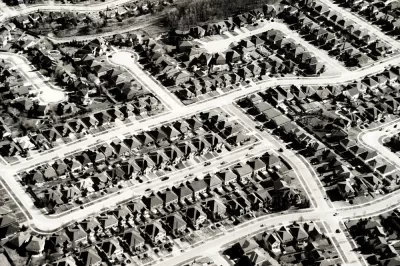
In the aftermath of the Great Recession, skyrocketing costs, and shrunken incomes have made the once great engine for middle-class wealth creation and stability—homeownership—an unattainable dream for all but a few in Coastal California. However, efforts to alleviate housing cost burdens support affordable rental housing almost exclusively.
TPR spoke with Charles Loveman, executive director of Heritage Housing Partners—one of the few housing nonprofits in the region focused on affordable homeownership—to opine on the historical role that subsidized demand played in spurring housing production and the value of low to moderate-income affordable homeownership development:
"It’s important because homeownership creates a wealth engine for those low to moderate-income households that we sell units to. Like anybody else who owns a house in Southern California, house prices appreciate and the owners of those homes build equity. For those buyers who are able to qualify for a mortgage, it’s a much better outcome financially."
Read the full interview at The Planning Report.
Read the full story: Charles Loveman: Unlocking The Market for Affordable Homeownership with Private Capital
Opinion: Denver Needs New Direction on Housing
A Denver writer calls attention to the city's worsening housing affordability, gentrification, and displacement challenges, and prescribes a YIMBY response.

Study: 'Sudden shocks' are driving up homelessness rates
Evictions and climate disasters are leading causes of sharp spikes in unhoused populations.

Spain Fines Airbnb $75 Million After Crackdown on Unlicensed Rentals
The government took action after residents in tourist centers protested, blaming tourist rentals for a growing housing crisis.

Planetizen Federal Action Tracker
A weekly monitor of how Trump’s orders and actions are impacting planners and planning in America.

California plans to bury El Niño’s downpour
If the state plays its cards right, it may be able to store a billion acre-feet of El Niño’s water in aquifers.

Desperate measures: Advocates weigh draining Lake Powell to fill Colorado River
Draining the reservoir could reduce evaporation losses by a couple hundred thousand acre-feet.

Mamdani’s pied-à-terre tax survives legal challenge
A panel of judges found that the plaintiffs failed to demonstrate injury as a result of New York City's implementation of the tax.

Eastern Nebraska is running out of electricity
Data centers and electrification are straining eastern Nebraska’s grid, throttling economic development.

Seattle passes record-breaking transit services expansion
Proposition 1 will double the city’s transit tax to add 95,000 more bus trips and preserve 180,000 bus trips annually.

FREE Course: Walkable City 1: Why Walkability?
After describing his path towards focusing on walkability as the essence of good planning, Jeff Speck marches through his five principal reasons for making more walkable places.
Reinventing Malls: Planning Alchemy—Turning Gray Fields Into Gold
The course focuses on the opportunities and imperatives that shape reinvention of mall sites.

City of Rosemead
Rutgers University, Edward J. Bloustein School of Planning and Public Policy
One Hundred Miles
University of Michigan School for Environment and Sustainability (SEAS)
Hunter College, City University of New York (CUNY)
The Architects Foundation
City of Cambridge
Montrose County
The Pocatello Development Authority